



The Sweet Newcomer
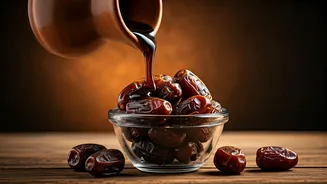
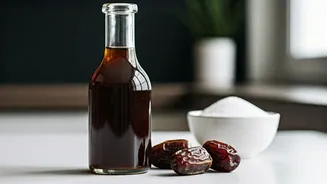
First things first: what exactly is date syrup? Also known as 'silan', this thick, caramel-like sweetener isn’t new at all. It has ancient roots in Middle Eastern cuisine, where it has been a staple for centuries. It's made by simply heating dates in water,
blending the mixture, and then straining the pulp to leave behind a rich, concentrated liquid. The appeal lies in its simplicity. Unlike refined white sugar, which is heavily processed to isolate sucrose, date syrup is made from the whole fruit, retaining some of its original character. This 'whole food' halo is a significant part of its modern-day revival, fitting perfectly into the current demand for natural and minimally processed ingredients.
More Than Just Sweetness?
The main driver behind the swap is health, or at least the perception of it. The internet is buzzing with claims about date syrup's superiority. Proponents point out that because it’s made from whole dates, the syrup contains trace amounts of nutrients not found in empty-calorie white sugar. These include potassium, magnesium, and antioxidants. Studies have shown that date syrup does retain some of the antioxidant properties of the date fruit itself, which are known to help fight oxidative stress in the body. Furthermore, it has a slightly lower glycemic index (GI) than table sugar, honey, or maple syrup. This means it may cause a slower, less dramatic spike in blood sugar levels, making it an attractive option for those looking to manage their energy levels and avoid the notorious sugar crash.
The TikTok Effect
You can’t discuss a Gen Z trend without talking about social media. Date syrup’s meteoric rise can be directly traced to platforms like TikTok and Instagram. Wellness influencers and food bloggers have championed it as a 'healthy' secret weapon. Viral videos showcase its use in everything from 'healthy Coke' (balsamic vinegar, sparkling water, and a sweetener) to drizzling over oatmeal bowls, energy balls, and baked goods. This visual-first promotion has been incredibly effective. It positions date syrup not just as an ingredient, but as part of an aspirational lifestyle—one that is clean, aesthetically pleasing, and health-conscious. For a generation that grew up online, seeing a product repeatedly in curated, positive contexts is a powerful endorsement.
A Dietitian’s Reality Check
So, is it time to throw out your sugar canister and replace it entirely with date syrup? Nutrition experts urge a more balanced perspective. While date syrup does have marginal benefits over white sugar—the trace minerals and a lower GI are real—it is crucial to remember that it is still a sugar. It is high in calories and fructose, and overconsumption will have the same health impacts as overconsuming any other sweetener, including weight gain and related metabolic issues. A tablespoon of date syrup contains roughly the same amount of sugar and calories as a tablespoon of honey or maple syrup. The 'health halo' can be misleading if it encourages people to use it more liberally than they would white sugar. The consensus is that it's a 'better' choice, but not a 'health food' that can be consumed without limits.
Beyond the Health Halo
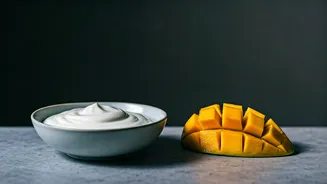
While health is the primary narrative, the appeal of date syrup isn't purely clinical. It has a complex, delicious flavour that white sugar simply can't match. With deep notes of caramel, vanilla, and molasses, it adds a richness to dishes that is genuinely unique. It’s less cloyingly sweet than honey and has more body than maple syrup. This makes it incredibly versatile in the kitchen. It can be used in baking, as a glaze for roasted vegetables or meats, in marinades and salad dressings, or simply as a topping for yoghurt and pancakes. For many, the swap is as much about culinary exploration and a preference for more nuanced flavours as it is about counting antioxidants.