
The Grand Alignment Explained
The spectacular views are all thanks to an event called 'opposition'. Think of Earth and Jupiter as two runners on a circular track around the Sun. Earth is on the inner, faster lane. Roughly every 13 months, Earth 'laps' Jupiter, passing directly between
it and the Sun. This moment is called opposition, and in 2026, it occurs on January 10. While the peak is in winter, the entire autumn season is the lead-up. Starting in September and October, Jupiter will become a brilliant and convenient fixture in the evening sky, getting progressively better each week. So, while the headline says autumn, think of it as the start of Jupiter season.
A Celestial Spotlight
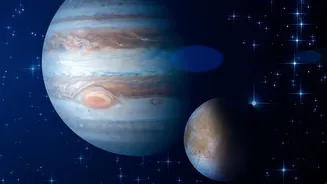
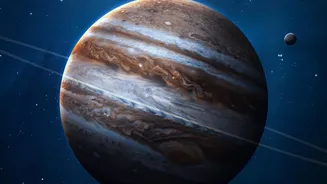
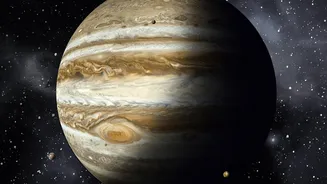
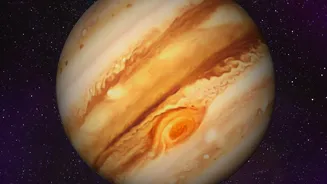
Why does opposition matter so much? Two reasons: proximity and brightness. When Earth passes between the Sun and Jupiter, the gas giant is at its closest point to us for the year. Closer means it appears larger and more detailed through binoculars or a telescope. Secondly, being 'opposite' the Sun in our sky means Jupiter is fully illuminated from our perspective, like a face in a spotlight. It will rise in the east around sunset and stay visible all night long, setting in the west at dawn. During its 2026 opposition, it will shine at a dazzling magnitude of -2.7, making it brighter than any star in the night sky.
Meet the Galilean Moons
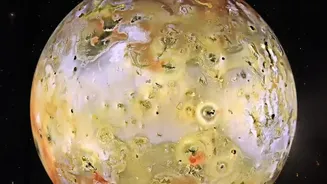
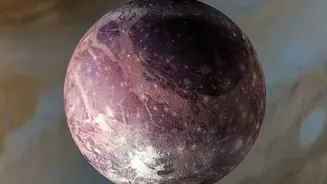
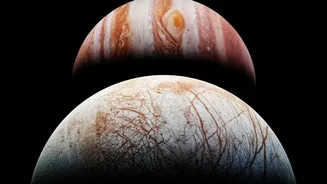
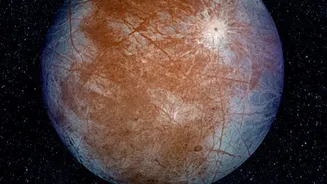
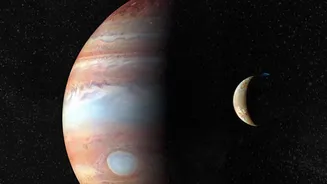
The real magic of this event is seeing another planet's moons with your own eyes. Jupiter has dozens of moons, but four are large enough to be spotted with basic equipment. These are the Galilean moons, named after their discoverer, Galileo Galilei, whose 1610 observation shattered the idea that everything revolved around Earth. In order from Jupiter, they are Io, a volcanic world with hundreds of active volcanoes; Europa, an icy moon that may hide a vast subsurface ocean; Ganymede, the largest moon in our entire solar system (bigger than the planet Mercury); and Callisto, a heavily cratered, ancient world. With binoculars, they will look like tiny, sharp pinpricks of light arranged in a neat line around the brilliant disk of Jupiter.
Your Autumn Viewing Guide
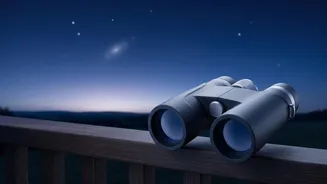
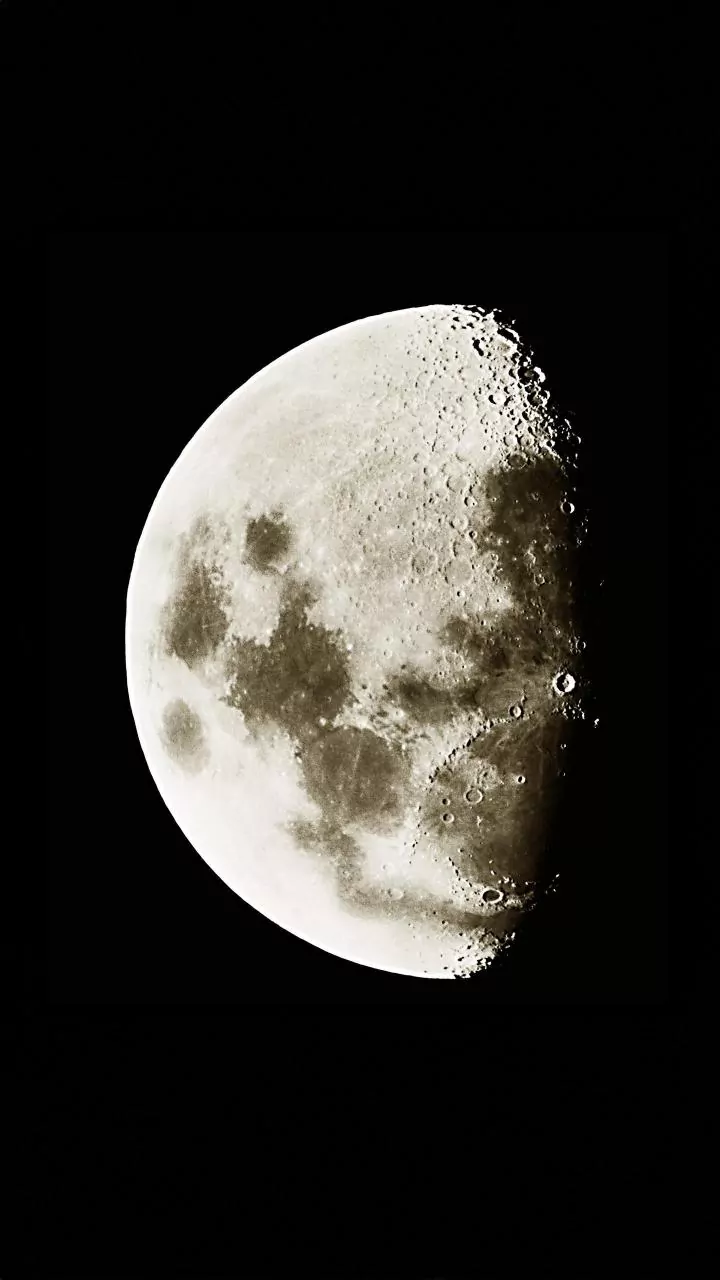
You don't need an expensive telescope. A standard pair of binoculars (7x50 or 10x50 are great) will be enough to reveal the moons. The key is stability. Hand-shake can make the tiny moons vanish, so brace your elbows on a fence, a car roof, or mount your binoculars on a simple tripod. As autumn progresses, look for the brightest, most steadfast 'star' in the eastern sky after sunset. Planets don't twinkle the way distant stars do, so Jupiter's steady, brilliant gleam will give it away. There's even a special bonus event this autumn: on the morning of October 6, 2026, the crescent Moon will pass in front of Jupiter, an event called a lunar occultation that will be a spectacular sight.
Watch the Cosmic Clock
What makes observing Jupiter so rewarding is that it’s a dynamic system. The moons orbit quickly; Io takes less than two days to circle the planet, while Callisto takes about 17 days. This means their positions will noticeably change from one night to the next. One night you might see all four stretched out to one side, and the next you might see two on either side, or only three if one is hiding behind or in front of the planet. Sketching their positions each night can be a deeply satisfying project, allowing you to trace the orbital mechanics of another solar system from your own backyard. You are, in effect, watching a giant cosmic clock at work.