




The New Red Warning Label
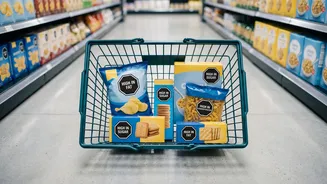
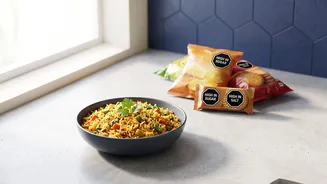
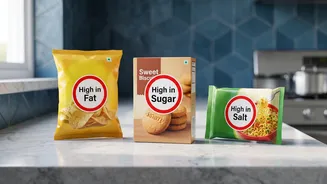
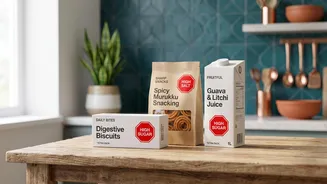
The most significant change coming to Indian food packaging is the mandatory Front-of-Pack Label (FOPL). After directions from the Supreme Court, the Food Safety and Standards Authority of India (FSSAI) is introducing a clear and simple warning system.
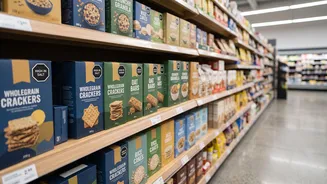
You will soon start seeing a prominent red hexagon on the front of products that are high in unhealthy nutrients. This label is designed to be impossible to miss, helping you quickly identify foods that have high levels of salt, sugar, or saturated fat. The warnings will be explicit, stating “HIGH SUGAR,” “HIGH FAT,” or “HIGH SALT” within the hexagon. This system cuts through confusing marketing claims and gives you an at-a-glance verdict on the product's nutritional profile, a move aimed at helping consumers make healthier choices and tackling the rise of lifestyle diseases.
Don’t Forget to Flip the Pack
While the new front-of-pack warnings are a game-changer, the detailed information on the back of the package remains your best friend for making truly informed choices. The front might tell you what a product is high in, but the back tells you everything else. The FSSAI encourages a five-step check: ingredients, nutritional facts, expiry date, allergen declarations, and the FSSAI license number. Think of the front label as the headline and the back label as the full story. Developing the habit of flipping the pack over is the single most important skill for a smart shopper.
Mastering the Nutrition Table
The nutrition facts table can seem like a lot of numbers, but you only need to focus on a few key areas. First, always use the 'per 100g' or 'per 100ml' column. Ignore the 'per serving' column, as manufacturers can set unrealistically small serving sizes to make a product seem healthier than it is. The 'per 100g' value is the only way to make a fair comparison between two different products. Next, look at total sugars. As a general rule, a product with over 22 grams of sugar per 100g is considered high in sugar, while under 5 grams is low. For salt, check the sodium content. Over 600mg of sodium per 100g (which is about 1.5g of salt) is high. This simple check helps you quantify what the front-of-pack warning means in real terms.
The Ingredient List Tells the Truth
The ingredient list is arguably the most honest part of any food label. Ingredients are always listed in descending order by weight. This means the first three ingredients make up the bulk of the product. If you see sugar (or its many hidden names like corn syrup, dextrose, or maltose), refined flour (maida), or palm oil at the top of the list, you know what you’re really eating, regardless of any 'healthy' or 'natural' claims on the front. A shorter ingredient list with names you can recognise is generally a better sign. This is where you can spot what a product is truly made of, beyond the numbers.
Beyond the Big Three: What Else to Look For
Besides fat, sugar, and salt, pay attention to protein and fibre, which are beneficial nutrients. Higher amounts are generally better. Also, keep an eye out for trans fats. While regulations have reduced their presence, any product listing 'partially hydrogenated oils' in its ingredients deserves a second look and should probably be avoided. Finally, look for the FSSAI license number on the package. This is a simple confirmation that the manufacturer is registered with and accountable to India's food safety authority. The absence of this number is a red flag.