





What Exactly Is El Niño?
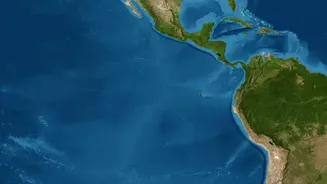
At its core, El Niño is a straightforward concept: it is the unusual warming of the sea surface in the central and eastern parts of the equatorial Pacific Ocean. This is one phase of a larger cycle called the El Niño-Southern Oscillation (ENSO), which
alternates between the warm El Niño, the cooler La Niña, and neutral conditions. Normally, strong trade winds blow from east to west, piling up warm water in the western Pacific near Asia and Australia. During an El Niño, these trade winds weaken, allowing the vast pool of warm water to slosh back eastward towards South America. This change, occurring thousands of kilometres away, sets off a chain reaction in the atmosphere that can alter weather worldwide.
The Connection to India’s Monsoon
The Indian monsoon is a massive sea-breeze system driven by the temperature difference between the land and the ocean. The El Niño phenomenon disrupts this delicate balance. The warming of the eastern Pacific Ocean alters a major atmospheric circulation pattern known as the Walker Circulation. This can weaken the moisture-laden winds that typically blow from the ocean towards the Indian subcontinent. The result is often a suppression of rainfall during the crucial June to September southwest monsoon season. While not every El Niño year results in a drought, there is a strong historical correlation. Since 1950, a significant number of India's drought years have coincided with El Niño events, making it a primary factor in monsoon forecasting.
The Outlook for 2026
Forecasters are closely watching the Pacific, with many agencies predicting the development of a strong El Niño through late 2026. The US National Oceanic and Atmospheric Administration (NOAA) noted a 90 per cent chance of a strong event forming during the Northern Hemisphere winter. In India, the India Meteorological Department (IMD) has already issued a forecast for a below-normal monsoon in 2026, predicting rainfall to be around 90-92% of the Long Period Average (LPA). This is consistent with the anticipated effects of a developing El Niño. Skymet, a private weather agency, has also downgraded its forecast, citing the strengthening El Niño as a major reason and predicting a 70% chance of drought. The current monsoon season has already seen significant deficits, with cumulative rainfall as of early August being 12% below the LPA.
Why Other Factors Matter
It is important to remember that El Niño is not the only variable in the complex equation of the Indian monsoon. Other climate phenomena can either amplify or counteract its effects. One key factor is the Indian Ocean Dipole (IOD), sometimes called the 'Indian Niño'. A 'positive' IOD, characterized by warmer waters in the western Indian Ocean, can help offset the negative impact of an El Niño by steering more moisture towards India. Forecasters have noted that a positive IOD is expected to develop, which could play a crucial role in the monsoon's performance. However, the strength and timing of both the El Niño and IOD will ultimately determine the outcome, creating a complex and closely watched scenario.
The Economic and Agricultural Impact
A weak or erratic monsoon has far-reaching consequences for India. With nearly half the country's workforce employed in agriculture, a rainfall deficit directly threatens crop production, particularly rain-fed kharif crops like rice, cotton, and soybeans. This can lead to lower farm incomes, reduced rural demand, and increased stress on water reservoirs. The economic ripple effects are significant, potentially leading to higher food price inflation and a slowdown in overall economic growth. Historically, some of India's most severe droughts and subsequent economic challenges have occurred in El Niño years, underscoring the high stakes involved in each monsoon forecast.