







A Symphony of Simplicity
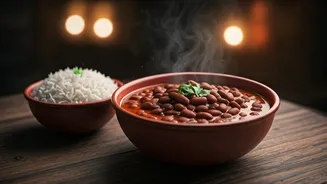
Let’s be honest: rajma chawal is not a dish that screams for attention with exotic ingredients or complex techniques. Its genius lies in its profound simplicity. Plump, tender kidney beans, slow-cooked until they almost melt, swim in a thick, luscious
gravy. This aromatic concoction, rich with ginger, garlic, tomatoes, and a blend of earthy spices, is ladled generously over a mound of fluffy, steaming rice. Each spoonful is a perfect marriage of textures and tastes—the soft beans, the distinct grains of rice, and the robust gravy that brings it all together. It’s a culinary masterpiece born not in a fancy restaurant, but in the heart of the Indian home kitchen. Its beauty isn't in its presentation, but in its soul-satisfying substance.
The Taste of Home
For countless North Indians, the smell of rajma cooking is synonymous with Sunday. It’s the official scent of a day off, of lazy afternoons, family gatherings, and cricket matches on television. The signature whistle of the pressure cooker was the soundtrack to a weekly ritual, a promise of a hearty, fulfilling meal shared with loved ones. This association has cemented rajma chawal’s status as the quintessential taste of home. For students in hostels, professionals living in new cities, and anyone far from their family, a bowl of rajma chawal is a direct line to their childhood. It’s an edible piece of nostalgia, a way to recreate the feeling of being cared for, even when you’re the one standing over the stove.
A Monsoon Masterpiece
While delicious any time of year, rajma chawal ascends to a different plane of existence during the monsoon. As the temperature drops and the world outside turns damp and grey, our bodies instinctively crave warmth, and our hearts seek comfort. This dish delivers on both fronts. The heat from the spices, particularly ginger and garam masala, provides a gentle, warming effect from within. It’s a carb-and-protein powerhouse that feels deeply nourishing, replenishing energy and fighting off the lethargy that often accompanies rainy weather. It's the perfect antidote to the gloom, a bright, flavourful anchor in the middle of a downpour. The act of eating a hot plate of rajma chawal while listening to the rain fall is a simple, profound joy.
The Art of the Accompaniment
True connoisseurs know that the experience is incomplete without the right supporting cast. Rajma chawal is a team player, and its partners are non-negotiable. A dollop of white butter or desi ghee, melting slowly into a golden pool on top of the hot rajma, adds a layer of richness that is pure indulgence. Then there’s the crucial element of crunch and acidity: a side of thinly sliced onions, sometimes soaked in vinegar or sprinkled with lemon juice and salt. This sharp, pungent contrast cuts through the richness of the gravy. A simple kachumber salad (chopped tomato, cucumber, onion) or a bowl of plain, cool dahi can also join the plate, providing freshness and balance. These aren't just side dishes; they are essential components of a sacred food ritual.
A Legacy in a Pressure Cooker
Beyond the ingredients and flavours, rajma chawal carries the weight of memory and tradition. Every family has their own version, a subtle twist that makes it uniquely theirs. Perhaps it’s a pinch of anardana (dried pomegranate seeds) for a tangy kick, or a whole black cardamom added for a smoky depth. These aren't just recipes; they are culinary heirlooms passed down through generations, often unwritten but perfectly memorised. The dish connects us to our mothers and grandmothers, to the kitchens we grew up in. Making it is an act of love; eating it is an act of remembrance. It’s a reminder that the most comforting things in life are often the simplest, steeped in history and shared experience.