





Understanding the CAPSTONE Pathfinder
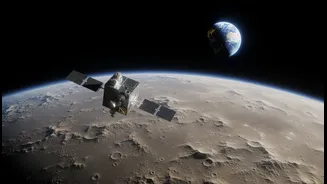
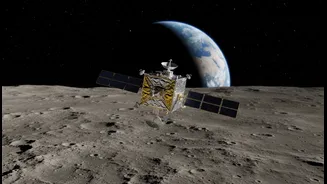
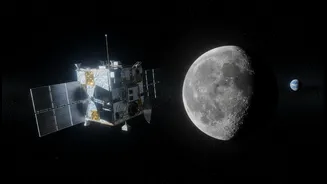
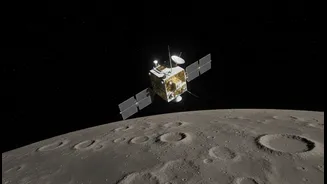
The Cislunar Autonomous Positioning System Technology Operations and Navigation Experiment, or CAPSTONE, is a small but mighty spacecraft that has played a crucial role in NASA's Artemis program. Launched in 2022, this microwave-oven-sized satellite was
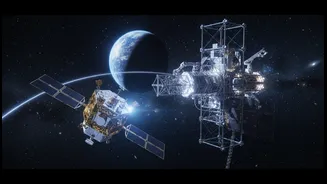
the first to fly in a unique, efficient orbit around the Moon called a near-rectilinear halo orbit (NRHO). Its primary mission was to test the stability and navigation requirements of this orbit, providing pathfinding data for the future Lunar Gateway space station. While NASA concluded its activities with the mission in July 2026, CAPSTONE achieved its objectives, demonstrating new autonomous navigation technologies and reducing risks for future lunar missions. Its success provides a blueprint for operating in deep space.
Analyze Publicly Available Mission Data
One of the most direct ways to engage with lunar exploration is by working with the data it produces. NASA makes vast archives of information from missions like the Lunar Reconnaissance Orbiter (LRO) and CAPSTONE available to the public. Portals like the Planetary Data System (PDS) and the Space Science Data Coordinated Archive offer a treasure trove for curious engineers, programmers, and data scientists. You can use this data for personal projects, such as creating trajectory visualizations, analyzing orbital decay, or developing models of the lunar environment. For those with programming skills, using open-source tools like NASA's General Mission Analysis Tool (GMAT) allows you to simulate missions and validate orbital mechanics, turning professional-grade data into a hands-on learning experience.
Join Citizen Science Lunar Projects
If you want to contribute to active research, NASA’s citizen science projects are an excellent starting point. These initiatives allow volunteers to collaborate directly with scientists on meaningful tasks. For example, projects have asked the public to help map the Moon's surface by identifying craters and outlining ancient molten flows using images from the LRO. Others involve observing and recording meteoroid impact flashes on the lunar surface. These contributions, often facilitated through platforms like Zooniverse, help scientists process enormous datasets more quickly than they could alone. It’s a tangible way to apply a keen eye and analytical mindset to advance our understanding of the Moon without needing a PhD.
The Frontier of Amateur Radio Tracking
Amateur radio operators, or "hams," have a long history of supporting space missions, and the new lunar age presents fresh challenges. While tracking a distant object like CAPSTONE is difficult for most, the Artemis missions have included opportunities for experienced volunteers to passively track the Orion spacecraft. Organizations like AMSAT (Radio Amateur Satellite Corporation) provide resources and community for those interested in satellite communications. For engineers, this hobby provides practical experience with RF systems, signal processing, and orbital mechanics. As more satellites head toward the Moon, the need for a robust network of ground observers—even amateur ones—to supplement official tracking from networks like the DSN will only grow.
Develop In-Demand Engineering Skills
For students and professionals looking to work in the space industry, supporting future missions means building the right skills today. The complexity of lunar operations requires expertise beyond traditional aerospace engineering. There is a high demand for software proficiency, particularly in languages like Python and C++ for embedded systems and autonomous operations. Other critical areas include AI and machine learning for data analysis and navigation, robotics for surface operations, and systems engineering for integrating complex hardware. Focusing your professional development on these future-facing competencies is perhaps the most powerful way to contribute to—and eventually lead—the next generation of lunar spacecraft operations.