


The Sun’s Destructive Bursts
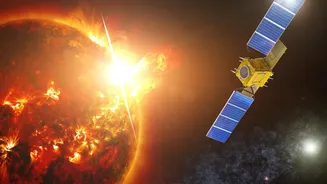
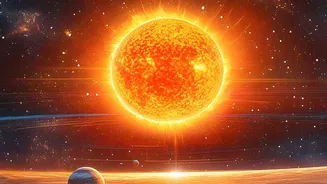
The Sun, our life-giving star, has a volatile side. It periodically releases enormous bursts of energy and matter known as solar storms. These events most often take the form of solar flares, which are intense flashes of radiation, or coronal mass ejections
(CMEs), which are massive clouds of magnetised plasma hurled into space at incredible speeds. While Earth's magnetic field shields us from most of this onslaught, a sufficiently powerful and Earth-directed storm can have significant consequences for our technology-dependent society. The most famous example, the 1859 Carrington Event, fried telegraph systems across the globe. A storm of similar magnitude today could have a catastrophic impact on the global economy.
Our Digital Achilles' Heel
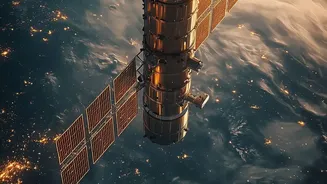
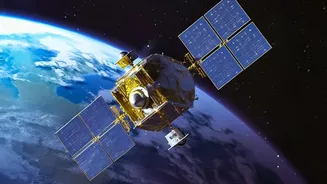
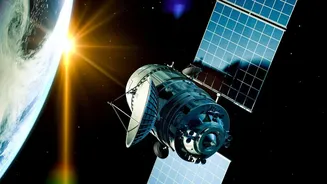
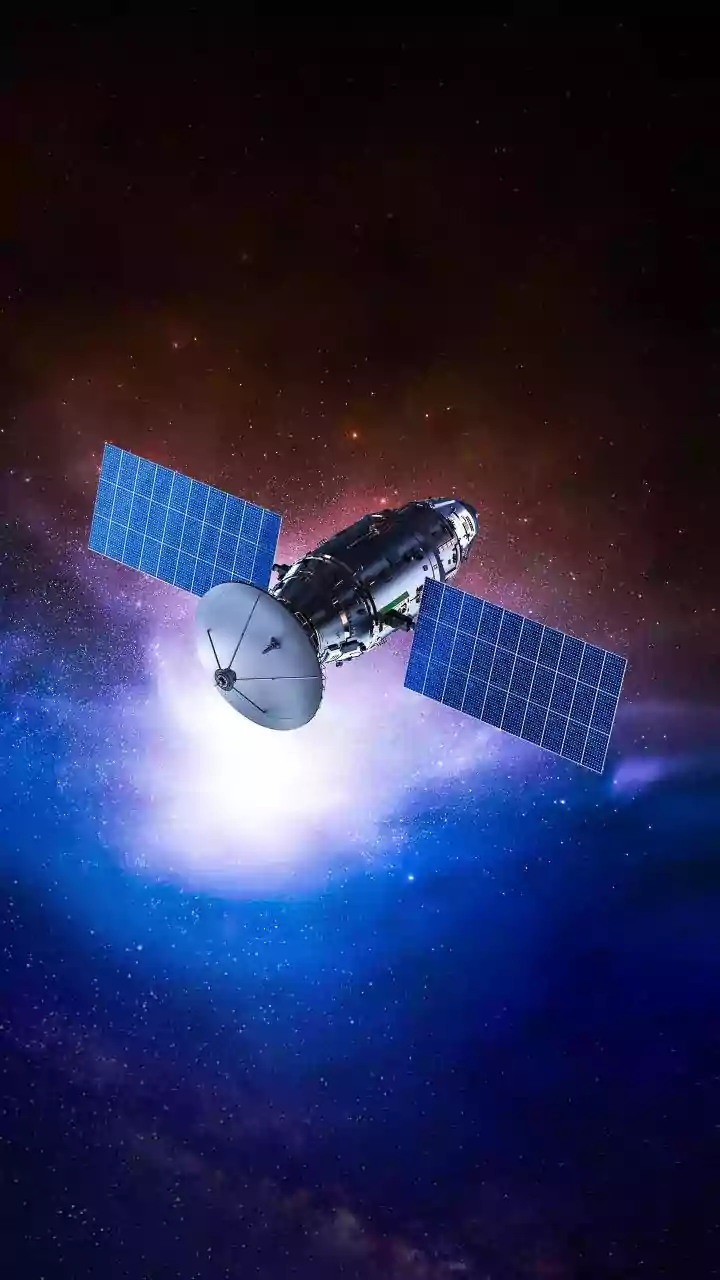
Satellites are particularly vulnerable because they operate outside the full protection of the atmosphere and magnetic field. High-energy particles from a solar storm can damage sensitive electronics, causing everything from minor glitches and phantom commands to complete system failure. Radiation can also degrade solar panels, shortening a satellite's operational lifespan. Furthermore, intense solar activity heats and expands Earth’s upper atmosphere, increasing the atmospheric drag on satellites in low-Earth orbit (LEO). This drag can cause satellites to lose altitude, potentially leading to premature re-entry or even collisions. On the ground, geomagnetic storms can induce powerful currents in long electrical conductors, threatening to overload power grids and cause widespread blackouts, as seen in Quebec in 1989. GPS signals, crucial for aviation and logistics, can also be disrupted or rendered inaccurate.
The Global Sentinel Network
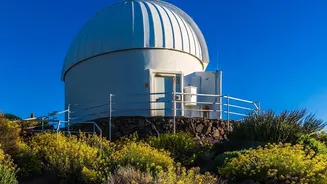
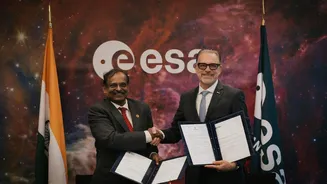
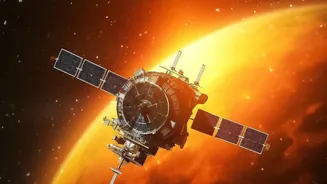
To counter this cosmic threat, a global network of space and ground-based observatories keeps a constant watch on the Sun. Leading this effort are organisations like the US National Oceanic and Atmospheric Administration (NOAA) and the European Space Agency (ESA). Satellites such as NOAA's GOES series continuously monitor the Sun for flares, while observatories positioned at a unique gravitational balance point nearly a million miles from Earth, like the recently operational SOLAR-1, act as an early-warning system. These spacecraft monitor the solar wind, the stream of charged particles constantly flowing from the Sun, and can detect an Earth-bound CME, providing crucial lead time—from hours to days—before it arrives. This data is fed to forecasting centers like NOAA’s Space Weather Prediction Center (SWPC), which issues watches and warnings much like a terrestrial weather service.
From Prediction to Protection
An early warning is the key to mitigation. When a significant solar storm is forecast, satellite operators can take defensive measures. This often involves placing their spacecraft into a protective 'safe mode', shutting down non-essential systems to minimize the risk of electrical damage. Airlines can reroute flights, especially those over polar regions where the effects are strongest, to avoid communication blackouts and heightened radiation exposure for passengers and crew. Similarly, power grid operators can prepare their systems to better absorb the effects of induced geomagnetic currents, preventing instability and potential blackouts. These protective actions, enabled by sophisticated forecasting, help shield the critical infrastructure that underpins our modern economy and daily life from the Sun's fury.