


The Sun's Violent Eruptions
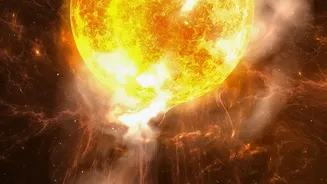
A solar storm is a major disturbance on the sun, usually in the form of a solar flare or a coronal mass ejection (CME). A solar flare is a tremendous explosion on the sun's surface, releasing a burst of radiation. A CME is even more formidable: it's a giant
cloud of electrified gas and magnetic plasma hurled from the sun into space at incredible speeds. While many CMEs miss Earth entirely, those aimed in our direction pose a direct threat to our planet's technological infrastructure.
Earth's Invisible Shield
Fortunately, Earth isn't defenceless. Our planet is surrounded by a vast magnetic field called the magnetosphere, generated by the motion of molten iron in its core. This field acts like a protective bubble, deflecting the constant stream of charged particles from the sun, known as the solar wind. Without this shield, the solar wind would strip away our atmosphere, making life impossible. The magnetosphere repels most of this energy, keeping our planet safe from the sun's regular outbursts.
When the Shield Is Overwhelmed
A particularly powerful CME can be too much for the magnetosphere to handle. When a massive, fast-moving cloud of solar plasma slams into Earth's magnetic field, it compresses and distorts it, triggering a 'geomagnetic storm'. This intense interaction allows energetic particles to leak through the shield and interact with our upper atmosphere. While this can create beautiful auroras seen at lower latitudes than usual, it also induces powerful electrical currents in the ground and atmosphere. It is these geomagnetically induced currents (GICs) that pose the real danger to our technology.
Blackouts and The Power Grid
The most significant terrestrial risk from a major solar storm is to our electrical grids. Long-distance power transmission lines act as giant antennas, picking up the induced currents from the geomagnetic storm. These currents can flow into electrical transformers, causing them to overload, overheat, and even burn out. This can lead to a cascading failure across the grid. In March 1989, a severe geomagnetic storm did just that, collapsing the Hydro-Québec power grid in Canada in under two minutes and leaving six million people without power for nine hours in the cold.
Satellites, GPS, and Communications at Risk
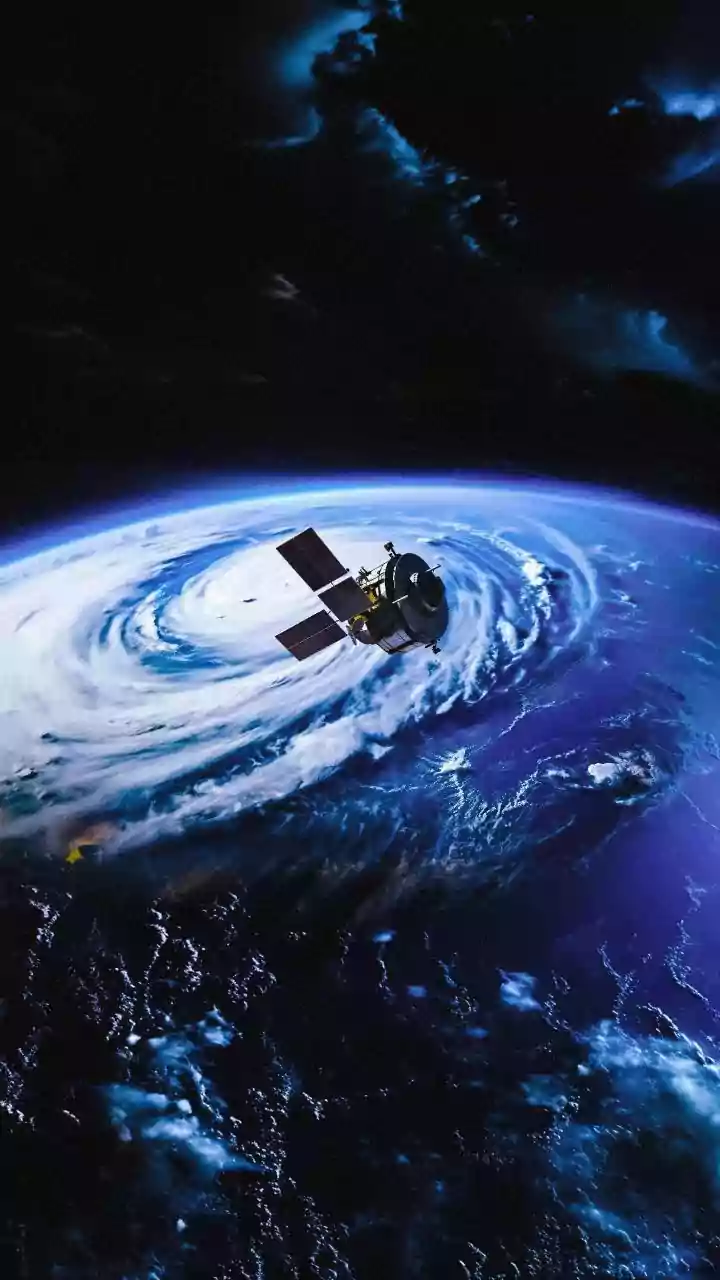
The technology operating in space is even more vulnerable. Satellites orbiting outside the densest parts of Earth's atmosphere are directly exposed to harmful solar radiation. These charged particles can damage solar panels, disrupt electronics with 'phantom commands', and degrade systems. A storm can also heat and expand the upper atmosphere, increasing drag on low-orbiting satellites and causing them to fall out of orbit. This directly threatens the services we rely on daily, including GPS navigation, satellite television, and long-distance communications, which can be disrupted or knocked out entirely.
A Warning from History
The largest solar storm on record is the Carrington Event of 1859. This superstorm was so powerful it caused telegraph systems across Europe and North America to fail, throwing sparks and even catching fire. Some telegraph operators were able to send messages with their batteries disconnected, powered only by the storm's induced current. While a novelty then, an event of that magnitude today would be catastrophic. It would threaten to cause widespread, long-lasting blackouts and disable the satellite and communication networks that form the backbone of modern global society.