





The Problem with Every Exhale
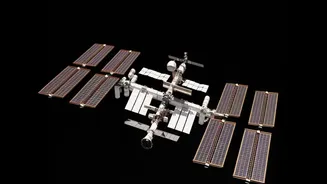
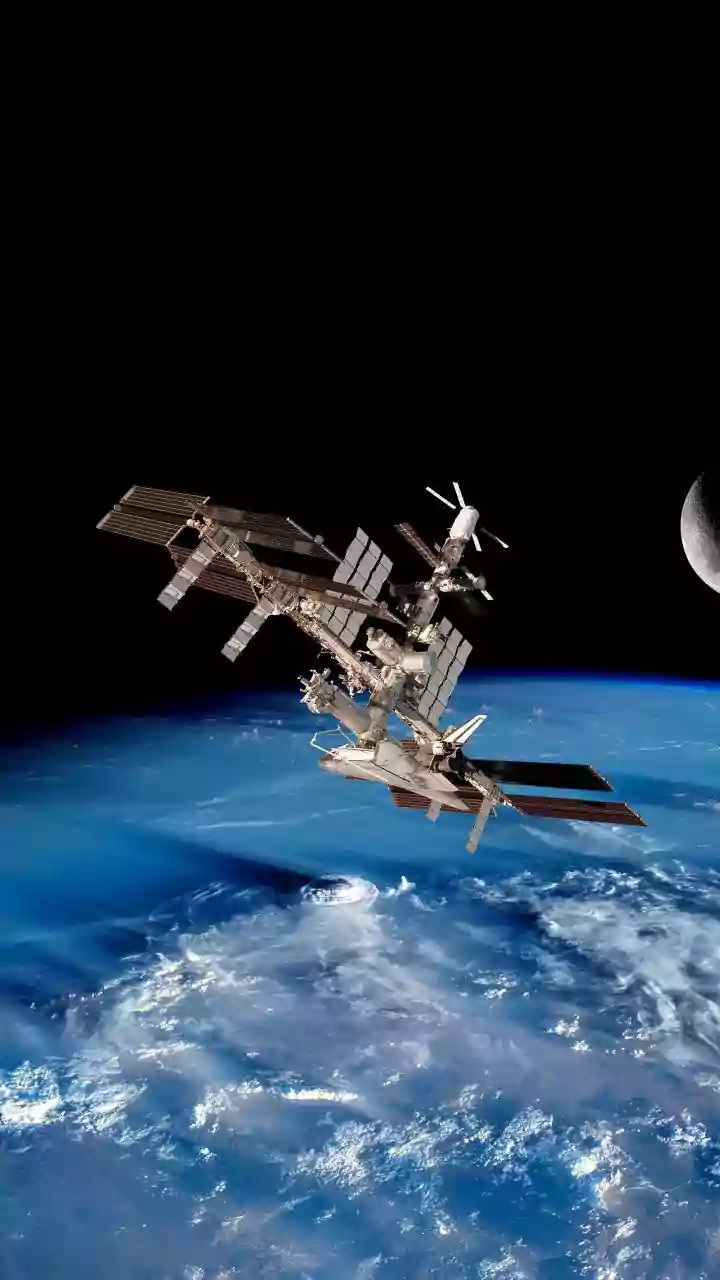
On the International Space Station (ISS), you can’t just crack a window for some fresh air. It’s a completely closed environment, which means everything that’s put into the air stays there. The most immediate problem is the carbon dioxide (CO2) astronauts
exhale. Without constant removal, CO2 levels would quickly rise to toxic concentrations, leading to cognitive impairment and eventually suffocation. Beyond CO2, there are hundreds of other airborne threats. These trace contaminants are released from the crew’s metabolic processes, the off-gassing of electronic equipment and plastics, and even from scientific experiments. This chemical cocktail, if left unchecked, would make the station’s atmosphere unbreathable and dangerous. Therefore, a sophisticated, multi-layered air revitalization system is not just a convenience; it’s one of the most critical pieces of technology keeping the crew safe on long missions.
Scrubbing CO2 with Regenerative Tech
The primary workhorse for CO2 removal on the U.S. segment of the ISS is the Carbon Dioxide Removal Assembly, or CDRA. This system is a far cry from the single-use lithium hydroxide canisters used on early Apollo missions. The CDRA is a regenerative system, meaning it can be used over and over again. It works by drawing cabin air through beds of tiny, porous crystals called zeolites. These materials act like a molecular sieve; one type of zeolite bed absorbs water vapor from the air, and a second type traps the CO2 molecules from the now-dry air. The system operates in a clever cycle: while one half of the CDRA is actively scrubbing the air, the other half is regenerating. The saturated zeolite beds are exposed to the vacuum of space and heated, which releases the trapped CO2 and water. The CO2 is vented away, while the water vapor is captured for potential recycling. This continuous, dual-bed process ensures the station’s atmosphere remains safe for the crew.
Filtering the Invisible Contaminants
While CO2 is the most abundant contaminant, it’s far from the only one. The Trace Contaminant Control System (TCCS) is another vital component of the ISS life support system, designed to handle the hundreds of other volatile organic compounds (VOCs) that can build up. These can range from ammonia to methane. The TCCS works by first passing air through activated charcoal filters, which physically trap many of these compounds. For the more stubborn chemicals that get through, the air is sent to a high-temperature catalytic oxidizer. This unit essentially incinerates the remaining contaminants at around 450 degrees Celsius, breaking them down into harmless substances like CO2 and water. The effectiveness of this system was highlighted during a 2024 incident when a toxic smell was detected after a resupply craft docked; the TCCS played a crucial role in ensuring the air quality remained safe for the crew.
From Waste Gas to Precious Water
Simply venting CO2 into space is wasteful, as it contains precious oxygen atoms. This is where another key innovation, the Sabatier system, comes into play. This remarkable device helps close the loop on the station's resource cycle. It takes the waste CO2 collected by the CDRA and combines it with waste hydrogen, a byproduct from the station's oxygen generation system. Through a chemical reaction over a catalyst, it produces two vital outputs: water and methane. The water is then purified and can be used for drinking or fed back into the oxygen generator to be split into breathable oxygen and more hydrogen. The methane is currently vented into space, but this process recovers a significant amount of water that would otherwise be lost, dramatically reducing the amount of water that needs to be launched from Earth.
Bringing Space Innovation Down to Earth
The relentless need for reliable, efficient life support in space has driven innovations with significant benefits back on Earth. The technology developed to scrub ethylene gas—a compound released by plants that causes them to ripen and decay—for space-based greenhouses is now used commercially in air purifiers. These devices are used in hospitals, grocery stores to keep produce fresh longer, and even by winemakers to prevent mold. The research into photocatalysis, a process used to break down contaminants, has also found its way into terrestrial air and water purification systems. As NASA plans for future long-duration missions to the Moon and Mars, where resupply is not an option, the pressure to create even more efficient, fully closed-loop life support systems will only intensify. These technologies, born from the necessity of surviving in the harshest environment imaginable, will continue to improve life for everyone on our home planet.