

The Monsoon's Allure and Peril
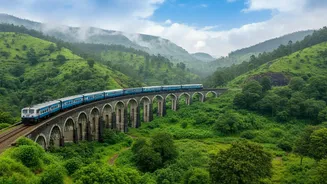
When the monsoon arrives, the Western Ghats transform into a breathtaking spectacle of vibrant green carpets, misty mountains, and gushing waterfalls. This annual metamorphosis attracts thousands of adventure seekers to popular trails in states like Maharashtra,
Karnataka, and Kerala. However, the same rains that bring the landscape to life also introduce significant dangers. Paths become extremely slippery, visibility can drop to near zero in minutes due to dense fog, and seemingly small streams can swell into raging, uncrossable torrents. Flash floods, landslides, and simply getting lost on poorly marked trails are real and present dangers that have led to numerous accidents and rescues over the years. A trekker can get separated from their group and find themselves alone in a dense forest with no mobile signal, turning a day trip into a fight for survival.
Your Digital Compass in the Wild
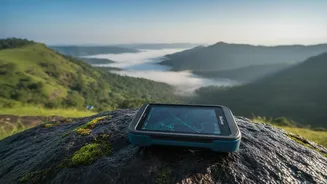
This is where Global Positioning System (GPS) technology steps in as a critical safety tool. At its core, GPS is a satellite-based navigation system that provides your precise location—latitude, longitude, and altitude—anywhere on Earth, independent of mobile phone signals. For trekkers, this means having a reliable way to know exactly where you are, even deep within a forest or high on a remote peak where network bars are a distant memory. While many smartphones come equipped with GPS, dedicated handheld GPS devices and advanced trekking watches offer superior battery life, durability, and accuracy, making them a preferred choice for serious adventurers. These devices don't just show your location; they can host detailed maps that guide you through the wilderness.
Key Features That Save Lives
The true power of GPS lies in its specific features that directly counter the risks of monsoon trekking. The most vital is the ability to use offline maps. Apps like AllTrails, Gaia GPS, and Maps.me allow you to download detailed topographical maps of your route before you leave home. This means even with no internet, you can see the trail, your position on it, and key landmarks. Another life-saving feature is the 'breadcrumb' trail or trackback function. As you walk, the GPS device records your path. If you get disoriented by fog or a confusing trail fork, you can simply follow this digital breadcrumb trail back to your starting point. You can also pre-load a GPX file—a digital map of a specific trail—which acts as a virtual guide, showing you every turn. In a worst-case scenario, some advanced GPS communicators have an SOS button that can send your exact coordinates to emergency services via satellite, a feature that can reduce rescue times dramatically.
Best Practices for GPS Use
Owning a GPS device is not enough; using it correctly is what ensures safety. Before any trek, always download the necessary offline maps for your entire route. Fully charge your device and carry a fully charged power bank, as cold weather and continuous GPS usage can drain batteries faster than expected. It’s also wise to familiarise yourself with the device's functions before you find yourself in a stressful situation on the trail. Plan your route, mark key waypoints like water sources or tricky junctions, and most importantly, share your itinerary and a live tracking link, if available, with someone back home. This creates a crucial safety line if you fail to return on time.
A Tool, Not a Replacement for Judgment
While GPS is an invaluable asset, experts caution that it should never be your only navigation tool. Batteries can die, and electronic devices can fail if dropped or exposed to heavy rain. Therefore, it's essential to also carry a physical map and a compass as a reliable backup and know how to use them. Technology is not a substitute for common sense. Always check weather forecasts, assess the trail difficulty, wear appropriate footwear with good grip, and never underestimate the power of the monsoon. If a trail is known to be dangerous during heavy rains, or if local authorities have issued warnings, no amount of technology can make it safe. The smartest decision is often to choose a safer trail or postpone the trek.