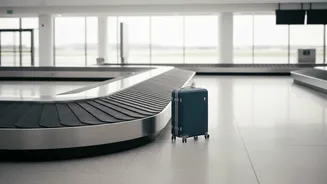







A Landmark Ruling for Passengers
In a decision that strengthens the hand of Indian travellers, a District Consumer Commission recently ordered a private airline to pay significant compensation to a passenger whose luggage was delayed by three days. The court found the airline guilty
of a "deficiency in service" for not only delaying the bag but also for failing to provide the legally mandated compensation. The ruling directed the airline to reimburse the passenger for the exact amount spent on essential clothing, plus pay additional compensation under aviation guidelines and for the service failure itself. This case underscores a critical point: airlines are liable not just for the delay, but for the reasonable costs you incur because of it.
Understanding Your Rights: What the Rules Say
Passenger rights in India are protected by regulations from the Directorate General of Civil Aviation (DGCA) and the Carriage by Air Act, 1972. For domestic flights, an airline's liability for delayed, lost, or damaged baggage can be up to ₹20,000 per passenger. For international flights, the compensation is guided by the Montreal Convention and can be as high as 1,288 Special Drawing Rights (SDR), which translates to approximately ₹1.5 lakh. A bag is considered officially "delayed" until it has been missing for 21 days, after which it is declared "lost". The key takeaway is that during this delay period, airlines are obligated to reimburse you for reasonable emergency expenses.
The Golden Rule: Keep Every Single Receipt
The recent court ruling was successful because the passenger had documentary evidence of his spending. This is where keeping receipts becomes a non-negotiable travel habit. Airlines and consumer courts need proof to process a claim for reimbursement. Without receipts, your claim is just your word against theirs. Airlines will reimburse for “reasonable and necessary” items. This includes essentials you need to continue your trip while your bag is missing. Think of it as a survival kit: toiletries, basic undergarments and clothing, a phone charger, and any urgent prescription medication you had to replace. Luxury purchases or a full wardrobe replacement are almost always rejected. A pro-tip is to photograph each receipt immediately, as thermal paper can fade quickly.
Your Action Plan at the Airport
The moment you realise your bag hasn't arrived, your first and most crucial step is to file a Property Irregularity Report (PIR) before leaving the baggage reclaim area. This report, filed at the airline’s baggage service desk, is the official acknowledgement of your issue. Without a PIR, an airline can legally reject your claim. When filing the report, make sure you get a copy with a reference number for tracking. Keep this document as safe as you would your passport, along with your boarding pass and the original baggage tags that were stuck to it.
Filing Your Claim for Reimbursement
Once your bag is returned, you typically have 21 days to submit a formal written claim for the expenses you incurred during the delay. Your claim should be sent to the airline’s customer relations department and include copies of the PIR, your boarding pass, baggage tags, and, most importantly, all the receipts for your emergency purchases. Be prepared for some back and forth. Airlines may initially offer a settlement that is lower than your documented expenses. Stand firm and refer to your documented proof. If the airline refuses to provide fair compensation, you can escalate the complaint through the government's AirSewa portal or, as the recent case shows, a consumer disputes forum.