



The Atmosphere's Blind Spot
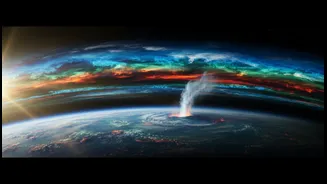
Scientists have a reasonably good handle on the troposphere, the atmospheric layer we live and breathe in. But higher up, in the stratosphere, mesosphere, and beyond, our understanding gets hazy. These regions are too high for weather balloons and most
aircraft, yet too low for satellites to orbit without being dragged down. This makes direct, consistent measurement difficult. As a result, our computer models of these layers—crucial for understanding long-term climate, ozone layer health, and satellite operations—are built on a foundation of limited data. This lack of information is a primary source of uncertainty in climate projections.
Nature's Unplanned Laboratory
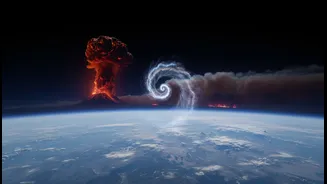
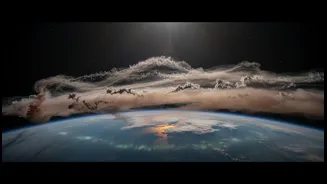
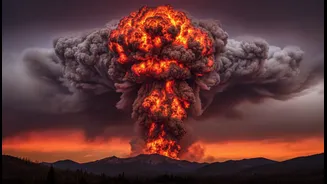
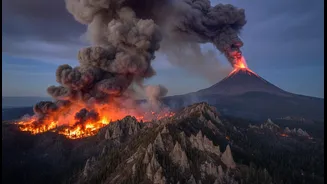
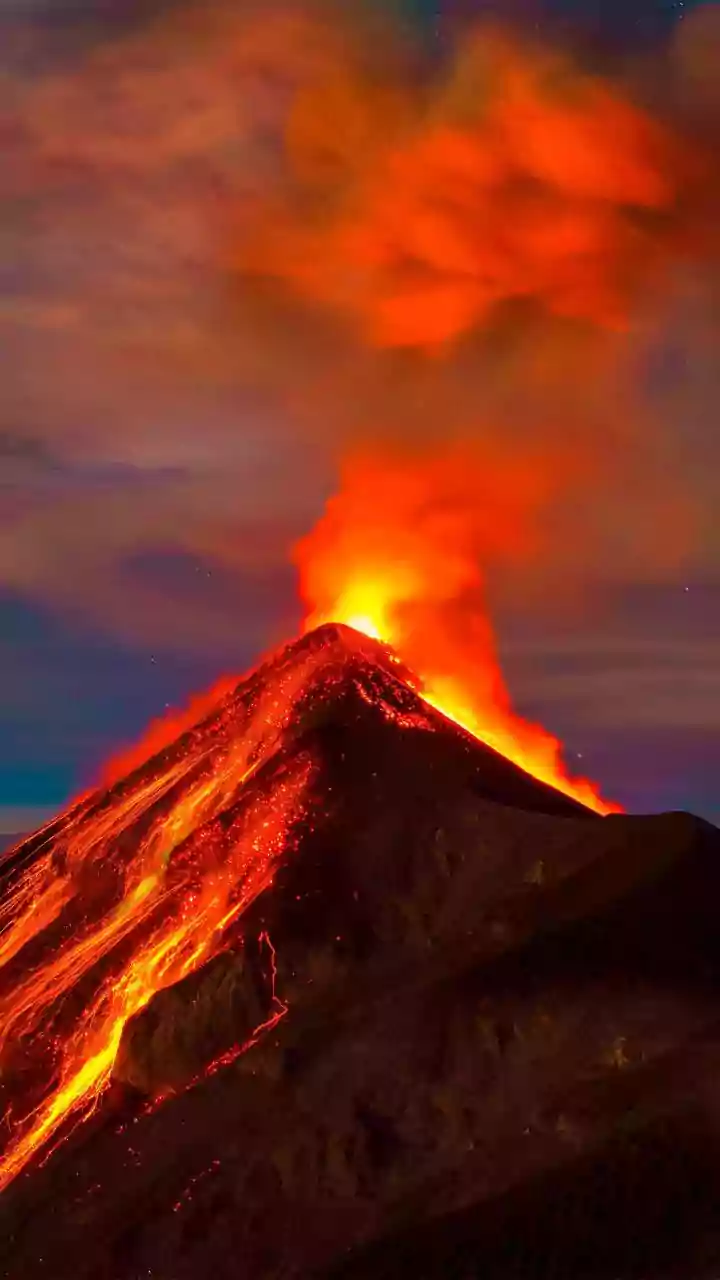
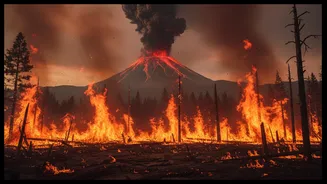
This is where volcanoes and mega-wildfires come in. When a massive event occurs, it injects a huge, trackable plume of material—sulfur dioxide, water vapor, smoke, and ash—high into the stratosphere and sometimes even the mesosphere. These plumes act like a dye dropped into a river. For months, satellites can track these materials as they travel around the globe, providing invaluable data on high-altitude winds and chemical reactions. Events like the 2019-2020 Australian wildfires and the 1991 eruption of Mount Pinatubo provided scientists with crucial test cases, allowing them to see how the atmosphere responds to a massive, sudden shock.
The Tongan Shockwave: A Case Study
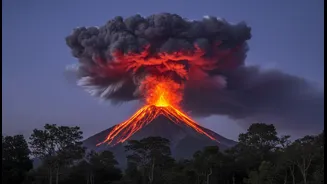
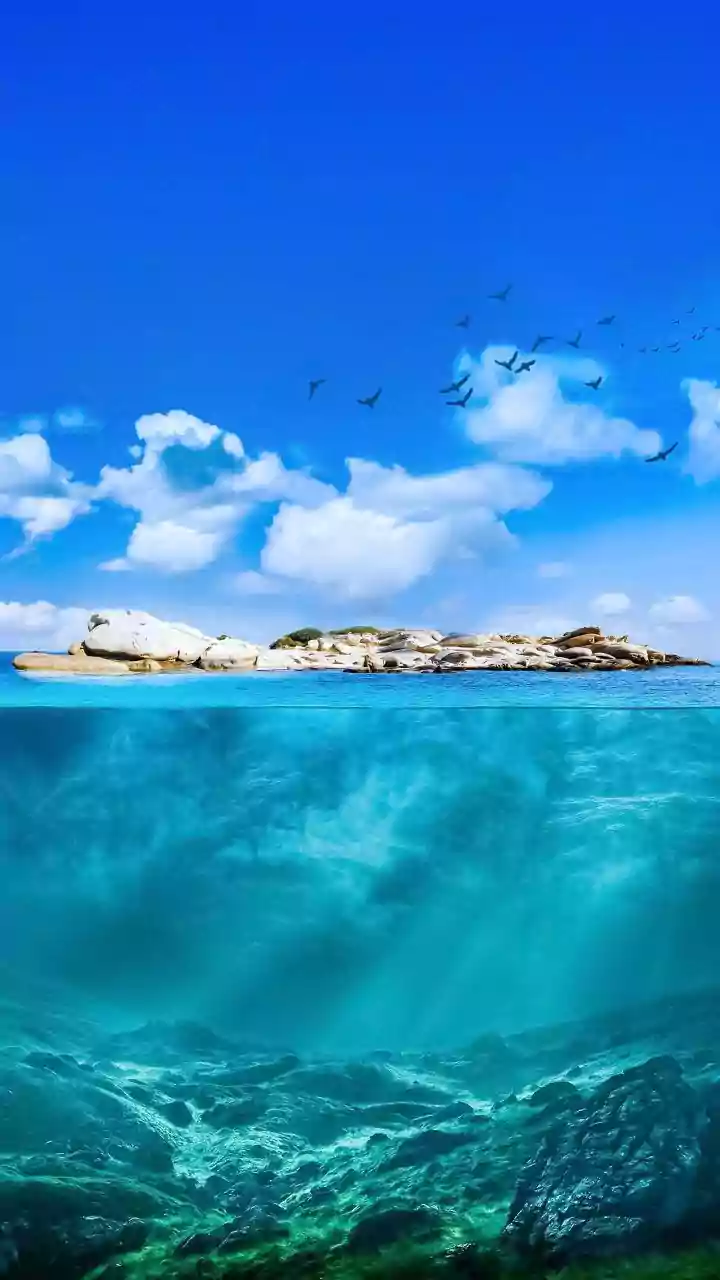
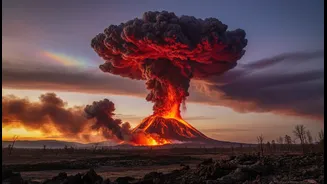
The eruption of the Hunga Tonga-Hunga Ha'apai underwater volcano in January 2022 was a game-changer. It was the largest underwater explosion ever recorded and blasted a plume to a record height of 58 kilometers, well into the mesosphere. Unlike most volcanoes that inject sunlight-reflecting sulfate aerosols, Hunga Tonga’s unique underwater location meant it shot an unprecedented amount of water vapor—an estimated 150 metric megatons—into the normally dry stratosphere. This single event increased the stratosphere's total water vapor content by about 10%, providing a completely new kind of atmospheric perturbation for scientists to study.
A Dose of Healthy Uncertainty
So, does this data lead to more certainty? Yes, but not in the way one might think. Instead of simply confirming existing models, these events often reveal their weaknesses. For example, the sheer amount of water from Hunga Tonga and the specific heating effects of Australian wildfire smoke challenged existing assumptions. When a model fails to predict the observed reality, scientists are forced to find out why, leading them to refine the physics and chemistry within the model. This process doesn't create overstated certainty; it replaces simplified assumptions with a more complex, nuanced, and ultimately more accurate understanding. It’s a crucial reality check that makes future projections more reliable by exposing what we don't yet know.
From Smoke Signals to Better Forecasts
The insights gained from these natural experiments are invaluable. They have demonstrated that wildfire smoke can have a warming effect on the stratosphere, unlike the cooling effect of many volcanic eruptions. The Hunga Tonga eruption showed how a massive injection of water vapor can lead to stratospheric cooling and impact ozone chemistry in unexpected ways. This knowledge is critical for separating natural climate variability from human-caused changes. By understanding the powerful, short-term impacts of these events, scientists can better isolate the long-term signals of climate change. Furthermore, these events help inform the design of future satellite missions, ensuring we have the right tools to monitor these hard-to-reach layers of our atmosphere continuously, not just in the chaotic aftermath of a disaster.