








Understanding the Monsoon Mustiness
That distinct 'rainy season' smell isn't just in your head. It’s the result of science at work in your home. The high humidity in the air prevents moisture from evaporating quickly. This dampness creates the perfect breeding ground for mould and mildew
on walls, in cupboards, and within fabric fibres. These fungi release spores that produce that tell-tale musty odour. Poor ventilation, a common issue when windows are shut against the rain, traps this humid air indoors, making the problem worse. So, the goal isn't just to mask the smell, but to tackle the moisture and mould at its source.
Your Pantry's Cleaning Crew
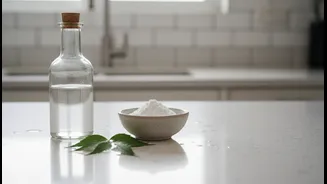
The good news is that you don't need a cabinet full of expensive, strong-smelling chemicals. Your kitchen holds a team of natural, powerful cleaners. White vinegar's acetic acid makes it a fantastic natural disinfectant that kills mould and neutralises odours. Baking soda is a gentle abrasive and an amazing deodoriser, perfect for scrubbing surfaces and absorbing moisture. Lemon juice, with its citric acid, cuts through grime and leaves a fresh scent. And don't forget traditional Indian powerhouses like neem, whose antifungal and insect-repelling properties are invaluable during the monsoon.
DIY All-Purpose Surface Cleaner
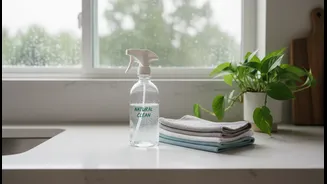
Creating your own effective, all-purpose cleaner is simple. Mix equal parts white vinegar and water in a spray bottle. For extra cleaning power and a pleasant scent, you can add a few drops of an essential oil like eucalyptus, tea tree, or lemon. This solution is perfect for wiping down countertops (avoiding natural stone like marble), shelves, and the inside of cupboards to prevent fungal growth. Letting the spray sit on a surface for a few minutes before wiping gives the vinegar time to work its magic on germs. For a floor mopping solution, add a cup of this vinegar mix or water boiled with neem leaves to your bucket.
Tackling Fabrics and Wardrobes
Keeping clothes and linens from smelling musty is a major monsoon challenge. First, ensure clothes are completely dry before storing them; even slight dampness can cause mildew. If you can't dry clothes in the sun, use a fan to improve air circulation indoors. To absorb dampness inside wardrobes, place an open box of baking soda, a few pieces of charcoal, or camphor balls in the corners. Keeping wardrobe doors slightly ajar periodically also helps with ventilation. For clothes that already have a musty smell, adding half a cup of vinegar or baking soda to your wash cycle can neutralise the odour.
Natural Ways to Freshen the Air
Beyond cleaning, you can actively freshen the home. Instead of synthetic air fresheners, which can be overpowering, try natural alternatives. Placing bowls of coffee grounds or baking soda in rooms can help absorb lingering smells. Burning camphor or diffusing essential oils like lavender and lemongrass not only adds a pleasant fragrance but also has antimicrobial properties. A traditional method is to simmer a pot of water with orange peels, cinnamon sticks, and cloves; this will fill your home with a warm, inviting aroma.