





Embrace the Philosophy, Not Just the Numbers
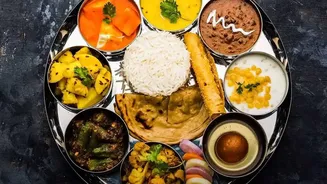
A traditional Sadhya is a masterpiece of balance. It's not about the sheer number of dishes, but the harmony of flavours—sweet, salty, sour, bitter, pungent, and astringent. The feast, which means 'banquet' in Malayalam, is a symbol of abundance and prosperity,
prepared to honour the return of King Mahabali. For a smaller gathering, the goal isn't to replicate a 26-dish spread but to capture its essence. By focusing on a curated selection that covers all the essential tastes and textures, you can create a meal that is both authentic and manageable.
Crafting the Core Menu: The Magnificent Seven
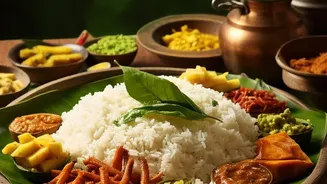
Instead of feeling pressured to make everything, focus on a core group of dishes that represent the entire Sadhya experience. A good starting point is a 'magnificent seven' framework: one main gravy, one key side dish, one dry vegetable dish, one sour element, one form of pickle, essential crunch, and a delicious dessert. For instance, a menu of Sambar, Avial, a simple Thoran, Kichadi or Pachadi, Puli Inji, Pappadam with banana chips, and a Payasam provides a complete and satisfying journey through the flavours of Onam without requiring days of preparation. This strategy ensures variety and balance on the banana leaf.
Must-Haves: The Anchors of Your Feast
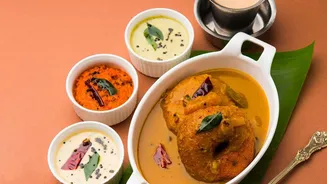
Certain dishes are considered indispensable anchors of the Sadhya. Avial, a thick mix of vegetables in a coconut and yogurt base, is often seen as the star. It’s a dish that symbolizes unity by bringing many vegetables together. Likewise, a good Sambar or Parippu curry is essential to be eaten with the foundation of the meal: fluffy red Matta rice. For the all-important tangy and sweet notes, Puli Inji, a ginger-tamarind chutney, is non-negotiable for many, as it helps tie all the other flavours together. And of course, no Sadhya is complete without crispy Pappadam and at least one type of Payasam to finish the meal on a sweet note.
Smart Prep and Planning
The secret to a stress-free Sadhya is planning. Many tasks can be completed in the days leading up to the feast. Pickles and chutneys like Puli Inji can be made a few days ahead, as their flavours often improve with time. Chopping vegetables for dishes like Avial and Sambar can be done the day before and stored in the refrigerator. Grating coconut, a key ingredient in most dishes, can also be done in advance. On the day of Onam, focus on cooking the fresh dishes like Thoran, and the main curries. You can also make a bulk tempering of mustard seeds, curry leaves, and red chillies in coconut oil to add to multiple dishes, saving time.
The Art of Serving: Tradition Matters
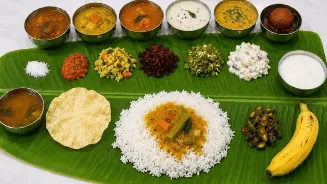
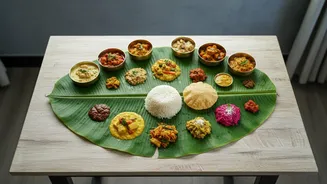
Even with fewer dishes, the traditional presentation is key to the Sadhya experience. The meal is always served on a banana leaf, which is believed to add its own subtle flavour. There is a specific order and placement for each item. The top half of the leaf is for the side dishes and accompaniments, with pickles placed on the far left. Rice is served on the lower half, onto which the main curries are poured. Following this ritual, even in a simplified form, honours the tradition and enhances the festive feeling, making your smaller gathering feel just as grand and special.