





The Problem with Overcrowding
The traditional towel bar seems like a straightforward solution, but in a busy household, it quickly becomes a source of clutter. When multiple towels are draped over a single bar, they overlap, trapping moisture within the folds. This lack of air circulation
is the primary reason towels remain damp hours after use, creating an ideal environment for mildew and unpleasant odours to develop. A towel bunched up on a hook can have the same problem if not hung properly. The core issue is insufficient surface area exposed to the air. For a towel to dry efficiently, it needs space to breathe, something a crowded bar or a single, overloaded hook simply cannot provide.
Why Hooks Offer a Better System
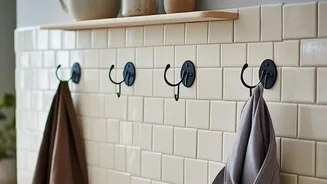
Drying hooks offer a different approach by providing a dedicated spot for each towel. This simple change from a shared bar to individual hooks encourages better habits, especially in family bathrooms. When each person has their own hook, towels are less likely to end up on the floor. While a single towel spread flat on a bar will dry the fastest, a series of hooks is often a more practical solution for households with limited wall space. The key is to hang the towel so it can hang as freely as possible, which is more effective than being folded and layered on a bar. This approach is not only hygienic but also visually tidier, replacing a jumble of fabric with a neat, orderly row.
Choosing the Right Hooks
The market offers a wide variety of hooks to suit any bathroom style and need. For durability in a humid environment, materials like stainless steel and brass are excellent choices due to their resistance to rust and corrosion. Zinc alloy and aluminum are more budget-friendly alternatives. Single hooks offer flexibility in placement, while multi-hook racks provide a streamlined, easy-to-install option. There are also adhesive hooks that are perfect for renters or those who don't want to drill into tiles, and many modern versions are surprisingly strong. For an element of luxury, you might even consider heated hooks, which speed up drying time and provide the comfort of a warm towel.
Installation for Maximum Airflow
Where you place your hooks is just as important as the hooks themselves. To maximize their effectiveness, avoid clustering them too closely together. A good rule of thumb is to space hooks about 12 inches apart, giving each towel ample room to hang without touching its neighbour. This spacing ensures that air can circulate freely around the entire surface of the towel, which is critical for quick and thorough drying. When considering height, placing them between 55 to 60 inches from the floor is generally ideal. This allows a standard bath towel to hang freely without bunching up at the bottom. For convenience, install them within easy reach of the shower or bathtub.
Beyond the Bathroom
The utility of drying hooks extends far beyond the bathroom. In the laundry room, they provide a perfect spot to air-dry delicate garments. Near an entryway or back door, they become an organization station for wet raincoats, hats, and bags. In the kitchen, hooks can be used to hang aprons, oven mitts, and dish towels. You can even mount them inside closet doors to organize belts, scarves, or necklaces, freeing up valuable drawer and shelf space. By thinking creatively, these simple pieces of hardware can solve storage and drying problems throughout the entire home.