



First, What is SAR Technology?
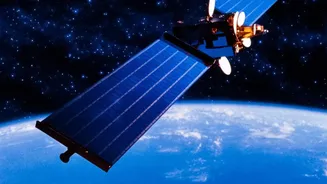
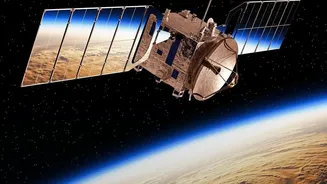
Before diving into the training, let's break down the technology. Synthetic Aperture Radar (SAR) is a powerful remote sensing tool used on satellites and aircraft. Unlike optical cameras that need light and clear skies, SAR sends microwave pulses to Earth’s
surface and reads the echoes that bounce back. This allows it to create high-resolution images day or night, and through clouds, smoke, or rain. By processing these echoes, SAR can reveal detailed information about the planet's physical structures, from forests and ice sheets to urban infrastructure. This all-weather capability makes it invaluable for disaster management, environmental monitoring, and even planetary exploration.
Inside ISRO's Training Initiative
ISRO, primarily through its premier training centre, the Indian Institute of Remote Sensing (IIRS) in Dehradun, regularly offers courses focused on SAR technology. These programs are designed for a wide audience, including undergraduate and postgraduate students, researchers, and working professionals who want to upskill. The courses come in various formats, from multi-week in-person workshops to free online courses known as Massive Open Online Courses (MOOCs), making them highly accessible. The curriculum covers everything from the fundamentals of SAR data processing to advanced techniques like polarimetry (PolSAR) and interferometry (InSAR), which are used for detailed analysis of terrain and surface changes.
The Core Skills You Will Learn
Participating in an ISRO SAR course gives you more than just theoretical knowledge. The hands-on training is designed to build practical, job-ready skills. Students learn to process and analyse complex SAR datasets using specialised software, some of which is developed in-house at ISRO. You’ll gain experience in interpreting radar imagery to extract meaningful information, a critical skill in the geospatial industry. The training sharpens your analytical and problem-solving abilities, as you work on real-world case studies related to agriculture, forestry, cryosphere studies, and hazard assessment. These programs aim to bridge the gap between academic learning and the practical demands of the space sector.
How SAR Skills Boost Your Career
In India's rapidly growing space ecosystem, professionals with SAR expertise are in high demand. This training can open doors to a variety of roles within ISRO itself, from a Scientist/Engineer to a Technical Assistant. Beyond the national agency, opportunities are exploding in the private sector. Numerous space-tech startups and established companies are looking for data analysts, remote sensing specialists, and GIS professionals to work on projects related to climate change monitoring, urban planning, and resource management. Your skills would also be valuable in government bodies focused on disaster management, environmental science, and agriculture. Essentially, this training positions you at the forefront of Earth observation technology.
How to Get Started
To get involved, the best starting point is the official websites of ISRO and IIRS. These portals regularly post announcements about upcoming training programs, including course calendars, eligibility criteria, and application deadlines. For many of the online courses, you can register through the IIRS e-learning platform. While some introductory courses are free and open to all, more advanced, multi-week programs may have a nominal fee and specific eligibility requirements, often looking for candidates with a background in science or engineering. Keep an eye on the announcements and choose a program that aligns with your academic level and career aspirations to become part of India's exciting space journey.