



What Exactly Is the SKA?
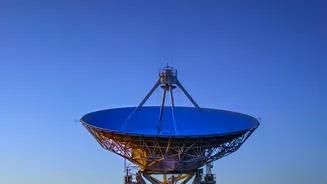
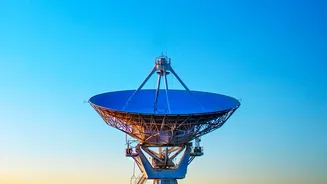
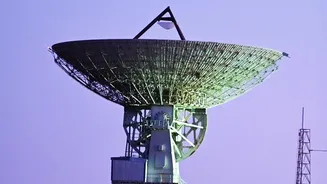
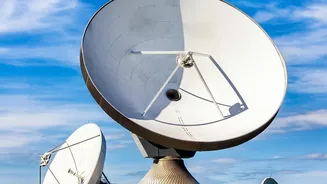
The Square Kilometre Array isn't one single dish, but a vast, international effort to build the world's largest radio telescope. The project is split across two continents: Australia hosts the low-frequency antennas (SKA-Low), while South Africa is home
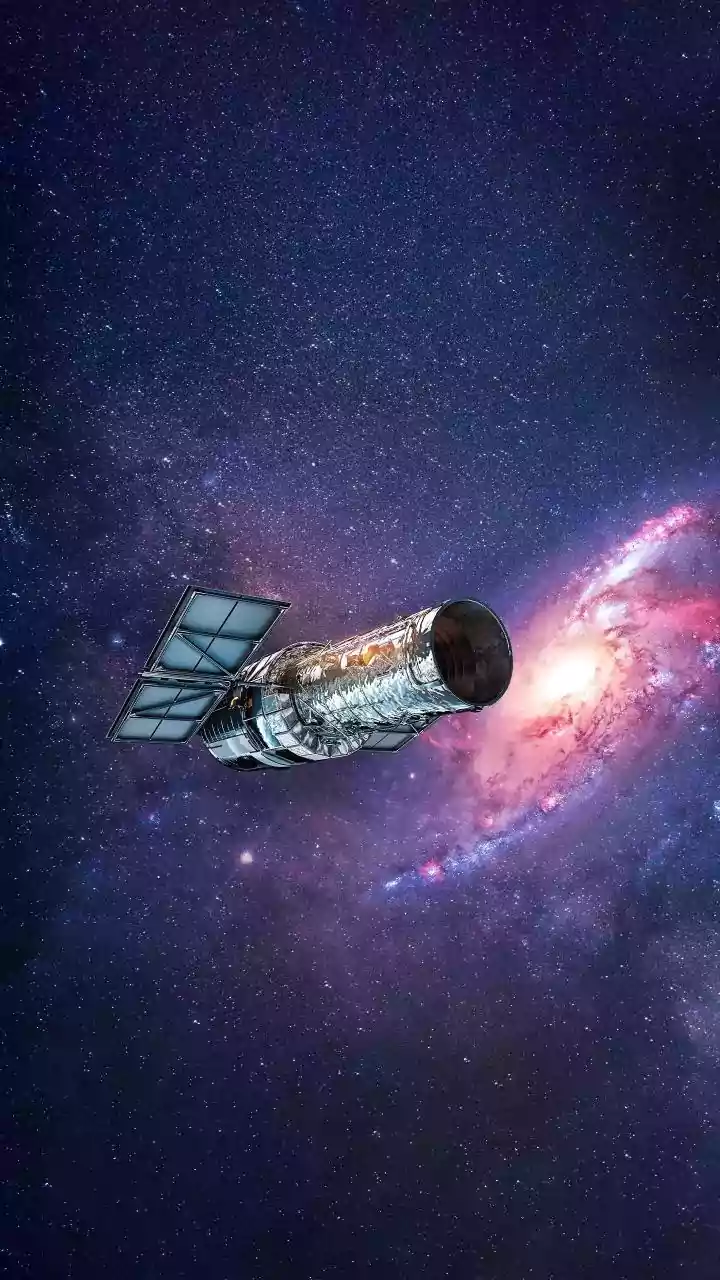
to the mid-frequency dishes (SKA-Mid). SKA-Low consists of over 130,000 Christmas-tree-like antennas, and SKA-Mid will feature nearly 200 large dishes, including the existing MeerKAT array. By using a technique called interferometry, these thousands of individual antennas, spread over huge distances, are digitally combined to function as a single, gigantic telescope with a collecting area of one square kilometre. This gives it extraordinary sensitivity and the ability to see the universe in more detail than ever before, exceeding the image resolution of the Hubble Space Telescope by 50 times.
An Unimaginable Data Deluge
The term "unprecedented amounts of data" is an understatement. When fully operational, the SKA telescopes will generate data at a rate exceeding the entire global internet traffic of today. The raw data flowing from the antennas to the on-site processors will average around 8 terabits per second. After initial processing, the observatory is expected to archive over 700 petabytes of data products annually. To put that in perspective, this would fill the storage of about 1.5 million modern laptops every single year. This data tsunami is so immense that it can't simply be downloaded by astronomers. Instead, a global network of SKA Regional Centres is being developed to provide the massive computing power needed to process, store, and access the information.
Peering Back to the Cosmic Dawn
One of the SKA's primary missions is to look back in time to the very beginning of the universe. Because of the time it takes for light (or radio waves) to travel across billions of light-years, observing distant objects is like using a time machine. The SKA's incredible sensitivity will allow it to detect the faint radio signals emitted by hydrogen gas from the universe's 'Cosmic Dawn'—the era when the very first stars and galaxies were beginning to form, just a few hundred million years after the Big Bang. Capturing these whisper-faint signals from the edge of the observable universe requires a massive collecting area and the ability to filter out noise, which is directly tied to the vast quantity of data collected.
Testing the Laws of Physics
The SKA will also be a unique laboratory for testing Albert Einstein's theories of gravity. Scientists will use the telescope to precisely time the signals from pulsars, which are rapidly rotating neutron stars that emit beams of radio waves like cosmic lighthouses. These pulses are incredibly regular, but tiny variations in their arrival times can indicate the passing of gravitational waves—ripples in the fabric of spacetime itself. By monitoring a vast network of pulsars across the galaxy, the SKA can create a detector for gravitational waves far larger than any on Earth. This high-precision timing requires observing many pulsars and collecting continuous, high-fidelity data streams over long periods.
The Search for Life's Building Blocks
Beyond cosmology, the SKA will join the search for life beyond Earth. While it won't be looking for little green men, it will be sensitive enough to detect complex organic molecules—the building blocks of life—in the dusty protoplanetary disks where new planets are forming. It will also be capable of detecting faint radio signals, such as airport radar, from a planet 50 light-years away. This capability makes it a powerful tool in the Search for Extraterrestrial Intelligence (SETI). Surveying huge swaths of the sky for these specific, faint signatures is a monumental task that necessitates the collection and analysis of enormous datasets.