


A Celestial Show over Europe, Not India
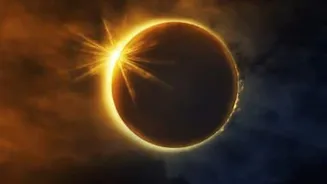
This year's most anticipated astronomical event is the total solar eclipse on Wednesday, August 12, 2026. The Moon’s shadow will trace a path across Greenland, Iceland, the Atlantic Ocean, and Spain, offering a breathtaking view of totality. However,
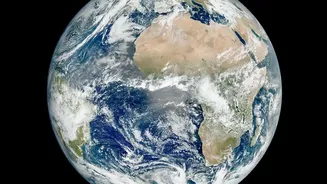
for anyone in India, looking up at the sky will reveal nothing out of the ordinary. The eclipse will occur during India's night, beginning around 9:04 PM IST on August 12 and ending in the early hours of August 13. Since the Sun will have already set, the celestial alignment will be entirely invisible from the subcontinent. This means there are no special precautions or religious observances, such as Sutak Kaal, to consider for this event in India.
Why This Eclipse is a Big Deal
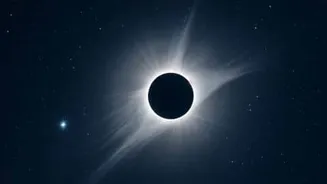
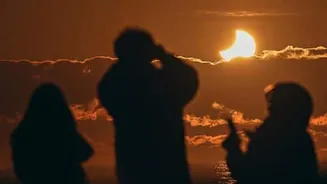
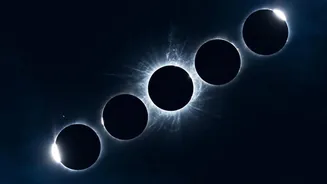
Astronomers and enthusiasts are particularly excited about this eclipse. It will be the first total solar eclipse visible from mainland Europe in 27 years and the first to grace Spain in over a century, since 1905. The path of totality will sweep over several Spanish cities, including Valencia and Palma, offering a dramatic view as the eclipsed sun hangs low on the horizon near sunset. The maximum duration of totality—when the Moon completely blocks the Sun—will be a stunning 2 minutes and 18 seconds off the coast of Iceland. NASA and other scientific bodies are seizing this opportunity to conduct significant research. High-altitude jets and scientific balloons will be deployed to study the Sun's mysterious outer atmosphere, the corona, which is only visible during a total eclipse. The event also conveniently coincides with the peak of the annual Perseid meteor shower, though the two are separate phenomena.
NASA's All-Access Pass to the Cosmos
This is where technology closes the distance. NASA is providing a front-row seat to everyone with an internet connection. The agency will host a comprehensive live stream, featuring multiple high-definition telescope feeds from locations across the path of totality, including Iceland and Spain. Their broadcast, beginning at 1:15 p.m. EDT (which corresponds to 10:45 PM IST), will be more than just a raw feed of the Sun. It will include expert commentary from NASA scientists, who will explain the science behind the eclipse, answer questions from social media, and provide context to the images you are seeing. This curated experience offers a unique advantage; viewers get close-up views of solar phenomena and expert insights that even someone on the ground might miss.
Your Digital Viewing Guide from India
Getting ready to watch from India is simple. The key is to know the timings and where to tune in. NASA's official live coverage is the top recommendation and will be available on NASA TV, the NASA website (nasa.gov/live), and their official YouTube channel. The broadcast begins at 10:45 PM IST on August 12. For those who want more options, the European Space Agency (ESA) will also have its own live stream from Spain, starting at 19:30 CEST (11:00 PM IST). Additionally, astronomy-focused organizations like the San Francisco-based Exploratorium and websites like TimeAndDate.com are planning their own live coverage. For the best experience, set a reminder for around 10:30 PM IST on August 12. Settle in with a large screen to appreciate the visual details and make sure your audio is on to catch the expert commentary.
The Underrated Joy of Watching Online
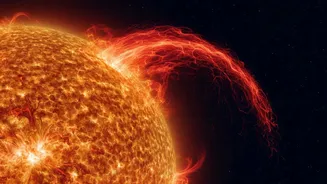
While nothing can fully replace the feeling of standing in the Moon's shadow, watching an eclipse online has distinct advantages. You are guaranteed a perfect, cloud-free view, something even those who travel thousands of kilometres cannot be certain of. You also bypass the crowds, travel costs, and the frantic search for certified eclipse glasses. The online broadcasts provide views from multiple professional telescopes, showing details like solar prominences and the diamond ring effect with a clarity that is hard to achieve with the naked eye. The expert commentary transforms the viewing from a passive observation into an educational journey, enriching your understanding of the cosmos. It’s a global watch party, and from the comfort of your home in India, you have the best seat in the house.