



An Unplanned Collision Course
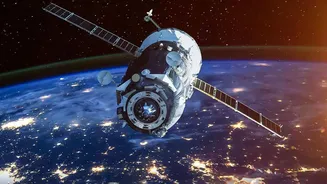
A spent upper stage of a SpaceX Falcon 9 rocket is expected to crash into the Moon on August 5, 2026. This isn't a planned demolition but an accident of celestial mechanics. Launched in January 2025 to deploy lunar landers, the four-tonne rocket body
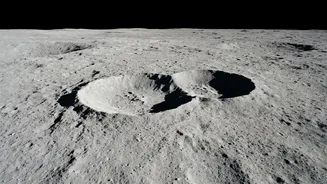
was left in a high orbit without enough fuel to return to Earth. Over time, the combined pull of solar activity and gravity has nudged it onto a path that ends with a high-speed impact on the lunar surface. Astronomers first identified the trajectory, and NASA later confirmed a 100% chance of collision near the Moon's western edge. The object is set to strike at a blistering speed of around 8,700 km/h, carving out a new crater estimated to be up to 100 feet wide.
A Surprise Scientific Opportunity
While uncontrolled, this impact has become an impromptu science experiment. When the rocket stage hits, it will blast millions of kilograms of lunar soil and rock, known as regolith, into a plume high above the surface. This provides a rare chance to analyse material from beneath the Moon's surface without having to land a mission and drill. Scientists will use ground-based telescopes and orbiting spacecraft like NASA's Lunar Reconnaissance Orbiter (LRO) to study this ejecta cloud. They are particularly interested in searching for signs of water ice, which could be hidden in the lunar soil. The data will help refine models of how impacts shape the lunar landscape, offering valuable insights for the safety of future astronaut missions and permanent bases.
Echoes of Past Impacts
This is not the first time a human-made object has struck the Moon. In fact, NASA has deliberately crashed spacecraft into the lunar surface before. The most famous example is the LCROSS mission in 2009, which sent a rocket stage crashing into a permanently shadowed crater near the south pole specifically to search for water. The mission was a success, confirming the presence of water ice. In the Apollo era, upper stages of the giant Saturn V rockets were also intentionally impacted to calibrate seismometers left on the surface by astronauts. More recently, there have been other accidental impacts, including a Chinese rocket stage in 2022 and several failed lander missions from different nations, including India's Chandrayaan-2 lander in 2019.
India’s Lunar Connection
For India, a key player in lunar exploration, such events are highly relevant. ISRO's Chandrayaan missions have made groundbreaking discoveries, particularly with Chandrayaan-1's initial detection of water molecules that partly inspired NASA's LCROSS impact mission. The unfortunate crash landing of the Vikram lander during the Chandrayaan-2 mission in 2019 also provided an unplanned impact event for scientists to study. These global scientific efforts, whether planned or accidental, complement India's own ambitious goals. By studying impacts in different regions, the international community builds a more complete picture of lunar geology and resources, which is crucial for future collaborative missions and ISRO's plans for sustained lunar presence.
A Wake-Up Call for Space Debris
This event also highlights a growing concern: space junk. While this particular rocket stage poses no danger to Earth, its unplanned trajectory into the Moon serves as a reminder of the lack of regulation for deep space hardware. As more countries and private companies launch missions to the Moon, the risk of abandoned stages and defunct satellites creating a debris field in cislunar space (the space between Earth and the Moon) increases. The collision has prompted discussions between space agencies like NASA and companies like SpaceX about developing new protocols to prevent future unintentional impacts. Ensuring the lunar environment remains safe and predictable is becoming critical as humanity prepares to establish a permanent foothold on its nearest celestial neighbour.