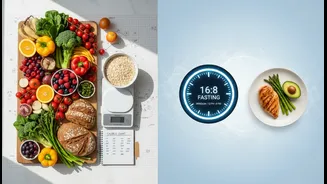









Two Paths, One Goal
At its core, weight loss boils down to a simple principle: consuming fewer calories than your body burns. Both intermittent fasting (IF) and traditional calorie counting are tools designed to help you achieve this calorie deficit. Calorie counting, the
long-standing gold standard, focuses on what and how much you eat. It involves tracking the energy value of all your food and drinks to stay within a daily target. Intermittent fasting, on the other hand, focuses on when you eat. By restricting your food intake to a specific window of time each day or on certain days of the week, you naturally tend to consume fewer calories overall, often without a strict need for counting.
What the Latest Science Says
For years, the debate has raged over which method is superior. However, a growing body of research, including recent systematic reviews and studies from 2026, points to a clear conclusion: when it comes to pounds lost, both methods are strikingly similar. A Cochrane systematic review found that the difference in weight loss between the two approaches was statistically insignificant. Another study published in early July 2026 by the University of Adelaide found that after six months, participants in both an intermittent fasting group and a calorie-restriction group lost a similar amount of weight—an average of about seven kilograms. The key takeaway from the research is that both methods work because they help people reduce their overall calorie intake. Neither method appears to be a magical solution, but both are valid strategies for achieving a calorie deficit.
The Psychological Edge of Fasting
Where intermittent fasting seems to pull ahead is in the psychological experience of dieting. The same 2026 Adelaide University study revealed a fascinating difference in how dieters felt. While the calorie-counting group reported that their weight loss required constant, conscious effort to control their food intake, the intermittent fasting group did not report the same feeling of restraint. They lost a similar amount of weight without feeling like they had to constantly police every bite. Researchers suggest this could make intermittent fasting a more sustainable option for people who struggle with the mental fatigue of traditional dieting or who have a history of yo-yo dieting. It simplifies decisions around food, reducing the constant tracking and thinking that can lead to burnout.
The Case for Calorie Counting
Despite the mental ease that IF may offer, calorie counting has its own distinct advantages. Its greatest strength is its flexibility. No foods are off-limits, as long as they fit within your daily calorie budget. This can make social situations, like dinners out or holidays, easier to navigate. Calorie counting also provides a structured framework that many people find helpful, offering clear targets and a direct sense of accountability. By logging your food, you gain a powerful awareness of your eating habits, portion sizes, and the nutritional content of what you consume. For those who thrive on data and structure, and want the freedom to eat at any time of day, counting calories remains a highly effective and educational tool.
Potential Downsides to Consider
Neither approach is without its drawbacks. The primary complaint about calorie counting is that it can be tedious, time-consuming, and for some, can lead to an unhealthy obsession with food and numbers. Intermittent fasting, while simple in concept, can be challenging in practice. Initial side effects like hunger, headaches, and irritability are common as your body adjusts. It can also be socially awkward to turn down meals or events that fall outside your designated eating window. Furthermore, it's not suitable for everyone, including people with a history of eating disorders, those who are pregnant, or individuals with certain medical conditions like diabetes who need to manage their blood sugar levels carefully.
Which Approach Is Right for You?
Ultimately, the 'best' diet is the one you can stick with long-term. Consider your personality and lifestyle. If you enjoy structure, data, and the flexibility to eat whenever you like, calorie counting might be your ideal match. If you dislike tracking every detail, prefer simpler rules, and find the idea of eating within a set window manageable, intermittent fasting could be a better fit. Recent research suggests IF may be particularly helpful for those who feel mentally exhausted by the constant vigilance of traditional diets. Both paths can lead to the same destination; the key is choosing the route you are most likely to follow consistently and happily.