



The Frictionless Money Problem
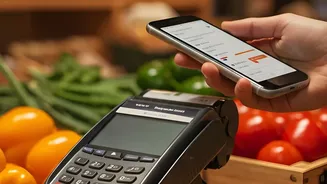
Unified Payments Interface (UPI) has revolutionised how we transact, making payments seamless and instant. While incredibly convenient, this very frictionlessness is a double-edged sword. Behavioural economists call it the 'pain of paying'—or rather,
the lack of it. When you hand over physical cash, your brain registers a tangible loss. With digital payments, the transaction is abstract, reducing the psychological friction that would normally make you pause and reconsider a purchase. This makes it easier to give in to impulse buys, like ordering a pizza simply because you’ve had a long day.
How Food App Spending Quietly Escalates
Each food order seems small in isolation—₹300 here, ₹500 there. But these micro-transactions quickly accumulate. A daily order of ₹400 can balloon into a ₹12,000 monthly expense, excluding delivery fees, platform charges, and taxes that are often tacked on. Consumers often justify it as a trade-off for convenience, valuing their time over the extra cost. However, this convenience often masks the true financial impact until the end-of-month bank statement arrives, revealing a pattern of unchecked spending.
Creating a Financial Guardrail with UPI Limits
This is where setting a daily UPI limit becomes a powerful budgeting tool. It's important to clarify that most UPI apps and banks do not let you set a specific limit for 'food delivery'. Instead, you set a lower overall daily transaction limit for your bank account. The standard UPI limit set by the National Payments Corporation of India (NPCI) is ₹1 lakh per day, with a cap of 20 transactions. However, many bank apps allow you to manually lower this limit. By setting a personal daily cap—say, ₹1,000 or ₹2,000—you create an artificial 'soft stop'.
Putting the Brakes on Impulse Orders
Imagine you've set your daily UPI limit at ₹1,500. You've already made a few essential purchases during the day. When that evening craving for an expensive meal hits, you might find your next UPI payment gets declined because you've hit your self-imposed ceiling. This interruption forces a crucial moment of reflection. It breaks the cycle of mindless ordering and makes you consciously evaluate whether the purchase is necessary. It's a simple but effective way to enforce discipline and prevent your food delivery budget from spiralling out of control.
A Practical Guide to Setting Your Limit
While most third-party UPI apps like Google Pay and PhonePe don't have a built-in feature to lower the limit, you can often do it through your bank's own mobile app or net banking portal. Banks like HDFC, ICICI, and SBI provide options in their settings, usually under sections like 'Payment Limits' or 'UPI Settings'. The first step is to review your past month's spending to understand your daily average. Then, set a realistic but lower limit that covers your essential daily expenses but leaves little room for frivolous food orders. The goal isn't to stop spending, but to spend mindfully.
Complementary Habits for Lasting Control
A daily UPI limit works best when combined with other smart financial habits. Consider planning your meals for the week to reduce the temptation of last-minute orders. Another strategy is to load a fixed amount into a food app's wallet at the beginning of the month and treat that as your total budget. Some users have even started ordering directly from restaurants and using a separate courier service for pickup, which can be cheaper by avoiding platform markups. Designating one or two 'no-order' days a week can also build discipline and generate significant savings over time.