




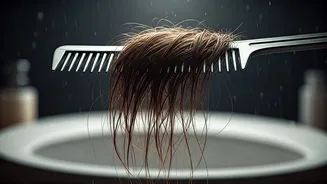


First, What's Normal Hair Fall?
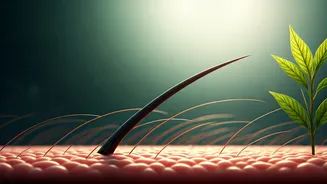
Before we panic about every strand on our pillow, let's set a baseline. It's completely normal to lose hair every day. Each hair follicle on your scalp goes through a cycle of growth (anagen), transition (catagen), and rest (telogen). At the end of the telogen phase,
the hair sheds to make way for a new one. Dermatologists agree that shedding between 50 to 100 hairs per day is standard for a healthy scalp. This number can fluctuate based on genetics, stress, and seasonal changes. Seeing a few strands in the shower drain or on your comb isn't a cause for alarm; it's just part of your hair's natural life cycle.
How Humidity Affects Hair Structure
Hair is primarily made of a protein called keratin, which has a specific chemical structure. This structure is highly sensitive to hydrogen, and water (H2O) is full of it. When the air is humid, your hair acts like a sponge, absorbing excess moisture. This moisture penetrates the hair shaft and forms new hydrogen bonds, causing the hair to swell up. This is why hair often becomes frizzy and unruly in damp weather. More importantly, this swelling process can weaken the internal protein structure of the hair, making each strand more fragile, porous, and susceptible to breakage and damage from simple acts like brushing or styling.
The Scalp Connection
The problem isn't just with the hair strands themselves; your scalp also feels the effects of humidity. A warm, moist environment is the perfect breeding ground for bacteria and fungi, particularly Malassezia globosa, a yeast linked to dandruff. An overgrowth can lead to scalp inflammation, itchiness, and clogged hair follicles. When follicles are blocked or inflamed, it disrupts the hair growth cycle and can push more hairs prematurely into the shedding phase. Essentially, a humid scalp is an unhappy scalp, and an unhappy scalp can't hold onto hair as effectively.
So, Why the Jump to 200 Strands?
Now, let’s connect the dots. The 'jump' in hair shedding during humid seasons is a perfect storm of factors. Your hair strands are physically weaker and swollen due to moisture absorption. Simultaneously, your scalp is more prone to fungal issues and inflammation. This combination puts immense stress on your hair follicles. The term for this excessive shedding is telogen effluvium, where a stressor causes a large number of hairs to enter the resting and shedding phase at once. While losing exactly 200 strands isn't a universal rule, studies on seasonal hair loss show that shedding can easily double during climatic shifts. For someone who normally loses 80-100 strands, hitting 160-200 is a very real possibility during peak humidity.
Fighting Back: Your Hair Care Routine
You can't change the weather, but you can adapt your routine. Start with your scalp. Use a gentle, clarifying shampoo to remove buildup of sweat and oil, or consider one with anti-fungal properties (like ketoconazole) once a week to keep yeast in check. Always condition your hair, but focus the product on the mid-lengths and ends to avoid weighing down the roots. After washing, avoid tying up your hair when it's wet, as this traps moisture against the scalp and weakens the strands. Opt for loose, comfortable hairstyles like a braid or a low ponytail instead of tight buns that pull on the roots.
Nourish From the Inside Out
What you eat plays a crucial role in your hair's resilience. Ensure your diet is rich in proteins, the building blocks of hair. Foods like eggs, lentils, paneer, and fish are excellent sources. Also, focus on iron and biotin. Iron deficiency is a major cause of hair loss, so include spinach, beans, and fortified cereals in your meals. Biotin, found in nuts, seeds, and bananas, helps in keratin production. Finally, stay hydrated by drinking plenty of water. It helps flush out toxins and supports overall cellular health, including that of your hair follicles. A strong internal foundation gives your hair a fighting chance against external stressors like humidity.