

Our Most Fascinating Galactic Neighbours
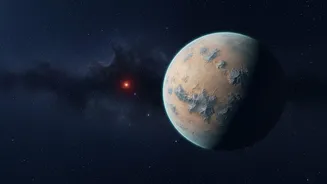
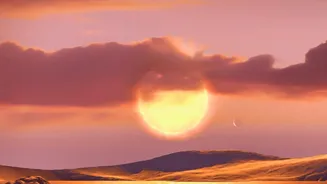
Imagine a solar system so compact that all seven of its planets orbit closer to their star than Mercury does to our Sun. That’s the TRAPPIST-1 system. Discovered in 2017, it quickly became one of the most exciting targets for astronomers. All seven planets are
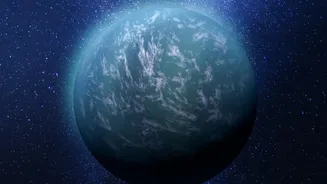
rocky and Earth-sized, a rarity in exoplanet hunting. Their star is an ultracool red dwarf, much smaller and dimmer than our Sun. This means that even though the planets are huddled close, some of them might still be in the 'habitable zone'—the region where temperatures could allow for liquid water on the surface. Three of the planets, TRAPPIST-1e, f, and g, are located within this promising zone. This unique setup makes the system a perfect natural laboratory for studying how planets form and whether they can hold onto atmospheres, a key ingredient for life as we know it.
How Webb Reads an Alien Sky
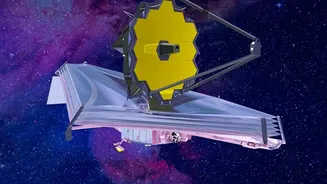
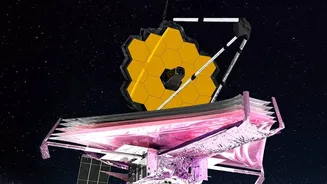
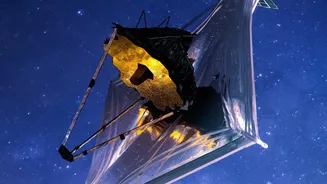
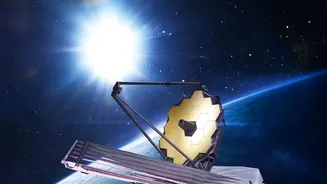
So, how does the JWST study a planet's atmosphere from 40 light-years away? It uses a clever technique called transmission spectroscopy. As a planet passes in front of its star from our point of view (an event called a transit), the starlight filters through the planet's atmosphere, if one exists. Different gas molecules in the atmosphere absorb specific colours, or wavelengths, of light. This leaves a unique chemical fingerprint on the starlight that finally reaches Webb’s powerful detectors. By analysing this fingerprint, scientists can identify the gases present, such as carbon dioxide, methane, and water vapour. For rocky worlds, detecting carbon-based gases is particularly thrilling. On Earth, carbon is the backbone of all life, and its presence in an atmosphere can also signal geological activity, like volcanoes, which are vital for cycling nutrients and sustaining a stable climate.
The Search for Carbon and a Surprise Finding
Scientists focused Webb's gaze on the innermost planets first, TRAPPIST-1b and TRAPPIST-1c. These worlds are too hot for liquid water, but they were expected to be similar to Venus, with thick, carbon dioxide-rich atmospheres. The measurements, however, revealed something surprising. For TRAPPIST-1c, Webb found no evidence of a thick CO2 atmosphere. The planet is far cooler than Venus, suggesting it either has a very thin atmosphere—even thinner than Mars's—or it's just a bare rock with no atmosphere at all. Similar studies of the innermost planet, TRAPPIST-1b, also came up empty, suggesting it too lacks any significant atmosphere. This doesn't mean the telescope failed; it means the measurement itself was a success, providing a crucial—albeit sobering—result. Measuring the absence of an atmosphere is just as important as detecting one.
Why 'Nothing' Is Still a Big Deal
Finding that the inner TRAPPIST-1 planets are likely airless worlds is a profound discovery. It suggests that being close to a volatile red dwarf star might be a harsh environment for a young planet. These stars are known to emit intense radiation and stellar winds, especially in their youth, which can strip away the atmospheres of nearby worlds. The findings for TRAPPIST-1b and 1c provide strong evidence for this atmospheric erosion. This helps astronomers refine their models of planetary habitability. The story is far from over, though. More recent studies of TRAPPIST-1b hint that ongoing volcanic activity could be resurfacing the planet, which complicates the picture and suggests some geological processes may still be at play. The focus now shifts to the outer planets, including those in the habitable zone, to see if they fared any better.