


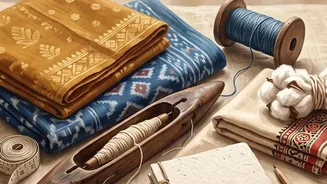
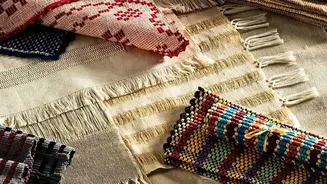
Feel a piece of Khadi and you feel a story. Its slightly uneven, breathable weave is instantly recognisable. But what gives this iconic Indian fabric its signature texture and appearance, a feel that machine-made textiles simply cannot replicate?
The Soul of the Charkha
The journey
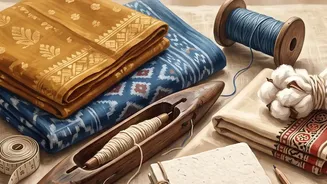
to Khadi's unique character begins long before the threads meet the loom. It starts with the spinning wheel, or 'charkha'. Unlike mill-spun yarn, which is made by machines to be perfectly uniform, Khadi yarn is spun entirely by hand. An artisan draws and twists fibres—be it cotton, silk, or wool—into a continuous thread. This manual process is an art of precision and patience. The spinner's skill determines the yarn's strength and fineness, but it also introduces subtle, unintentional variations in thickness. These tiny inconsistencies, often called 'slubs', are not defects; they are the fingerprints of the artisan, the first layer of character embedded into the yarn. It is this beautiful irregularity that gives Khadi its rustic, textured feel right from the start.
The Weaver's Hand on the Loom
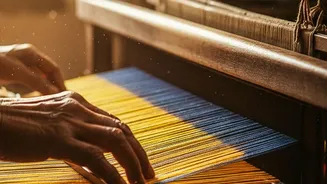
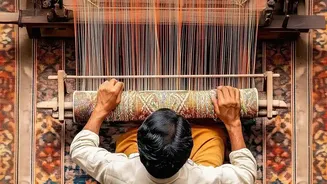
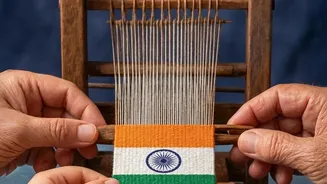
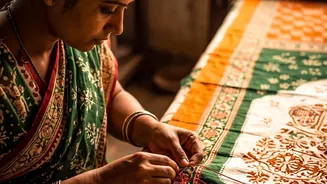
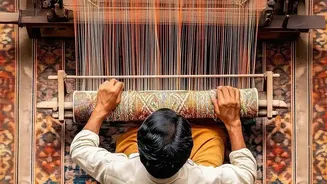
Once the yarn is ready, it moves to the handloom, the second critical stage that defines Khadi. For a fabric to be called Khadi, it must be both hand-spun and hand-woven. A weaver manually interlaces the warp (lengthwise threads) and weft (crosswise threads), often using a pit loom or a frame loom. This process is a rhythmic dance of hands and feet, requiring immense concentration. The weaver's touch directly influences the fabric's final form. The tension they apply, the force used to press the weft into place, and the rhythm of their work all contribute to the final texture and drape. Slight variations in the weave create a living, breathing surface that feels different from the flat, monotonous perfection of a power loom fabric.
The Magic of Air Pockets
The combination of hand-spinning and hand-weaving creates a fabric with a remarkable quality: exceptional breathability. The minor irregularities in the hand-spun yarn create tiny air pockets within the fabric's structure. These pockets are what give Khadi its unique ability to act as a natural insulator. In the summer, the fabric allows air to circulate freely, keeping the wearer cool and comfortable. In the winter, these same air pockets trap body heat, providing surprising warmth. This natural thermal regulation makes Khadi an incredibly versatile, all-season fabric, perfectly suited to the diverse Indian climate. It's a functional benefit born directly from its handmade origins.
Beauty in Natural Fibres
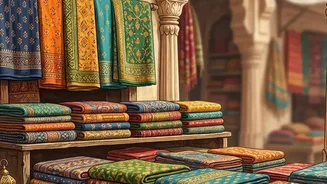
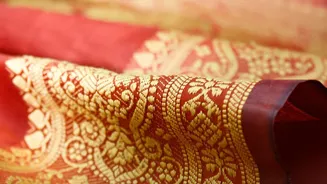
While cotton is the most common material, Khadi can also be made from silk and wool. Each fibre brings its own personality to the finished cloth, while still carrying the signature Khadi texture. Cotton Khadi is loved for its soft, breathable, and absorbent nature, making it a daily wear staple. Silk Khadi blends the rustic texture of hand-spinning with the natural lustre and graceful drape of silk, often used for more formal or festive occasions. Wool Khadi, on the other hand, is thick, warm, and insulating, perfect for shawls and jackets. Regardless of the raw material, the handmade process ensures the fabric remains eco-friendly, requiring no electricity and minimal water compared to industrial production.
A Fabric That Ages Gracefully
Unlike many machine-made fabrics that can thin out or lose their shape over time, Khadi is known for its durability and the beautiful way it evolves. With each wash, the handwoven fibres tend to become softer, more supple, and more comfortable against the skin. The fabric develops a unique patina, enhancing its character rather than diminishing it. This longevity is a testament to the strength imparted by the twisting of the yarn and the sturdy construction of the handloom weave. Choosing Khadi is not just choosing a piece of clothing; it's investing in a durable, timeless textile that gets better with age.