






The Unseen Problem Below Our Feet
Urban flooding is a familiar and frustrating reality, often blamed on overwhelmed drainage systems and ever-increasing paved surfaces. Yet, scientists and engineers are now looking at a less obvious culprit: air. Specifically, the large pockets of air trapped
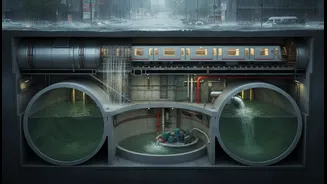
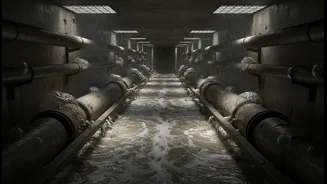
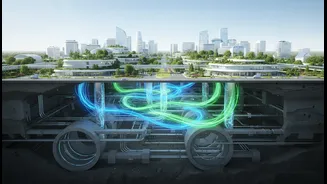
inside our vast network of underground stormwater and sewer pipes. During a sudden, intense downpour, water rushes into these pipes much faster than the air inside can escape. This rapid filling process effectively turns the drainage network into a giant, unintentional piston, compressing the trapped air and creating unexpected pressures throughout the system.
How Trapped Air Worsens Flooding
When air is trapped and compressed in drainage pipes, it has nowhere to go but to push back against the incoming water. This resistance can significantly reduce the capacity of the drainage system, meaning pipes that should be able to handle a certain volume of water effectively cannot. The consequences can be dramatic. The pressurized air can cause water to back up into streets and homes from points far from the main flooded area. In more extreme cases, this pressure builds until it finds a weak point, often leading to manhole covers being blown off with explosive force, followed by a geyser of water and air. This phenomenon, sometimes called 'geysering,' poses a serious public safety risk and demonstrates the powerful interplay between air and water in these systems.
A 'Piston Effect' in Our Sewers
Recent research has helped to explain this powerful 'piston effect.' At one deep underground research facility, engineers noticed that during heavy rainstorms, airflow in ventilation shafts would sometimes mysteriously reverse. By installing new sensors, they confirmed that large volumes of water falling down a vertical shaft were dragging air with them, powerfully pushing it through the tunnel network and disrupting the carefully managed ventilation. While this occurred in a mine, the principle is directly applicable to urban drainage systems, especially modern designs that feature large storage tunnels and vertical dropshafts. The descending column of water acts like a syringe, pressurizing the air ahead of it and creating surges that the system was not designed to handle.
Rethinking Urban Flood Models
This growing understanding of 'two-phase flow'—the interaction of air and water—is challenging city planners and engineers to update their flood-risk models. Traditionally, hydrodynamic models used to predict flooding have treated drainage pipes as simple conduits for water, largely ignoring the dynamic effects of air. This omission can lead to a significant underestimation of flood risk, as models might show a system has capacity when, in reality, air pressure is preventing it from being used effectively. Future models will need to incorporate these complex air-water interactions to provide more accurate predictions, especially as climate change brings more frequent and intense rainfall events.
What This Means for Indian Cities
For densely populated Indian cities prone to monsoon deluges, these findings are particularly critical. Many urban centres rely on aging drainage infrastructure that is already struggling to cope with rapid urbanization and increased runoff. The added, often uncounted, stress from air pressure can help explain why certain areas experience repeated, seemingly unpredictable flooding. By acknowledging and studying the role of underground airflow, urban planners in cities like Mumbai, Chennai, and Kolkata can develop more resilient infrastructure. This could involve designing better-vented systems, retrofitting existing networks with air release valves, or creating new 'green infrastructure' like permeable surfaces and rain gardens to reduce the initial rush of water into the pipes in the first place.