




A Tale of Two Worlds
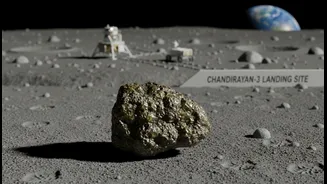
In a remarkable convergence of space exploration and earthly discovery, scientists have forged a link between two seemingly disparate locations: the Shiv Shakti Station on the Moon and the icy expanse of Antarctica. The soil analysed by the Pragyan rover
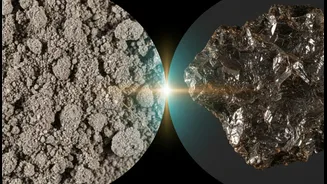
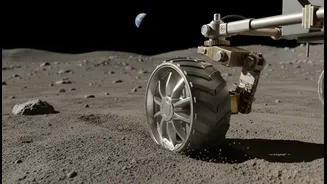
at the Chandrayaan-3 landing site has a chemical composition that closely mirrors a lunar meteorite found on our planet more than forty years ago. This groundbreaking finding, spearheaded by researchers at the Physical Research Laboratory (PRL) in Ahmedabad, doesn't just add another feather to the cap of India's space programme; it opens a new chapter in our understanding of the Moon's ancient history. The study connects the dots between in-situ analysis on the lunar surface and a physical specimen that was blasted off the Moon by an impact and eventually landed on Earth.
The Scientific Detective Work
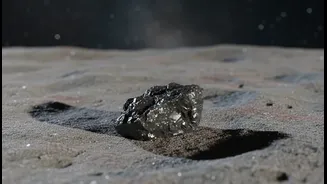
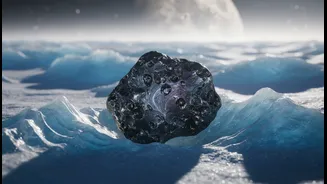
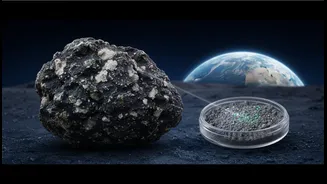
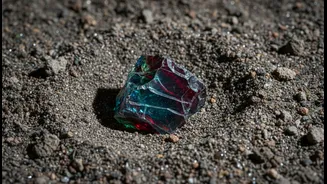
The key players in this story are the Pragyan rover's Alpha Particle X-ray Spectrometer (APXS) and a meteorite named ALHA 81005. The APXS, developed at PRL, meticulously measured the elemental composition of the lunar soil, or regolith, at Shiv Shakti Station. Meanwhile, ALHA 81005 holds a special place in science as it was the very first meteorite confirmed to have originated from the Moon. It was discovered in Antarctica's Allan Hills during an expedition in 1981-82. Scientists from PRL compared the APXS data with the known compositions of 66 lunar meteorites found on Earth. The results were striking. The soil at Shiv Shakti and meteorite ALHA 81005 both contained nearly identical amounts of key compounds like aluminium oxide, iron oxide, and magnesium oxide. This geochemical match was the closest among all meteorites examined.
What the Connection Means
It's important to clarify that this discovery does not mean the meteorite came from the exact spot where Chandrayaan-3 landed. Instead, it indicates that both the landing site and the region where the meteorite originated represent a similar and rare type of magnesium-rich lunar crust. The soil at Shiv Shakti Station is not just from the surface; it's a mixture of materials, likely including fragments from deeper layers of the Moon's crust that were excavated by ancient, massive impacts. The landing site's proximity to the gigantic South Pole-Aitken Basin, one of the largest impact craters in the solar system, makes it possible that materials from deep within the Moon were thrown to the surface and are now present in the soil sampled by Pragyan.
A Triumph for Indian Science
This finding is a powerful validation of the Chandrayaan-3 mission's capabilities and the quality of its scientific instruments. It represents one of the first times that direct, on-site measurements from a lunar mission have been so clearly connected to the existing record of lunar meteorites on Earth. For scientists, this is like finding a new page of a history book that confirms and enriches the stories told by other sources. The research, published in the journal 'npj Space Exploration', reinforces the Lunar Magma Ocean (LMO) hypothesis, a leading theory on how the Moon formed and evolved from a molten state. The presence of magnesium-rich materials, now confirmed by both the rover and the meteorite, provides strong evidence for this theory.
Unlocking the Moon's Ancient Past
By linking the soil at Shiv Shakti Station to a specific type of lunar crust, the discovery opens new avenues for studying the Moon's early formation. It suggests that the lunar highlands, which cover most of the Moon's surface, are more chemically diverse than previously thought based on samples from earlier missions. This knowledge is invaluable for planning future lunar missions, as it helps scientists identify promising locations where unique materials, potentially from the Moon's mantle, could be accessible for study. Each new piece of data from Chandrayaan-3 helps us piece together the violent and complex history of our celestial neighbour, a history that is written in the very dust of the Shiv Shakti Station.