








Your Feet: The Forgotten Foundation
Think of your body as a tall building. If the foundation is unstable, the entire structure will be compromised. Your feet are that foundation. Each foot contains 26 bones, 33 joints, and over 100 muscles, ligaments, and tendons—a masterpiece of natural
engineering designed for complex movement and feedback. However, we spend most of our lives encasing this marvel in cushioned, supportive, and often restrictive shoes. While shoes protect us from the elements and injury, they also act as a buffer, dulling the conversation between the ground and our nervous system. This can lead to the small, intrinsic muscles in our feet becoming weak and lazy, much like a muscle in a cast. A weak foundation can cause a chain reaction of misalignment, affecting your ankles, knees, hips, and ultimately, your spine and posture.
How Shoes Can Weaken Your Posture
Modern footwear, especially those with thick soles and arch supports, can interfere with our natural gait. They encourage a heavy heel-strike and reduce the need for our foot muscles to work. This isn't just about feet; it's about proprioception. Proprioception is your body's ability to sense its own position in space. Your feet are packed with nerves that constantly send information to your brain about the texture, temperature, and slope of the surface you're on. This rich data allows your brain to make instantaneous micro-adjustments throughout your entire muscular-skeletal system to maintain balance and efficient posture. When you wear thick shoes, it's like trying to read a book while wearing thick gloves. The sensory information is muffled, the feedback loop is dulled, and your body compensates, often in ways that lead to poor postural habits over time.
The Barefoot Advantage
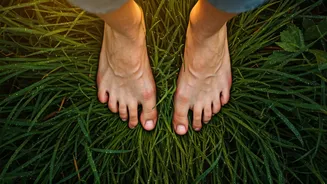
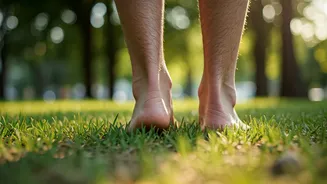
Walking barefoot re-engages this entire system. Without a shoe, your feet are free to move as they were designed. Your toes can spread and grip the ground, which is crucial for stability. The thousands of nerve endings are stimulated, sending a flood of high-definition information to your brain. In response, your body starts to make smarter choices. You might naturally shorten your stride, land more softly, and engage your core for stability. This isn't a conscious effort; it's your body's innate intelligence kicking in. By strengthening the intrinsic foot muscles and waking up your proprioceptive system, you’re not just exercising your feet—you're retraining your entire body to stand and move with better alignment, from the ground up.
Is Five Minutes Really Enough?
The “five minutes” in the headline isn't a magic number, but it’s a brilliant starting point. For feet that have been confined to shoes for years, even a short period of barefoot walking is a novel and intense workout. Five minutes is enough to stimulate the nerves and engage the muscles without causing excessive strain or soreness. The goal is consistency, not duration. Think of it as a daily dose of sensory and muscular awakening for your feet. By starting with just five minutes, you allow your feet and body to adapt gradually, reducing the risk of injury and building a sustainable habit. Over time, as your feet get stronger and more resilient, you can gradually increase the duration if it feels good.
How to Start Safely and Smartly
Before you kick off your shoes, it’s important to be mindful of your environment. Start on a safe, clean, and relatively soft surface like a grassy lawn, a park, or a sandy beach. Avoid hard, unforgiving surfaces like concrete or areas with sharp objects, debris, or insects. Always watch where you are walking. Pay attention to how your feet feel. If you feel any sharp pain (different from the mild sensation of working new muscles), stop. It’s also crucial to note that this practice may not be suitable for everyone. Individuals with diabetes, peripheral neuropathy, open sores on their feet, or specific foot deformities should consult a doctor or a podiatrist before attempting to walk barefoot outdoors. The key is to listen to your body and start slowly.