


Visitors from Beyond
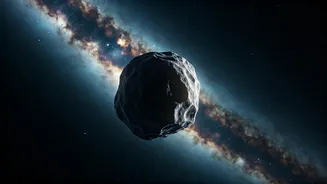
Our solar system is not an island. On rare occasions, it receives visitors that are not bound by our Sun's gravity. These are interstellar objects—comets or asteroids ejected from their own star systems that wander through the galaxy for millions or even
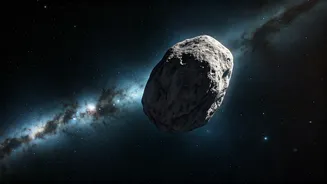
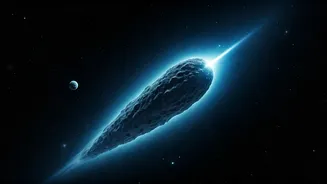
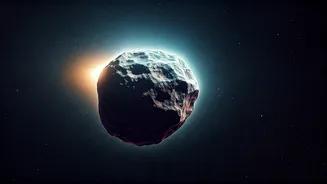
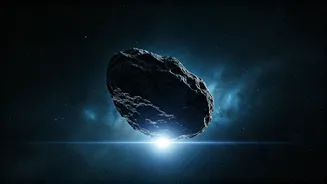
billions of years. Until recently, we had never definitively seen one. Then came 1I/ʻOumuamua in 2017, a strange, cigar-shaped object that baffled scientists. It was followed in 2019 by 2I/Borisov, which looked and acted more like a conventional comet but had a very unusual chemical makeup, with extremely high levels of carbon monoxide. These two visitors proved that objects from other stars do pass through our neighborhood, offering a tantalizing glimpse into alien chemistry.
The New Cosmic Messenger: 3I/ATLAS
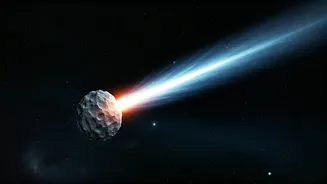
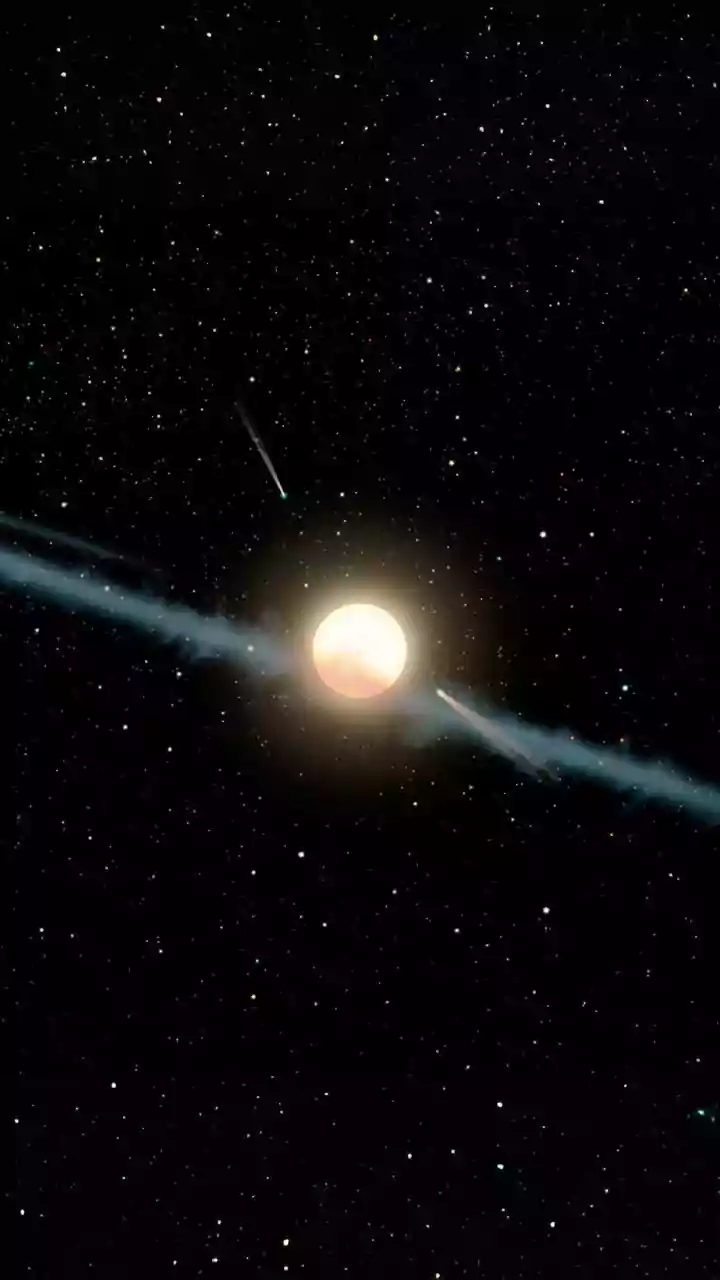
The scientific world is now buzzing about the third confirmed interstellar visitor: 3I/ATLAS. Discovered on July 1, 2025, this comet has provided an unprecedented opportunity for study. Unlike its predecessors, 3I/ATLAS was detected with enough lead time for astronomers to train the world's most powerful instruments on it, including the James Webb Space Telescope (JWST). These observations, made as the comet flew past the sun in late 2025, are revealing a chemical fingerprint unlike anything found in our own solar system.
An Ancient Chemical Fingerprint
What makes 3I/ATLAS so extraordinary is its composition. JWST analysis published in June 2026 revealed that the comet contains surprisingly high levels of 'heavy water'—water made with a heavier type of hydrogen called deuterium. It also has a distinct lack of certain carbon isotopes common in our solar system. Taken together, these clues suggest 3I/ATLAS formed in an extremely cold environment, far from its host star. More astonishingly, its chemical makeup suggests it could be incredibly ancient—perhaps as old as 10 to 12 billion years. This would make it nearly three times older than our own solar system and possibly the oldest object ever observed up close.
Reading Mail from Another Star
Each interstellar object is a time capsule from a distant planetary system. By studying the dust and gas they release as they are warmed by our Sun, scientists can deduce the building blocks of planets around other stars. The high levels of carbon monoxide in 2I/Borisov suggested it might have formed around a cool red dwarf star. The ancient, water-rich composition of 3I/ATLAS hints at a formation in the cold outer fringes of a very old star system. These are not just comets; they are samples of galactic real estate, allowing us to study the diversity of planetary nurseries across the Milky Way without ever leaving home.
The Search Is Just Beginning
For centuries, we were blind to these celestial travelers. Now, a new generation of powerful sky surveys is changing the game. The Vera C. Rubin Observatory, which began its survey in 2025, is expected to find not just one or two, but dozens of interstellar objects in the coming decade. Its ability to scan the entire sky deeply and rapidly will create an unprecedented catalogue of these faint, fast-moving visitors. While some have scanned these objects for signs of alien technology (finding none, as expected), the true value lies in the natural story they have to tell. Each new discovery will add another piece to the grand puzzle of how solar systems, including our own, come to be.