



A Storm Within a Storm
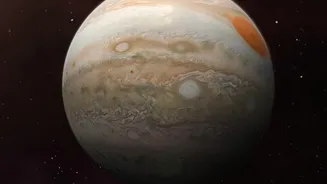
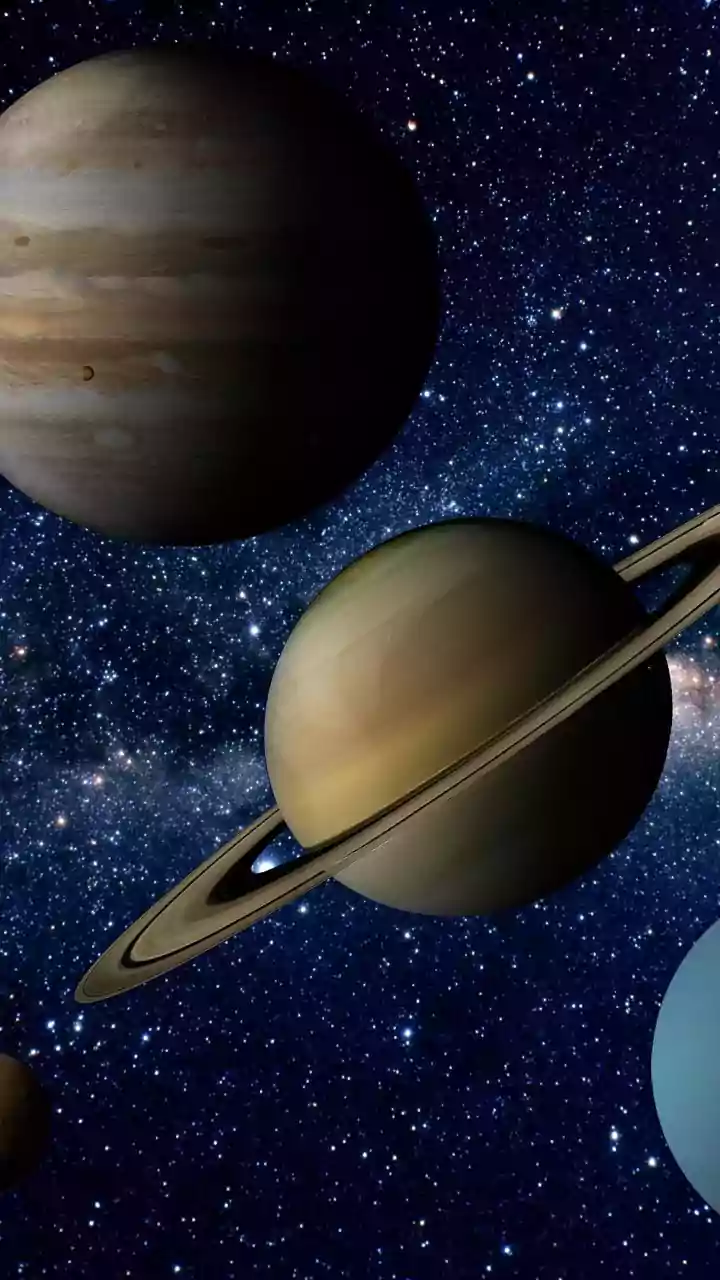
Jupiter’s Great Red Spot is one of the most recognizable landmarks in our solar system. This colossal anticyclone, a high-pressure system spinning counter-clockwise, has been observed for at least 150 years and is so vast that our entire planet could
fit inside it. For a long time, it was seen as a relatively stable, if violent, feature. However, the term "cosmic tornados" in the headline refers to smaller vortices and eddies that exist within and around this massive storm. These are not tornadoes in the earthly sense but are powerful, rotating structures that are part of the larger storm's complex weather system. Recent observations suggest these smaller storms are feeding into the main vortex, potentially altering its dynamics and energy. This activity provides clues about the inner workings of the largest storm in the solar system.
A Wobbling, Pulsating Giant
The latest chapter in our understanding of the Great Red Spot comes from the Hubble Space Telescope. Recent, dedicated observations have unveiled a completely unexpected behavior. Instead of a steady, stable vortex, the storm appears to be jiggling like gelatin. Over a 90-day period between late 2023 and early 2024, astronomers watched as the Great Red Spot oscillated in size, rhythmically squeezing in and out while its rotational speed also varied. This pulsating motion was a shock to scientists, who had never witnessed such behavior before. Amy Simon of NASA's Goddard Space Flight Center noted that while slight variations in its position were known, this rhythmic expansion and compression is a new discovery, and there are currently no clear hydrodynamic theories to explain it.
The Incredible Shrinking Spot
The pulsating behavior is layered on top of a much longer-term trend: the Great Red Spot is shrinking. This isn't a new discovery, but it is an accelerating one. Historical observations from the late 1800s estimated the storm was about 40,000 kilometers across. By the time NASA's Voyager spacecraft flew by in 1979, it had shrunk to about 23,000 kilometers. Today, Hubble's measurements show it is roughly 16,500 kilometers across, barely large enough to contain one Earth instead of two or three. The storm is also becoming more circular as it shrinks. While some scientists wonder if the storm might eventually disappear, others speculate it could simply be transitioning to a smaller, more stable configuration. The reasons for the shrinkage are still not fully understood, but the interactions with smaller storms and eddies are a leading hypothesis.
Why These Observations Matter
Studying the Great Red Spot is about more than just cataloging a distant storm. Jupiter's atmosphere is a massive natural laboratory for fluid dynamics. With no solid landmass to break them up, storms on Jupiter can last for centuries, allowing scientists to study weather systems on a scale and timeline impossible on Earth. Understanding the forces that power, change, and may eventually dissipate the Great Red Spot provides invaluable data for modeling weather and climate, not just on other planets but also here on Earth. The surprising new data from Hubble underscores how much we still have to learn. It reveals that even the most seemingly permanent features in our cosmic neighborhood are in a state of constant, complex evolution, challenging our models and pushing the boundaries of planetary science.