





North India: Moong Dal Cheela
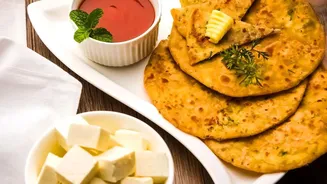
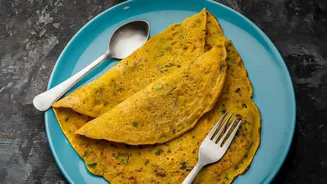
A staple in North Indian homes, the Moong Dal Cheela is a savoury pancake that is both light and protein-packed. Made from a simple batter of soaked yellow moong dal, ginger, and mild spices, this breakfast is incredibly easy to digest. According to Ayurvedic
principles, moong dal is one of the best lentils for the rainy season as it doesn't aggravate the digestive system, which is considered weaker during this time. The cheelas are pan-cooked with minimal oil until golden brown, resulting in a soft crepe with slightly crisp edges. Often spiced with turmeric and asafoetida (hing), they are not just nutritious but also help in boosting immunity. You can serve them plain or with a filling of grated paneer and finely chopped vegetables for a more substantial meal.
South India: Pesarattu Upma
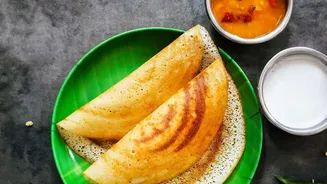
Hailing from Andhra Pradesh, Pesarattu is a crisp dosa-like crepe made from whole green moong dal. Unlike the regular dosa, it requires no fermentation, making it a quick and convenient option. Green gram is rich in protein and fibre, which helps in keeping you full for longer and aids in smooth digestion. What makes it a quintessential monsoon breakfast is its pairing with ginger chutney (Allam Pachadi). Ginger is known for its digestive and anti-inflammatory properties, making it an excellent ingredient to consume during the rains. For a complete meal, the Pesarattu is often stuffed with a small portion of semolina upma, adding a soft textural contrast to the crispy crepe and turning it into a wholesome and filling start to the day.
West India: Gujarati Patra
Patra, also known as Alu Vadi in Maharashtra, is a beloved snack from Western India that doubles as a unique breakfast. It is made using colocasia (arbi) leaves, which grow abundantly during the monsoon. The leaves are layered with a spiced, sweet, and tangy batter made from gram flour (besan), jaggery, and tamarind. The rolls are then steamed, sliced, and often tempered with mustard seeds and sesame seeds. This steaming process makes the dish light and easy on the stomach. The combination of spices not only provides flavour but also has warming properties suited for the damp weather. It’s a brilliant example of how regional cuisines use seasonal produce to create dishes that are perfectly adapted to the climate.
East India: Chirer Pulao
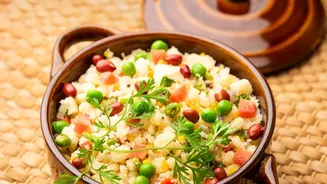
A classic Bengali breakfast, Chirer Pulao (or Poha) is a quick, light, and satisfying dish. Made with flattened rice (chire/poha), it's a very gentle food for the digestive system, a key consideration during the monsoon when gut health can be sensitive. The preparation is simple: flattened rice is lightly sautéed with onions, potatoes, peanuts, and mild spices like turmeric. Curry leaves and mustard seeds add a distinct aroma and flavour. The dish is not overly oily or spicy, aligning with the Ayurvedic recommendation for light meals during Varsha Ritu (monsoon season). It offers a good balance of carbohydrates and nutrients without feeling heavy, making it an ideal way to start a rainy day with energy and comfort.
Himalayan Region: Siddu
From the hills of Himachal Pradesh comes Siddu, a steamed bread that is the perfect antidote to chilly, rainy mornings. Though traditionally a snack or accompaniment, its warm and hearty nature makes it a wonderful breakfast. Siddu is a yeast-based bread made from wheat flour, which is stuffed with a savoury filling before being steamed. The fillings can vary, but popular options include a paste of walnuts and spices, or a mix of poppy seeds and roasted dals. Steaming makes the bread incredibly soft, fluffy, and easy to digest. It provides sustained energy and warmth, which is much needed in the cool, damp weather of the monsoon. Paired with a dollop of ghee, it’s a comforting and nourishing meal that truly captures the essence of mountain cuisine.