






The Sprinter’s Recovery Challenge
Every track athlete knows the feeling: the leg-burning, lung-searing intensity of an all-out sprint, followed by a frustratingly short recovery period before the next heat or final. The ability to recover effectively in those few minutes is what separates
a podium finish from a disappointing fade. During a sprint, muscles work anaerobically, building up metabolic byproducts that contribute to fatigue. To perform again at a high level just minutes later, your body must rapidly clear this waste and resupply muscles with oxygen and fuel. It’s a race against the clock, and athletes are constantly searching for an edge that can speed up this internal clean-up and recharge process.
Beetroot’s Secret Weapon: Dietary Nitrate
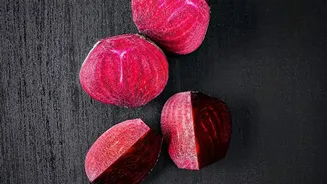
Enter the humble beetroot. This vibrant root vegetable is packed with a powerful compound called dietary nitrate. When you consume nitrate-rich foods like beetroot, a fascinating chain reaction begins. First, friendly bacteria in your mouth convert the nitrate into a simpler compound called nitrite. This nitrite is then absorbed into your bloodstream and, in areas of the body with low oxygen levels—like muscles working hard during a sprint—it gets converted into nitric oxide (NO). Nitric oxide is a potent vasodilator, a molecule that signals the smooth muscles in your blood vessel walls to relax, causing them to widen. This simple action is the key to beetroot’s performance-enhancing effects.
How Wider Blood Vessels Aid Recovery
So, how does widening blood vessels help a sprinter recover faster between runs? It’s all about efficient delivery and removal. The increased blood flow acts like a supercharged highway for your muscles. It allows for a more rapid delivery of oxygen, which is crucial for replenishing the energy stores, like phosphocreatine, that are depleted during explosive efforts. Think of it as refueling your muscle’s high-octane energy system more quickly. Simultaneously, this enhanced circulation helps shuttle away the metabolic byproducts, such as lactate and ammonia, that accumulate during intense exercise and contribute to muscle fatigue. By clearing this waste faster, your muscles can return to a state of readiness, allowing for a stronger performance in the next run. Research has shown this is particularly effective for repeated, high-intensity efforts, the exact scenario sprinters face in competition.
Decoding 'Micro-Dosing'
The term 'micro-dosing' in the headline isn’t a formal scientific term but points toward a strategic approach to supplementation. Instead of just taking a random amount, athletes see benefits from specific, targeted doses. The scientific consensus points to two main strategies. The first is an acute, or single, dose. Research shows that consuming about 300–600mg of nitrate 2 to 3 hours before competition is the optimal window to maximise nitric oxide availability in your blood. The effects peak within this timeframe and can last for up to six hours. The second strategy is a 'loading' phase, which involves taking a similar daily dose for several days (typically 3 to 7) leading up to a major competition. This can provide a small additional benefit on top of the race-day dose. This consistent, measured approach is the essence of what 'micro-dosing' implies in a sporting context.
Putting It Into Practice
For an athlete in India looking to incorporate this, the most common methods are beetroot juice, concentrated 'shots', or powders. A single dose of around 300-500mg of nitrate is the target. This translates to roughly 500ml of regular beetroot juice or 1-2 concentrated 70ml shots. Powders offer a more precise and often lower-sugar way to hit this target. The key is timing: consuming your dose 2-3 hours before the first race begins to ensure peak nitric oxide levels when you need them most. It’s a simple, legal, and natural strategy that focuses on making your body’s own recovery systems more efficient. While it won't replace hard training, it can provide a meaningful, science-backed advantage when the margins between winning and losing are razor-thin.