


A Glimpse into Alien Skies
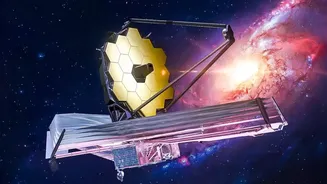
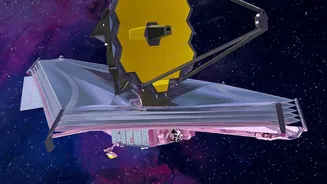
For decades, finding water on planets outside our solar system was a landmark achievement. Today, the James Webb Space Telescope is pushing far beyond that initial discovery. It isn't just finding water; it's characterizing the complex atmospheres of
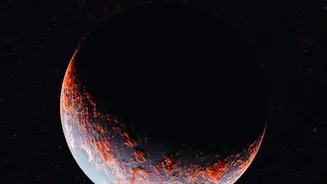
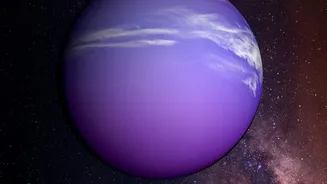
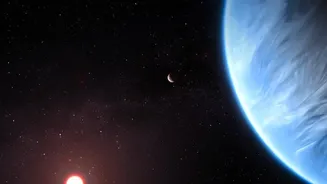
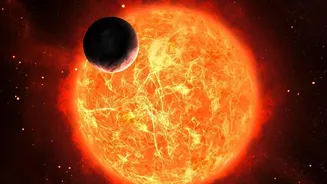
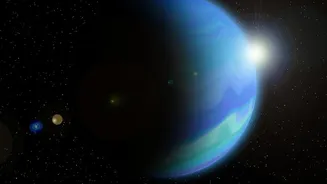
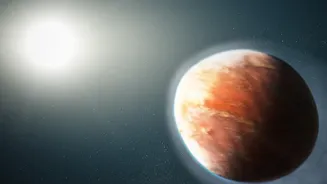
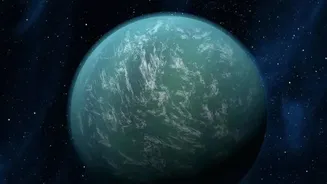
these alien worlds, offering unprecedented clues about their nature. Recent observations have highlighted two fascinating, yet starkly different, planets. One is GJ 9827 d, a world about twice the size of Earth located nearly 100 light-years away. JWST confirmed its atmosphere is dense with water vapour, but with surface temperatures soaring to around 400 degrees Celsius, it's considered a scorching "steam world." Another is the much-discussed K2-18 b, an exoplanet 8.6 times the mass of Earth that lies in its star's habitable zone. JWST’s analysis revealed not just water, but also methane and carbon dioxide, strengthening the theory that it could be a “Hycean” world—a planet with a hydrogen-rich atmosphere covering a liquid water ocean.
The Telescope’s Incredible Infrared Eye
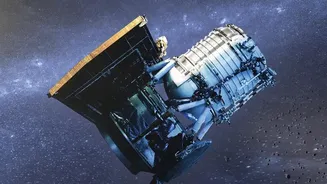
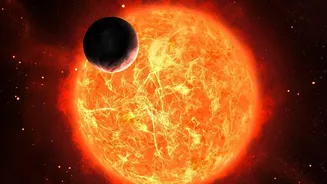
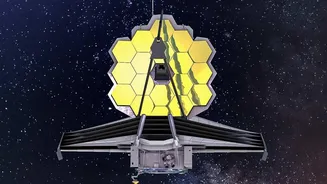
So, how does JWST peer into the atmosphere of a planet light-years away? The primary method is a technique called transmission spectroscopy. Many of these distant planets are discovered when they pass in front of their host star, causing a tiny, temporary dip in the star's brightness. For JWST, this transit is a golden opportunity. As the starlight filters through the edge of the planet's atmosphere, different gas molecules absorb specific wavelengths, or colours, of light. Each gas leaves behind a unique chemical fingerprint in the light that ultimately reaches the telescope's detectors. Because JWST is exquisitely sensitive to infrared light—wavelengths that are invisible to the human eye—it can spot the signatures of molecules like water, methane, and carbon dioxide with stunning precision, revealing details that were previously inaccessible.
More Than Just Water: A Chemical Puzzle
The real breakthrough lies in JWST's ability to see the bigger picture. Finding water is exciting, but understanding the accompanying chemistry is what truly tells the story of a planet. On K2-18 b, for instance, the abundance of methane and carbon dioxide, combined with a lack of ammonia, strongly supports the model of a water ocean. In a tantalizing, though not yet confirmed, finding, scientists also noted a possible trace of dimethyl sulfide (DMS), a molecule that, on Earth, is overwhelmingly produced by life. This doesn't confirm the presence of life, but it showcases the incredible potential for future discoveries. While planets like the scorching GJ 9827 d are not habitable, proving that a small planet can retain a water-rich atmosphere is a landmark discovery in itself. It shows that worlds with Earth-like atmospheric components exist, and we now have the tools to study them.
Water in the Making
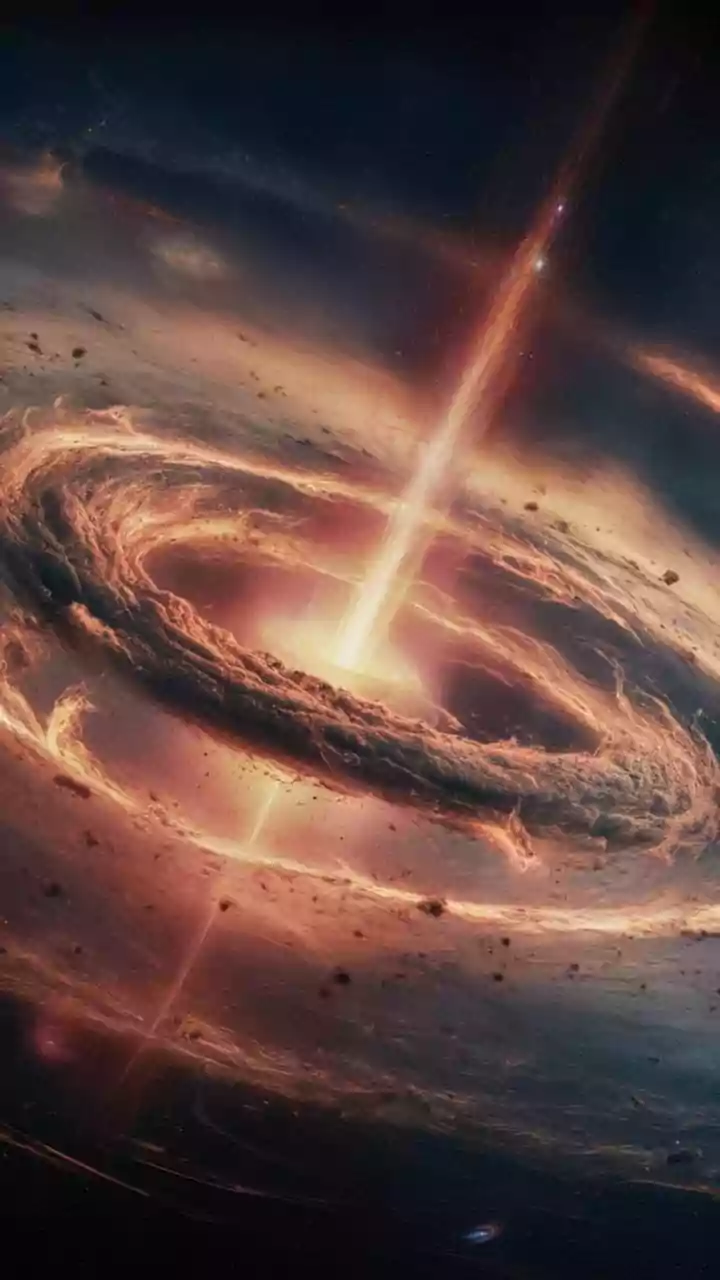
JWST’s discoveries extend even beyond fully formed planets. In one of its most profound findings, the telescope detected a significant amount of water vapour in the inner disk of a young star system called PDS 70. This is the region where rocky, terrestrial planets like Earth are thought to assemble. Located less than 160 million kilometres from the star—a distance comparable to Earth's orbit—this water provides a ready-made reservoir for any forming worlds. This is the first time water has been detected in the terrestrial region of a disk that is already known to be forming planets. It suggests that planets can have access to this essential ingredient for life from the very beginning of their existence, answering a long-standing question about how water arrives on rocky worlds in the first place.