


Our New Window on Alien Weather
For centuries, the worlds beyond our solar system were little more than faint points of light. Today, powerful ground-based and space telescopes are changing that, acting as long-range weather stations for alien worlds. By using a technique called spectroscopy,
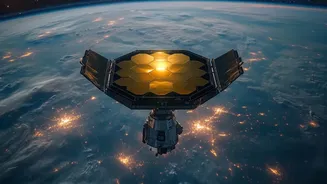
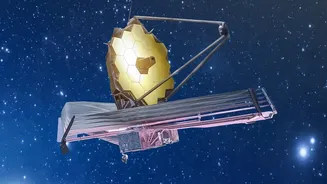
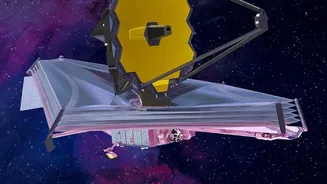
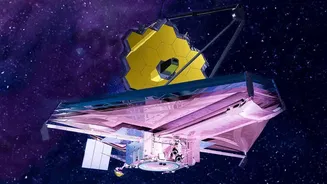
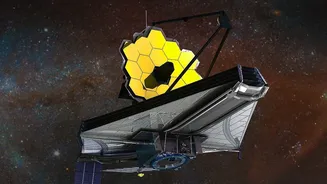
astronomers can analyze the starlight that filters through an exoplanet's atmosphere. The chemical elements and compounds present leave a unique fingerprint on this light, revealing secrets about temperature, composition, and even wind speed. Instruments like the ESPRESSO and CRIRES+ on the European Southern Observatory's Very Large Telescope (VLT) in Chile, often working in tandem with the observational power of space telescopes like Hubble and the James Webb Space Telescope, are giving us our first detailed look at these extreme climates.
Winds That Break the Sound Barrier
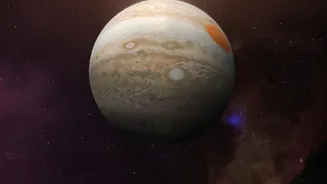
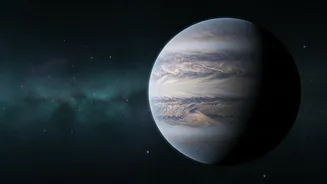
On Earth, the most powerful hurricanes seem tame compared to the weather on a gas giant named WASP-127b. Located over 520 light-years away, this planet is a strange beast; it's larger than Jupiter but so much less dense that scientists have nicknamed it a 'puffy' planet. Recent observations using the VLT have uncovered a jet stream of unimaginable speed raging around its equator. Astronomers clocked these winds at up to 33,000 kilometres per hour, which is more than 18 times faster than the most powerful gales ever measured in our solar system, found on Neptune. The energy from the planet's nearby star drives this extreme weather, creating a global wind system that is constantly moving at supersonic speeds.
When the Forecast Calls for Iron Rain
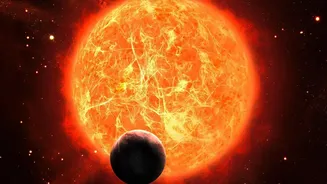
Even more bizarre is the forecast on WASP-76b, an 'ultra-hot Jupiter' about 640 light-years away. This planet is tidally locked, meaning one side perpetually faces its star in a state of constant, blistering daylight, while the other side is trapped in eternal night. On the dayside, temperatures soar above 2,400 degrees Celsius—hot enough to vaporise metals. Scientists believe that this intense heat turns iron into a gas. Powerful winds, estimated at 18,000 km/h, then whip this iron vapour across the planet to the cooler nightside. As the temperature drops, the gaseous iron condenses back into liquid droplets, creating clouds that rain molten iron. It’s a hellish, yet fascinating, example of a weather cycle completely alien to our own.
Why These Wild Worlds Matter
While the idea of iron rain is a compelling explanation for the data observed on WASP-76b, science is always a process of refinement. Some researchers suggest that temperature differences, rather than raining iron, could account for the observations. However, the theory remains a leading explanation for one of the most extreme environments ever discovered. More recent studies of the planet have even detected a rainbow-like 'glory effect', which points to the presence of stable, spherical droplets in the atmosphere—a finding that keeps the possibility of rain very much alive. These discoveries are more than just cosmic curiosities. They are stress-testing our fundamental understanding of planetary science and atmospheric physics, forcing us to reconsider how planets form and evolve. They show us that the variety of worlds in our galaxy is far greater and more wondrous than we ever imagined.