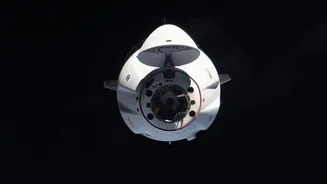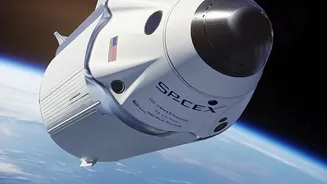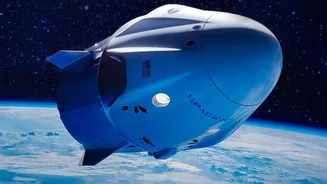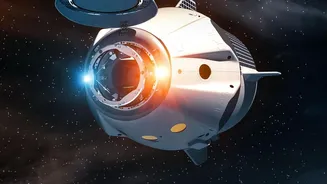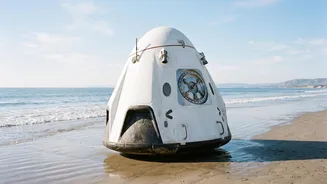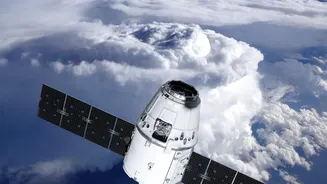



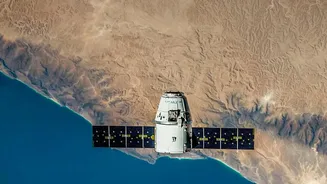
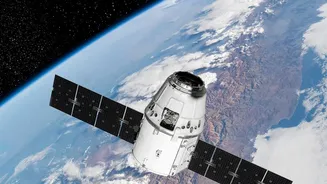
A SpaceX Dragon capsule successfully splashed down off the coast of California on November 21, completing its 35th resupply mission. While the journey itself is a feat, the real treasure lies inside: thousands of pounds of scientific cargo.
Precious Cargo from Orbit
After a 37-day
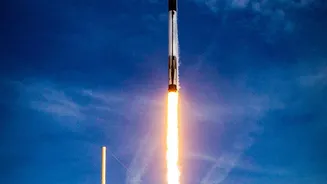
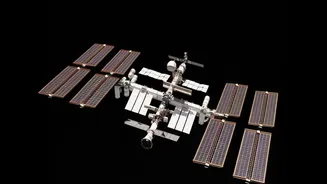
mission docked at the International Space Station (ISS), the uncrewed Dragon capsule brought home a unique and invaluable haul. This wasn't just about returning hardware; the primary objective was the safe return of time-sensitive scientific experiments. Among the key samples are 3D-bioprinted blood vessel structures, frozen tumour organoids used for cancer research, and microbial samples studied for antibiotic resistance. The capsule, which launched on October 13, is currently the only vehicle capable of bringing a significant volume of research material back to Earth intact, as most other cargo ships burn up upon re-entry. This capability makes the partnership between NASA and SpaceX crucial for turning orbital research into terrestrial breakthroughs.
The Microgravity Advantage
Conducting these experiments 400 kilometres above Earth is essential because microgravity provides a unique laboratory. On Earth, gravity's pull influences everything, from how fluids settle to how cells grow and interact. By removing this variable, scientists can study the fundamental mechanics of biological and physical systems in a purer state. For instance, cells and tissues grow differently, often forming more complex, three-dimensional structures that more closely mimic the human body. This accelerated environment allows researchers to observe processes like aging and disease progression on a compressed timeline, offering insights that could take decades to gather on the ground. This is especially true for research into cardiovascular disease, cancer, and muscle and bone loss.
From Tumours to Tissues
The samples from CRS-35 represent cutting-edge medical science. The 3D-bioprinted blood vessel construct, for example, was used to study how vascular cells age, which could unlock new understandings of cardiovascular disease. Another key payload contained frozen tumour organoids — miniature, lab-grown models of tumours — that were treated with experimental drugs while in orbit. By analysing how these organoids responded to treatment without the influence of gravity, scientists hope to develop more effective and personalized cancer therapies. Researchers will also examine microbial samples to better understand how bacteria develop antibiotic resistance, a growing global health concern that is critical to solve for the safety of future long-duration space missions to the Moon and Mars.
The Race from Ocean to Laboratory
The mission doesn't end with the splashdown. Once the Dragon capsule is recovered from the Pacific Ocean, a race against time begins. The most time-sensitive scientific samples are immediately flown by helicopter and plane to a NASA processing facility. This rapid retrieval is vital to preserve the integrity of the biological experiments, many of which are temperature-sensitive. From there, the samples are distributed to research teams and scientists around the world, who have been eagerly awaiting the results of their orbital experiments. The detailed analysis they will now perform is the final, crucial step in translating space-based research into tangible benefits for human health and technology back on Earth.