








The Persistent Problem of Uranium
Uranium is a naturally occurring element, but human activities like mining, nuclear power generation, and weapons production have left behind a difficult legacy. When processed, uranium can become soluble in water, allowing it to move easily through groundwater
and contaminate vast areas. This mobile, hexavalent form of uranium, U(VI), poses a significant risk to ecosystems and human health. Traditional cleanup methods often involve physically excavating massive amounts of soil or complex chemical treatments, which can be expensive and disruptive. For decades, scientists have searched for a more elegant, efficient, and environmentally friendly solution to lock this contaminant in place.
Nature's Tiniest Janitors
The solution may come from some of the smallest forms of life on Earth. A group of bacteria, particularly those from the genus Geobacter, have a remarkable ability. They can essentially 'breathe' certain metals, including uranium, as part of their energy-generating metabolism. This process is called bioreduction. Through it, microbes add electrons to the soluble U(VI), changing its chemical state to tetravalent uranium, or U(IV). This new form is insoluble and solid, causing it to precipitate out of the water as a mineral. The radioactive material is not gone, but it is effectively immobilized, preventing it from spreading further through the groundwater.
A Two-Pronged Cellular Strategy
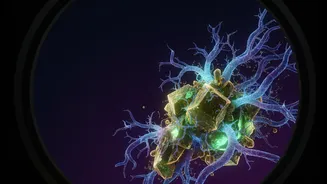
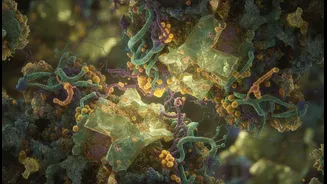
For years, the precise mechanism of how Geobacter accomplished this feat was only partially understood. Research led by microbiologist Gemma Reguera revealed that the bacteria use a multi-faceted approach. On one side of the cell, they grow tiny protein filaments, which act like nanowires. These wires 'zap' the uranium, triggering the chemical reduction that both provides the bacteria with energy and traps the uranium. This process accounted for about 75% of the cleanup. More recent findings have uncovered the rest of the story: the cell's surface is coated in molecules called lipopolysaccharides, which act like a sponge, soaking up the remaining uranium. The bacteria can then package this uranium into tiny vesicles and release them, effectively shedding the captured contaminant while remaining protected.
From the Lab to Contaminated Land
This is more than just a laboratory curiosity. Field tests have shown that stimulating the growth of native Geobacter populations at contaminated sites can lead to a dramatic decrease in uranium concentrations in groundwater. In one landmark study at a former uranium ore processing site in Rifle, Colorado, injecting acetate—a food source for the bacteria—into the aquifer led to a significant enrichment of Geobacter species. This, in turn, was directly associated with a drop in dissolved uranium levels. Researchers at the Helmholtz-Zentrum Dresden-Rossendorf (HZDR) in Germany have also found that feeding bacteria glycerol can stimulate them to convert dissolved uranium into a surprisingly stable compound. These real-world applications show that bioremediation is a feasible strategy.
Hurdles and the Path Forward
Despite its promise, microbial remediation is not a simple magic bullet. The process can be complex and dependent on a variety of environmental factors. For instance, if other microorganisms, like sulfate-reducing bacteria, outcompete Geobacter for the food source, the effectiveness of uranium removal can decline. Researchers still need to determine the long-term stability of the immobilized uranium and how the process works in different geological settings, such as clay. Optimizing conditions to maintain a healthy, active population of the desired bacteria over the long term is the key challenge for moving this technology from successful trials to standard practice. Furthermore, regulatory frameworks must be established to govern the safe and responsible use of these biotechnologies.