





Navigating the Monsoon Sky
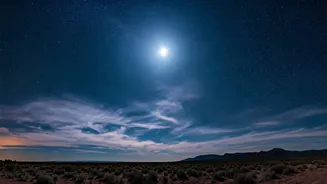
July is synonymous with the monsoon across much of India, meaning cloud cover can be a stargazer's biggest hurdle. This doesn’t make observation impossible, but it does require flexibility and a keen eye on the weather forecast. When the clouds do part,
the atmosphere is often washed clean of dust and haze, leading to nights of exceptional transparency. The key is to be prepared to take advantage of these clear windows when they appear. Keep an eye on local weather apps and be ready to head out, even if just for an hour. The rewards for your patience will be breathtaking views of planets, stars, and even the faint glow of our own galaxy.
A Parade of Planets
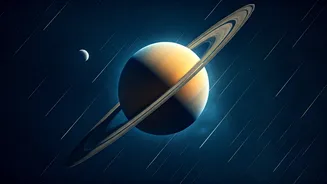
Throughout the month, the brilliant planet Venus will dominate the western sky shortly after sunset. Look for it as a dazzling, steady light before it dips below the horizon. For those willing to stay up late or wake up early, Saturn and Mars are the stars of the pre-dawn show. Saturn rises after midnight, a steady golden point of light in the eastern sky. On the mornings of July 7th and 8th, it will form a beautiful pairing with the Moon. Mars, with its distinct reddish hue, will also be visible in the east before sunrise. A special event occurs on July 11th, when a crescent Moon, Mars, and the Pleiades star cluster (also known as the Seven Sisters) will form a stunning celestial triangle. While you might spot Jupiter very low on the western horizon in early July, it will quickly disappear into the Sun's glare as the month progresses.
The Challenge of a Meteor Shower
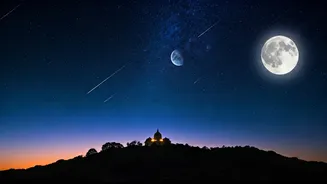
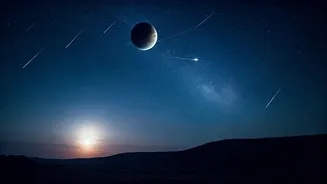
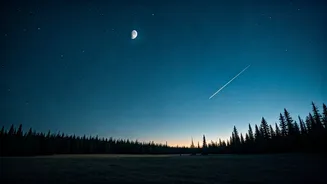
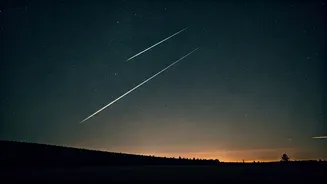
July marks the arrival of the Southern Delta Aquariids meteor shower, which is active from mid-July through August. This shower typically produces a steady, though not overwhelming, stream of meteors—around 15 to 20 per hour under perfect conditions. However, in 2026, timing is everything. The shower is predicted to peak around July 29th and 30th. Unfortunately, this coincides almost perfectly with the full Moon on July 29th. The bright moonlight will likely wash out all but the brightest meteors, making them very difficult to spot. For your best chance, try looking for them in the dark, moon-free mornings in the week leading up to the peak, from roughly July 20th to 26th. Find a dark spot away from city lights, lie back, and give your eyes at least 20 minutes to adjust.
The Moon and the Milky Way
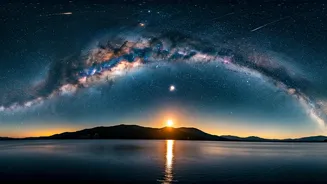
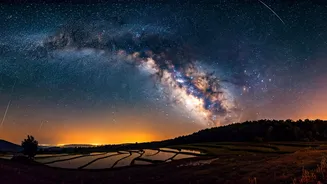
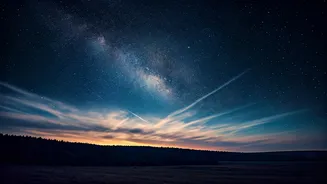
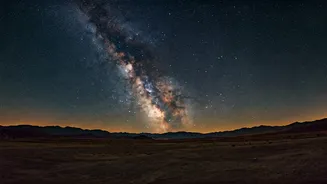
The Moon itself is a major player this month. The key dates for its phases are the Last Quarter on July 7th, the New Moon on July 14th, the First Quarter on July 21st, and the Full Moon on July 29th. The Full Moon in July is known as the Buck Moon, and this year it also coincides with the festival of Guru Purnima. While the Full Moon hinders meteor spotting, the New Moon on July 14th provides the perfect opportunity for deep-sky viewing. With no moonlight to interfere, the moonless nights around this date are the ideal time to seek out the faint, shimmering band of the Milky Way. Look towards the southern sky from a truly dark location, and you may witness the breathtaking sight of our galaxy's bright core stretching across the heavens.
Essential Tips for Success
To make the most of July's stargazing opportunities, a little preparation goes a long way. First and foremost, escape city lights. Light pollution is the biggest obstacle to seeing faint objects. Head to a rural area, a park, or any spot with a clear, dark horizon. Second, give your eyes time to adapt to the darkness. It takes about 20-30 minutes for your vision to become fully sensitive to low light, so avoid looking at your bright phone screen. Third, while many of this month's events are visible to the naked eye, a pair of binoculars can dramatically enhance your view, revealing more stars in the Pleiades cluster or even the faint bluish-green dot of Uranus near Mars around July 4th.