
Our Sun, A Volatile Neighbour
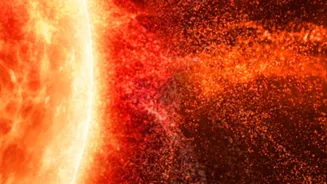
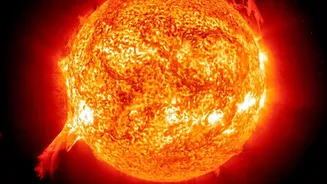
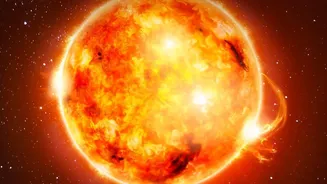
When we think of weather, we imagine rain, wind, and storms on Earth. But there is also weather in space, driven by our own Sun. The Sun is not a placid ball of light; it is a turbulent star that constantly ejects energy and matter. The most dramatic
of these events are solar flares—intense bursts of radiation—and coronal mass ejections (CMEs), which are massive clouds of solar plasma and magnetic fields hurled into space. When Earth is in the path of these events, our planet's magnetic field and upper atmosphere are disturbed, creating what is known as a geomagnetic storm. This is space weather, and its effects are not just limited to creating beautiful auroras.
Satellites in the Firing Line
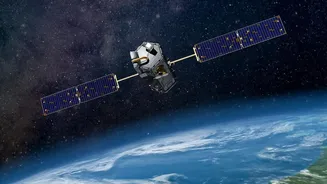
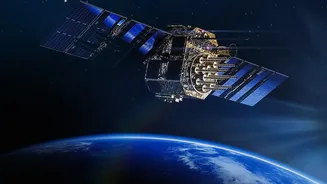
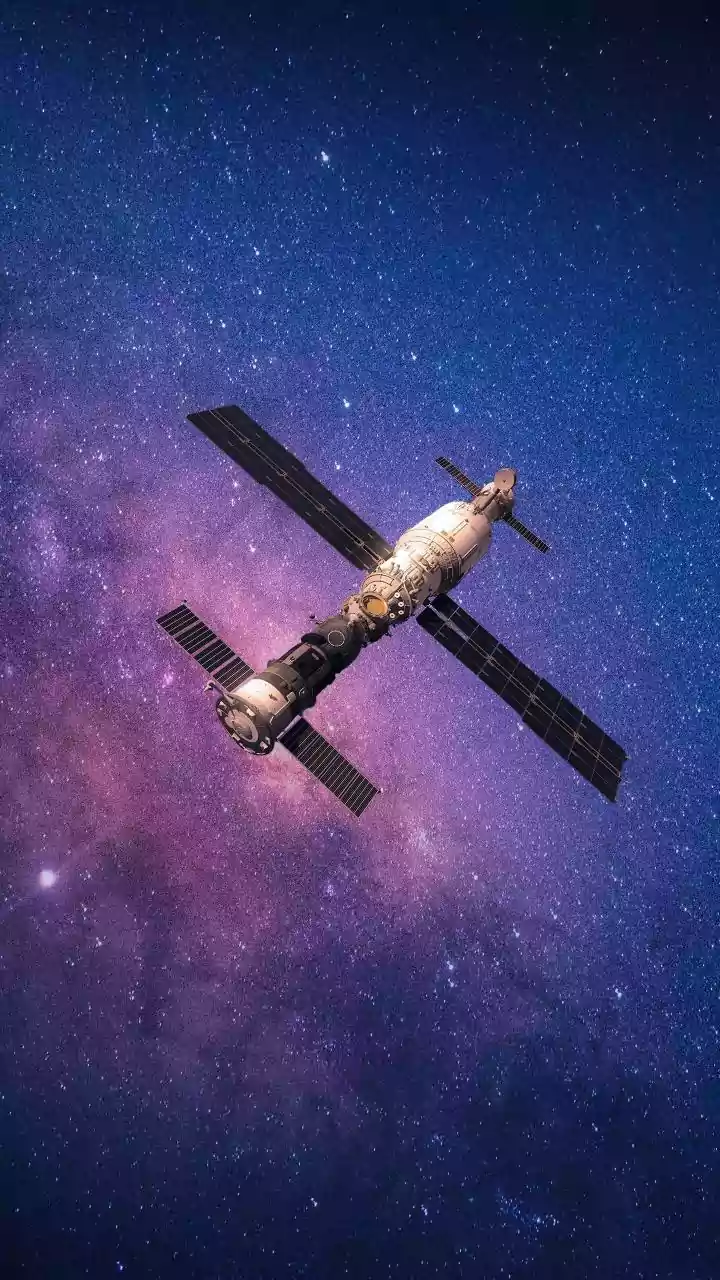
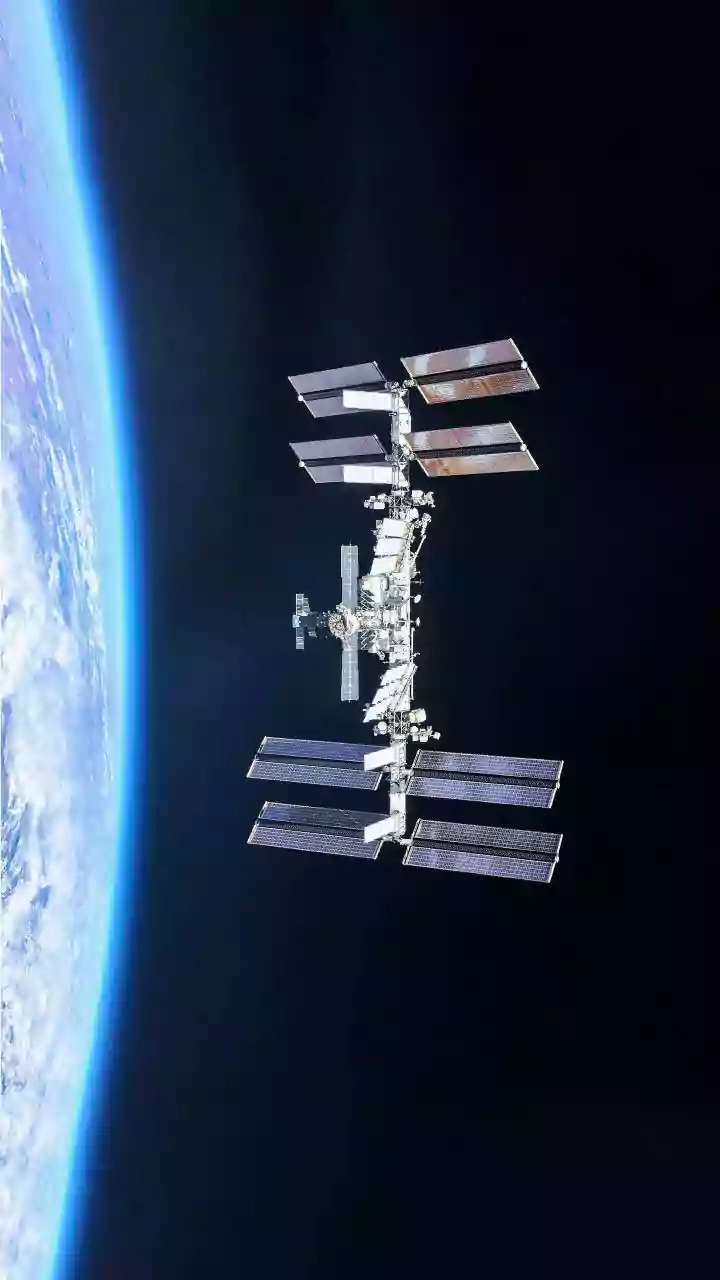
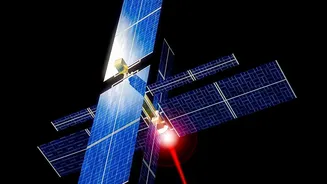
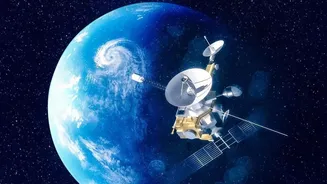
Satellites, particularly the thousands in low-Earth orbit (LEO) that form the backbone of modern communication networks, are highly vulnerable to space weather. There are four main threats. First, increased atmospheric drag during a geomagnetic storm can cause satellites to lose altitude faster than expected, shortening their operational lifespan and even causing them to re-enter the atmosphere prematurely. Second, high-energy particles can damage sensitive electronics, causing malfunctions or permanent failure. Third, spacecraft can accumulate electrical charges on their surfaces, leading to sudden discharges that can disrupt or destroy components. Finally, the very signals used for communication and GPS can be distorted or blocked as they pass through a disturbed ionosphere.
The High Cost of Solar Storms
The economic and societal reliance on this space-based infrastructure means that a major space weather event is a significant risk. A severe storm could disrupt aviation, cripple global navigation systems, and interfere with financial transactions and power grids that depend on precise timing signals from GPS. In February 2022, a relatively modest geomagnetic storm was blamed for the loss of up to 40 newly launched Starlink satellites, which were unable to overcome the increased atmospheric drag and fell back to Earth. The potential costs are enormous, with some estimates suggesting a major event could cause trillions of dollars in damage to the global economy. This has transformed space weather from a niche scientific concern into a critical issue for business and national security.
A New Generation of Forecasting
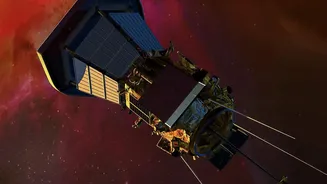
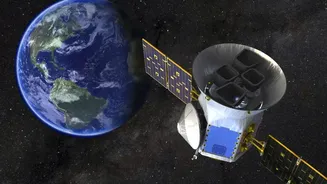
The key to mitigating these risks is prediction. Just like an earthly weather forecast gives us time to prepare for a hurricane, an accurate space weather forecast can give satellite operators crucial lead time. A recent study highlighted at the National Astronomy Meeting in July 2026 detailed a new mission that promises to revolutionize these forecasts. The European Space Agency's HENON mission, scheduled to launch in 2027, will place an instrument called MAGIC (MAGnetometer from Imperial College) about 15 million kilometres from Earth—ten times farther out than current monitoring satellites. This advanced position will allow it to measure the magnetic field of an incoming CME much earlier. This could extend the warning time for the most severe storms from the current 15 minutes to as long as two or three hours.
From Prediction to Proactive Protection
What can be done with a few hours of warning? A lot, it turns out. Satellite operators can proactively put their spacecraft into a protective 'safe mode,' shutting down non-essential and vulnerable systems. They can reorient satellites to present a smaller profile to the incoming storm or use onboard propulsion to counteract atmospheric drag and maintain their orbit. For industries on the ground, a reliable forecast allows them to prepare for potential disruptions. Airlines can reroute flights away from polar regions where radiation exposure is higher during solar events, and power grid operators can take measures to protect their transformers from damaging induced currents. Improved forecasts ultimately lead to more resilient networks, longer satellite lifespans, and a reduction in the economic losses caused by solar disruptions.