



The Allure of the Martian Mirage
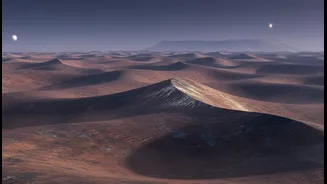
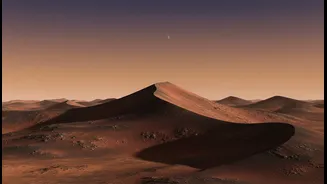
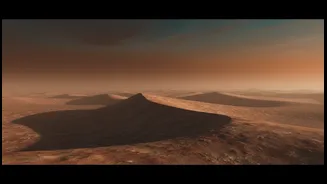
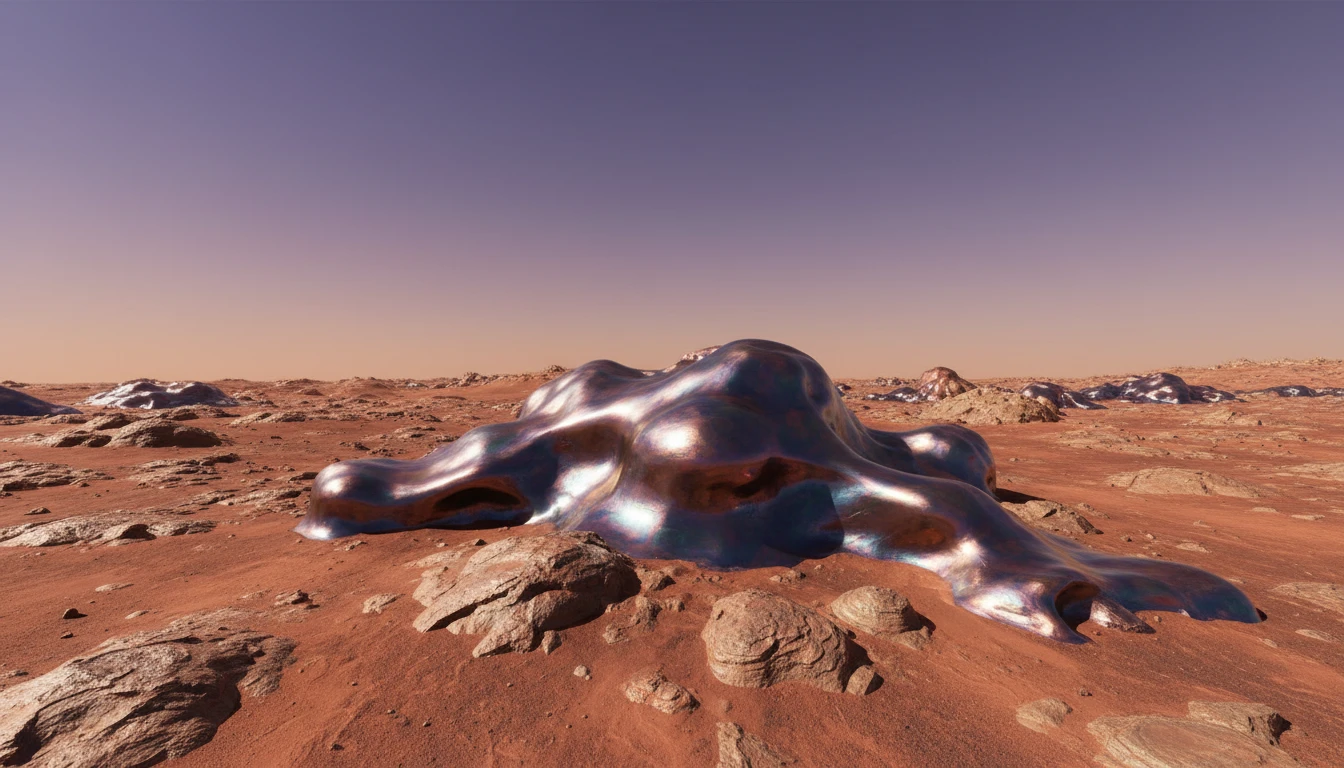
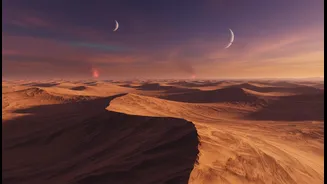
Images from other worlds are often our first, and sometimes only, point of contact. In mid-July 2026, the European Space Agency's Mars Express orbiter captured stunning images of what appeared to be metallic waves inside Mars's vast Kaiser Crater. These
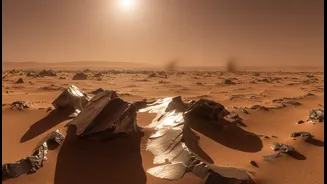
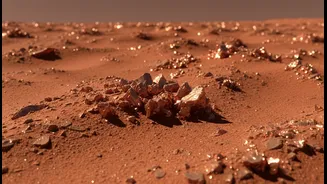
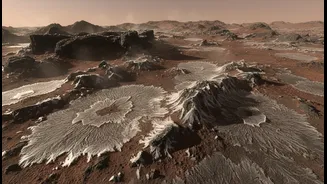
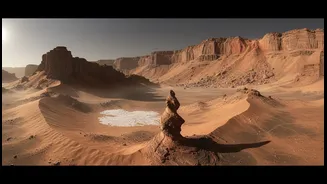
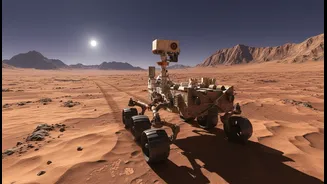
dark, shiny dunes, sculpted by Martian winds, seemed almost as if they were carved from metal. This isn’t the first time Mars has presented such tantalizing visuals. Over the years, NASA's rovers, like Curiosity, have spotted numerous shiny objects. Some looked like discarded parts, others like oddly polished rocks or even a metallic-looking 'hood ornament' shaped by wind. Each discovery sparks excitement and a fundamental question: have we found metal on Mars? The answer is complex. While iron meteorites have indeed been found on the Red Planet, many of these shiny surfaces are geological illusions.
Seeing Isn't Always Believing
So why does ordinary rock or sand sometimes look like polished chrome? The secret lies in a property geologists call luster and physicists call specular reflection. Luster describes how light reflects off a mineral's surface. While we associate a metallic luster with metals like gold and silver, many non-metallic minerals can also be highly reflective. The key factor is surface texture. A very smooth surface reflects light in a single, mirror-like direction—this is specular reflection. A rough surface, by contrast, scatters light in many directions, creating a dull, or diffuse, reflection. On Mars, the persistent wind can act like a powerful polishing agent. Over millennia, it can wear down rocks until they have an extremely fine-grained, smooth surface that reflects sunlight like a mirror, giving them a metallic appearance. In the case of Kaiser Crater's dunes, the metallic sheen is believed to be caused by bright frost deposits on their south-facing slopes, catching the light just right.
The Scientist's Toolkit
To move beyond visual guesswork, scientists rely on a powerful technique called spectroscopy. This method is the workhorse of planetary science, allowing researchers to determine the chemical composition of distant objects by analyzing the light they reflect or emit. Every element and compound interacts with light in a unique way, absorbing some wavelengths and reflecting others, creating a distinctive light 'fingerprint' or spectrum. Instruments like the ChemCam on NASA's Curiosity rover can fire a laser at a rock, vaporize a tiny portion of it, and analyze the resulting light to identify its chemical makeup. For orbiting spacecraft, instruments like the Compact Reconnaissance Imaging Spectrometer for Mars (CRISM) can analyze sunlight reflected off the surface to map out mineral deposits from above. This is how scientists determined that the shiny objects seen by Curiosity were often just wind-polished native rock, and how they identified hydrated salts in the mysterious dark streaks known as Recurring Slope Lineae (RSL), suggesting the presence of briny water rather than exposed metal.
A Universe of Visual Clues
This principle of looking past initial appearances is fundamental to exploring our solar system and beyond. The 'metallic' slopes on Mars are a perfect example of a visual clue that prompts deeper investigation. It forces scientists to ask not just 'What is that?' but also 'Why does it look like that?'. The answers reveal fascinating details about local conditions, from the direction of the wind to the presence of frost or briny water. This process is not limited to Mars. On asteroids and distant exoplanets, where our data is even more limited, understanding how materials reflect light is crucial for interpreting what we see. Some exoplanets are so extreme that they actually do have clouds of metal and rain droplets of titanium. Distinguishing between an illusion on Mars and a metallic reality light-years away requires the same rigorous scientific process: observe, question, and test with the best tools available.