



The End of the Sharp Edge
Walk into a newly designed apartment in Mumbai or Bengaluru, and you'll notice something is missing: the hard corners. The rigid, boxy sofas and sharp-angled tables that defined modern Indian decor for over a decade are being replaced by something more
fluid and organic. This isn't just a fleeting trend; it’s a fundamental shift in how we relate to our personal spaces. After years of prioritising a sleek, almost sterile minimalism, urban Indians are now embracing what designers call “warm minimalism” or “cozy minimalism.” The focus has moved from creating a showpiece home to cultivating a personal retreat that supports well-being. This change is partly driven by our collective experience of spending more time at home, which ignited a desire for spaces that feel genuinely comforting and enveloping.
The Gentle Power of the Curve
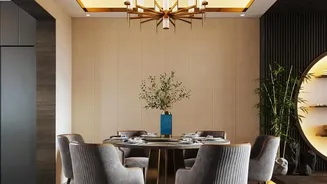
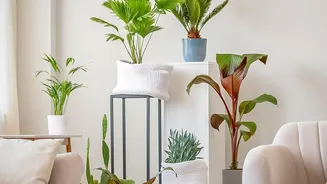
The most visible element of this new warmth is the curve. Arched doorways, rounded sofas, circular coffee tables, and pebble-shaped chairs are appearing everywhere. Curves do something straight lines cannot: they create a sense of natural flow, making rooms feel less rigid and more welcoming. In compact urban apartments, where space is a premium, a curved sofa or an oval dining table can improve movement and make a room feel more spacious and conversational. The psychology is simple—curves are found everywhere in nature and our brains are wired to find them calming. This connection to the natural world is a core principle of biophilic design, another major influence on current Indian interiors, which seeks to bring the outdoors in to enhance our well-being.
A Symphony of Natural Textures
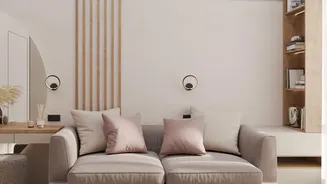
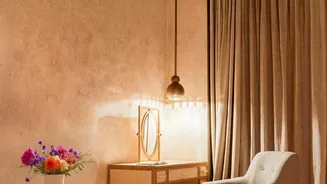
Beyond shape, the new Indian home is a deeply tactile experience. Smooth, glossy surfaces are giving way to a rich tapestry of textures. Walls are no longer just flat planes of paint; many now feature the soft, velvety finish of limewash or the raw honesty of lime plaster, which adds depth and a handmade feel. This appreciation for imperfection and natural materials is borrowed from philosophies like Wabi-Sabi, which finds beauty in authenticity and ageing. This is complemented by furniture and furnishings in materials like bouclé, linen, jute, cane, and rattan. These textures invite touch and add layers of visual interest, making a space feel curated and personal rather than assembled from a catalogue.
Let There Be (Layered) Light
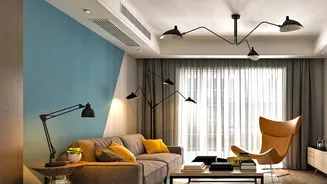
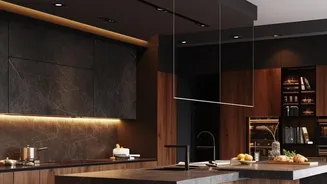
Perhaps the most crucial element in creating warmth is a thoughtful approach to lighting. The old model of a single, harsh tubelight or a grid of ceiling lights is being abandoned. Instead, designers are using a layered lighting scheme, which combines three distinct types of light. The first is ambient light, the general illumination from sources like cove lighting or pendants. Next is task lighting, focused light for activities like reading or cooking. Finally, accent lighting is used to highlight features like a textured wall or a piece of art. The key is to use warm-toned bulbs (around 2700K-3000K) and put each layer on a separate, dimmable switch. This allows homeowners to adjust the mood of the room, shifting from bright and functional to soft and intimate, ensuring the home is always bathed in a welcoming glow.
The Philosophy of Calm
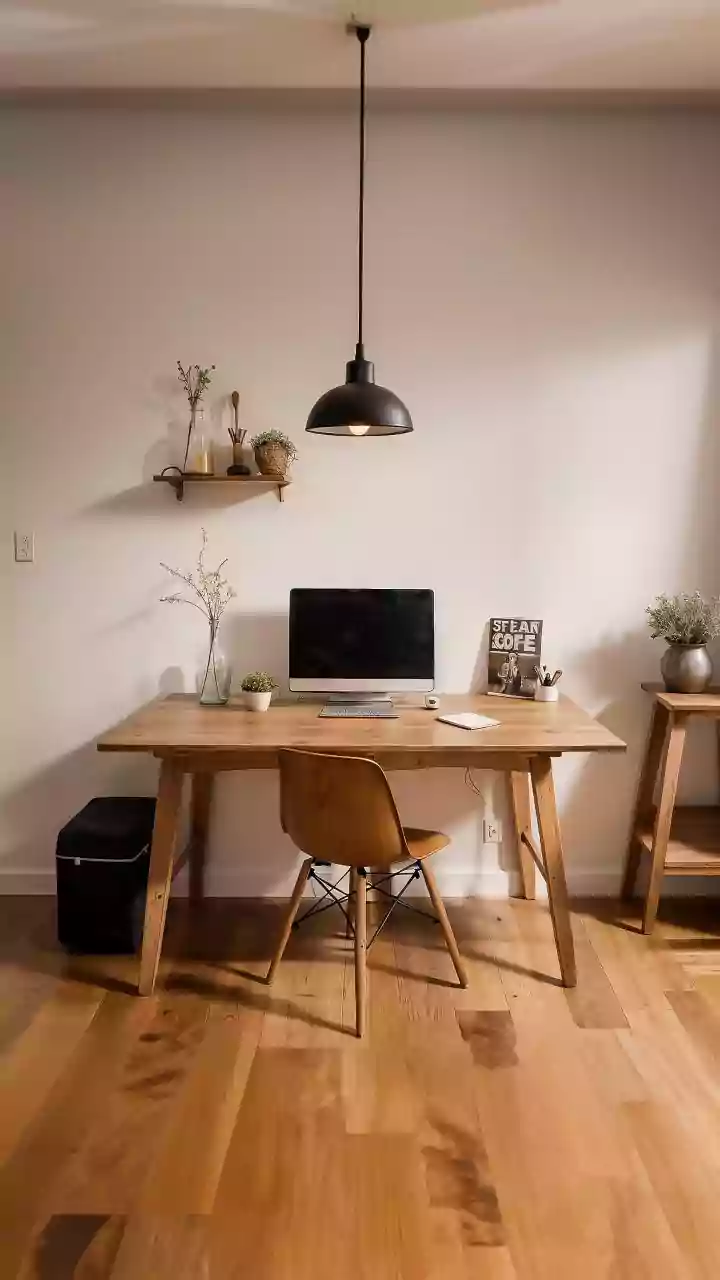
This collective shift towards curves, textures, and thoughtful lighting is strongly influenced by the Japandi design philosophy. A hybrid of Japanese Wabi-Sabi and Scandinavian hygge (the concept of cosiness), Japandi celebrates simplicity, natural materials, and functional warmth. It’s not about having less for the sake of it, but about surrounding yourself only with things that are both beautiful and meaningful. In the Indian context, this philosophy resonates with traditional principles of craftsmanship, natural materials like teak and terracotta, and an architectural understanding of space. It’s less about importing a foreign style and more about reinterpreting our own heritage of considered, soulful living for the 21st-century urban home.