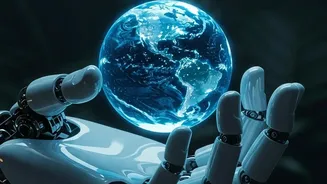









The Automation of Tradition
For decades, the strength of India's IT sector was built on a model of leveraging a vast, cost-effective workforce for tasks like manual software testing, infrastructure management, data entry, and basic coding. This era is rapidly drawing to a close.
Generative AI and advanced automation tools are now capable of handling these repetitive and predictable jobs with greater speed and efficiency. This has led to a structural change where major IT firms like TCS, Infosys, and Wipro are no longer hiring in massive volumes for entry-level roles. Instead, they are integrating AI platforms to boost productivity, leading to leaner team structures and a significant reduction in the need for large 'bench' armies of unassigned employees.
Redefining 'Value' in IT
As AI handles the 'what', the human workforce is shifting its focus to the 'why' and 'how'. The new 'higher-value' work demands skills that machines cannot easily replicate: strategic thinking, complex problem-solving, creativity, and deep domain expertise. Instead of just executing code, professionals are now expected to design and architect complex systems, ensure AI models are governed ethically, and consult with clients on digital transformation strategies. This marks a significant move up the global value chain for the Indian IT industry, transitioning from a service provider to an innovation partner.
The New High-Demand Roles
The demand for specific, advanced skills is soaring. Job postings for roles like AI/ML engineers, data scientists, cloud architects, AI governance specialists, and cybersecurity experts are commanding significant salary premiums, often 20-35% higher than traditional roles. Companies are aggressively seeking professionals who can combine technical AI capabilities with sector-specific knowledge, for instance in healthcare, finance, or manufacturing. Roles such as 'AI model trainer' and 'prompt engineer' which were unheard of a few years ago, are now emerging as critical functions. This specialized, capability-led hiring is replacing the old model of broad-based volume recruitment.
The Upskilling Imperative
This transformation has triggered a massive upskilling and reskilling movement across the industry. Recognising the looming talent gap, major companies are making huge investments in training their existing workforce. It's estimated that a significant portion of the current IT workforce needs to be reskilled to remain relevant in the AI era. Professionals themselves are also taking initiative, with a boom in enrollment for AI-specific courses and certifications. This is a race to build a future-ready workforce, as studies suggest a potential shortfall of over a million skilled AI professionals in India by 2027 if the current pace of training is not accelerated.
A Two-Tiered Job Market
While AI is creating new opportunities, it's also creating a divide. A K-shaped recovery is emerging in the job market, where professionals with high-demand AI, cloud, and cybersecurity skills see rapid salary growth and opportunities. Conversely, those with legacy or easily automated skills may face stagnation or displacement. While some data suggests AI is creating more jobs than it is eliminating, these new roles are not one-to-one replacements for the old ones. The challenge for the industry and for individual professionals is to successfully navigate this transition, ensuring that the shift to higher-value work is an opportunity for broad-based growth, not just for a select few.