







Beyond the Boundary Line
A protected area, whether it's a national park or a wildlife sanctuary, is legally designated to conserve biodiversity. In India, these areas cover just over 5% of the country's land. However, a line on a map does not create an impenetrable shield. These
'islands' of conservation exist within a sea of human activity, facing constant pressure from the outside world. The initial act of protection is a vital policy decision, but it's the ongoing work within those boundaries that determines whether the ecosystem thrives or slowly deteriorates. Conservation is not a one-time event; it is a long-term, dynamic responsibility.
The Persistent Threats
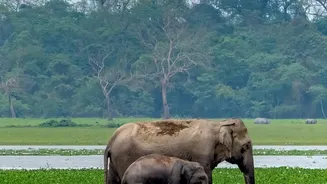
Protected areas face a barrage of relentless and evolving threats. Illegal poaching and hunting remain a severe problem, capable of creating 'empty forests' where trees stand but wildlife has vanished. Beyond poaching, there is the silent creep of invasive species, like the ornamental plant Lantana, which now chokes the undergrowth of many Indian forests, hindering native plant growth. Furthermore, human-wildlife conflict is a constant challenge, as animals cross invisible borders into farmlands. Adding to this are pressures from infrastructure development, such as highways and railways that fragment habitats, and the overarching effects of climate change, which alter ecosystems in unpredictable ways.
Monitoring: The Eyes and Ears of Conservation
If management is the hands-on work, then monitoring is the crucial intelligence that guides it. Effective conservation is impossible without good data. Park managers and researchers use a variety of tools to understand what is happening inside a protected area. Trail cameras and acoustic recorders capture the presence and movement of elusive wildlife, while vegetation surveys track the health of plant communities. This information helps answer critical questions: Is a species' population increasing or declining? How are animals using their habitat? Where are the hotspots for human-wildlife conflict? By tracking these trends, managers can make informed decisions, allocating limited resources where they are most needed and adapting their strategies before problems become irreversible.
Management: An Active, Hands-On Approach
Armed with data from monitoring, managers can take direct action. This is not about leaving nature entirely to its own devices, but about giving it a helping hand to counteract unnatural pressures. Management activities can include restoring degraded habitats by planting native species, implementing controlled burns to maintain ecosystem health, and actively removing invasive plants. It also involves law enforcement to prevent poaching and illegal logging. Critically, modern conservation involves proactive visitor use management—balancing tourism with the protection of resources to prevent overcrowding and environmental damage. These actions require consistent funding, scientific expertise, and a clear, adaptive plan.
The Human Element: Involving Communities
Perhaps the most critical component of modern conservation management is the involvement of local communities. In India, many indigenous and local communities have deep-rooted traditions of coexisting with nature. For protected areas to succeed in the long run, these communities cannot be seen as obstacles but as essential partners. Successful conservation initiatives increasingly involve local people in everything from anti-poaching patrols to habitat restoration projects and ecotourism ventures. When communities have a genuine stake in the health of the ecosystem and benefit from its protection, they become its most effective guardians. This community-based approach extends conservation beyond park boundaries, fostering a landscape where people and wildlife can both thrive.