








The vast, invisible system managing thousands of daily flights is finally getting a critical 21st-century upgrade. The U.S. Federal Aviation Administration (FAA) has begun a long-overdue overhaul, replacing decades-old technology with modern tools.
From Floppy Disks to Digital Dashboards
In
an announcement that felt long overdue, the FAA confirmed it is actively retiring archaic systems, some of which still relied on floppy disks and other 1980s-era technology. For years, air traffic controllers have managed the world's busiest airspace using a patchwork of legacy systems. This includes paper flight strips—small slips of paper used to track a plane's progress—and multiple, non-integrated information displays for weather, flight alerts, and equipment status. The reliance on this aging infrastructure has not only been inefficient but has also presented growing maintenance challenges, with some replacement parts for old computers reportedly sourced from online auction sites. The modernization effort, part of a broader push known as the 'Brand New Air Traffic Control System', aims to consolidate these disparate and manual processes into a cohesive digital environment.
Introducing the E-IDS
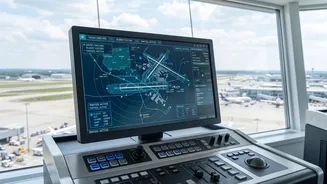
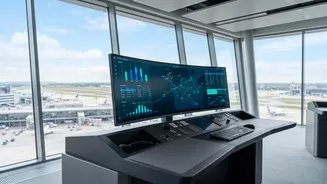
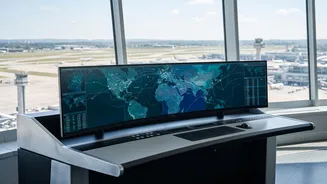
The centerpiece of this specific digital upgrade is the Enterprise Information Display System, or E-IDS. This new platform will replace four separate legacy systems, integrating critical data onto a single digital dashboard. Instead of consulting multiple screens or paper slips, controllers will have a unified, real-time view of weather patterns, equipment outages, restricted airspace schedules, and pilot reports. According to FAA Administrator Bryan Bedford, the goal is to move away from outdated, manual processes and allow controllers to instantly share crucial information across the entire National Airspace System. The initial rollout has already begun at facilities in Atlantic City, Nashville, and Rochester, as well as data-processing hubs in Atlanta and Salt Lake City, with a goal of deploying E-IDS to 435 sites by the end of 2028.
A Long and Winding Road to Modernization
This upgrade is a key component of the FAA's larger, multi-billion dollar Next Generation Air Transportation System (NextGen) program, an ambitious initiative that has been in the works for nearly two decades. The path has been marked by delays and significant costs. The first phase of the current modernization push comes with a price tag of over $12 billion. However, officials are already calling for an additional $30 billion to fund the second phase, which will tackle deeper automation and infrastructure replacement, including physical air traffic control towers. Despite the slow progress, recent years have seen an accelerated push, spurred by pressure from Congress and watchdog groups to improve the safety and reliability of the nation's aviation infrastructure. This includes replacing old copper wiring with fiber-optic cables and expanding the use of electronic flight strips, which are now active in 26 major airports.
What This Means for Air Travel
For the average passenger, the benefits of this technological leap forward are primarily centered on safety and efficiency. By providing controllers with better, faster, and more integrated information, the FAA anticipates a reduction in errors and an improved ability to manage air traffic proactively. This could translate to fewer delays caused by equipment failures or inefficient routing. The modernization also includes new AI_powered software, known as SMART, which is designed to predict congestion and weather disruptions hours or even days in advance, helping to prevent problems before they arise. The ultimate goal of NextGen is to increase the capacity of the airspace, allowing more flights to operate safely while also reducing fuel burn and carbon emissions through more direct flight paths.
The Challenge of a System–Wide Upgrade
Upgrading a mission–critical system that operates 24/7 without causing major disruptions is a monumental task. The FAA has noted that integrating new technologies with legacy systems is a major challenge. The process requires not only installing new hardware and software but also extensively training thousands of controllers on the new systems and procedures. A Government Accountability Office (GAO) report highlighted that the agency was managing the initial phase with thousands of individual project schedules that were not fully integrated, creating risks of conflicts and disruptions. Despite these hurdles, officials state that the first phase of the modernization is on track for completion by the end of 2028, setting the stage for a safer and more technologically advanced future for air travel in the United States.