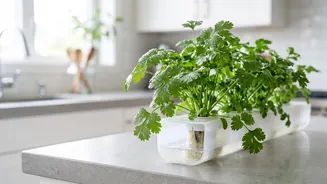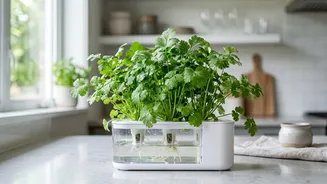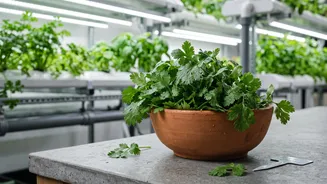




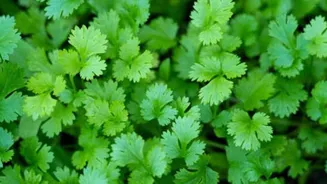
Growing coriander indoors using hydroponics offers a fast track to fresh, aromatic leaves year-round, free from soil-borne pests. But this soil-free method puts you in complete control, making consistent monitoring of nutrients and water the secret to success.
Why Hydroponics Works for Coriander
Hydroponics is an ideal method for growing coriander (also known as cilantro) because it bypasses many common gardening frustrations. By delivering nutrients directly to the roots via water, you can achieve faster growth compared to soil. This controlled environment also helps prevent the plant from 'bolting'—or flowering prematurely—which is often triggered by heat stress in outdoor gardens. With no soil, you eliminate mess and the risk of soil-based pests and diseases, making it perfect for a kitchen countertop or indoor garden space. Because you control the inputs, you can create the perfect conditions to keep your coriander leafy and productive for weeks.
The Importance of Nutrient Strength (EC)
In hydroponics, the nutrient solution is your plant's sole source of food. Its concentration is measured by Electrical Conductivity, or EC. For coriander, which is a relatively light feeder, the ideal EC range is generally between 1.2 and 1.8 mS/cm. Starting seedlings at the lower end of this range (around 1.2) and gradually increasing toward 1.8 as the plant matures will support healthy, lush foliage without overwhelming the roots. Too much nutrient strength can cause 'nutrient burn', which appears as brown, crispy leaf tips. Conversely, an EC that is too low will lead to pale leaves and stunted growth, often a sign of a nutrient deficiency.
Mastering Water Quality with pH
The pH level of your water determines whether the nutrients you provide are actually available for the plant to absorb. Even a perfectly mixed nutrient solution is useless if the pH is wrong, a problem known as 'nutrient lockout'. For hydroponic coriander, the target pH range is slightly acidic, between 5.5 and 6.5. Some expert growers narrow this even further to 6.0 to 6.5 to optimize conditions. If the pH drifts too high (alkaline) or too low (acidic), the roots will be unable to take up essential macro and micronutrients, leading to deficiencies even when they are present in the water. Yellowing leaves are a common first sign that the pH is out of balance.
Essential Tools for Monitoring
Guesswork is the enemy of successful hydroponics. To properly manage your system, two affordable digital meters are essential: a pH meter and an EC/TDS meter. A pH meter gives you an instant reading of your water's acidity, allowing you to make precise adjustments. An EC meter (sometimes called a TDS or PPM meter) measures the total concentration of nutrient salts in your solution. Regular testing—at least a few times a week for beginners—allows you to catch and correct drifts before they harm your plants. It's also wise to check the water temperature, as nutrient solutions above 24°C (75°F) hold less dissolved oxygen and can promote root rot. The ideal temperature range is between 18°C and 24°C.
Troubleshooting Common Problems
If your coriander plants are struggling, the issue can almost always be traced back to the water. Here are a few common symptoms and their likely causes:
Yellowing Leaves: This is most often a pH issue causing nutrient lockout. Check your pH first before adding more nutrients. Yellowing on lower, older leaves suggests a nitrogen deficiency, while yellowing between the veins of new leaves can point to an iron deficiency.
Brown, Slimy Roots: This is a classic sign of root rot, caused by insufficient oxygen in the water. This problem is made worse by warm water temperatures. Ensure your reservoir is properly aerated with an air stone and keep the water temperature below 24°C.
Bolting (Premature Flowering): Coriander bolts when stressed, especially by heat. If your plant suddenly sends up a flower stalk and the leaves turn bitter, your water or air temperature is likely too high.
Stunted Growth: If plants seem to grow very slowly, check both your EC and pH. A nutrient solution that is too weak (low EC) or a pH level that is out of range can stall development.