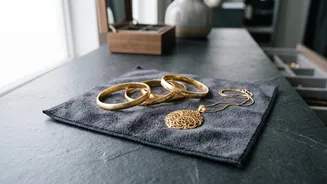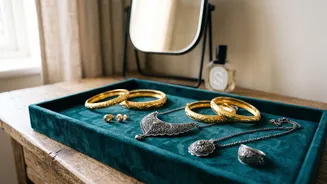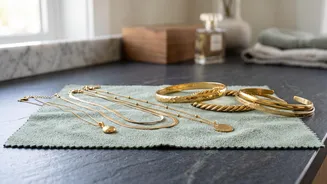




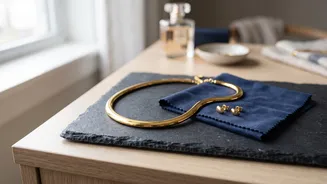

First, Understand Why Tarnish Happens
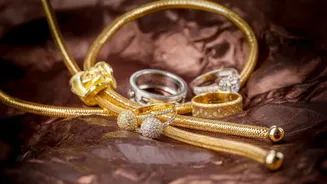
Tarnish isn't a sign of poor quality; it's a natural chemical reaction. For most artificial and gold-plated pieces, the base metal is often copper, brass, or another alloy. When these metals are exposed to oxygen, moisture, and sulfur compounds in the air,
they undergo oxidation. This process creates a dark or dull layer on the surface. Factors like humidity, sweat, skin oils, and chemicals in everyday products can significantly speed up this reaction. The thin layer of gold on plated jewellery can also wear away over time, exposing the more reactive metal underneath. Knowing the enemy is the first step to protecting your favourite pieces.
The Golden Rule: Last On, First Off
Make wearing your jewellery the absolute last step of your getting-ready routine and the first thing you take off when you get home. Perfumes, hairsprays, lotions, sunscreens, and makeup all contain chemicals and alcohols that can corrode the plating and accelerate tarnishing. By putting your jewellery on after all your products have dried, you create a barrier and minimise direct contact. At the end of the day, take your jewellery off before you do anything else, preventing it from snagging on clothes or coming into contact with makeup remover.
Keep It Dry and Away From Moisture
Water is one of the biggest culprits behind tarnishing. It's crucial to remove your jewellery before showering, washing your hands, swimming, or doing the dishes. The chlorine in pool water and salt in ocean water are especially harsh and can cause rapid discoloration. The same rule applies to exercise; sweat contains salts that react with the metals. Don't store your pieces in the bathroom, where high humidity from steam creates a perfect environment for oxidation to thrive. If your jewellery does get wet, dry it thoroughly with a soft cloth before storing it.
Smart Storage Is Non-Negotiable
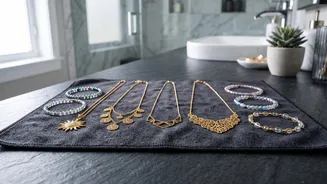
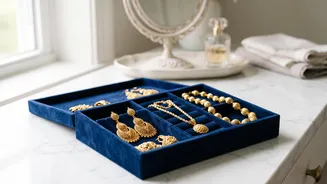
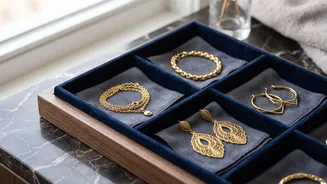
How you store your jewellery is just as important as how you wear it. Leaving pieces out in the open exposes them to air and humidity, speeding up tarnish. The best method is to store each piece separately in a soft pouch, a lined jewellery box with compartments, or an airtight zip-top bag. Storing pieces separately prevents them from scratching each other. For an extra layer of protection, you can add anti-tarnish strips or a small silica gel packet to your jewellery box to absorb moisture and sulfur compounds from the air.
Clean Gently, Not Aggressively
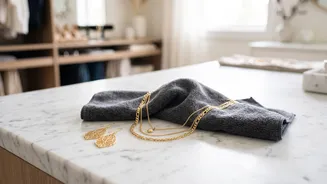
Regular cleaning removes the build-up of oils and dirt that contribute to tarnishing. However, aggressive scrubbing or harsh chemicals can strip the plating right off. After each wear, a quick wipe-down with a soft, lint-free microfiber cloth can work wonders. For a deeper clean, mix a few drops of mild dish soap into a bowl of warm water. You can soak the piece for a few minutes before gently cleaning crevices with a soft-bristled toothbrush or a cotton swab. Rinse with clean water and, most importantly, pat it completely dry before storing. Avoid abrasive cleaners like baking soda or toothpaste.
Give Your Favourite Pieces a Day Off
Even with the best care, constant wear takes a toll. Friction from skin and clothing can gradually wear down the thin plated layer, especially on rings and bracelets. Rotating your jewellery collection is a simple habit that allows each piece a break from daily exposure to skin oils and environmental factors. This not only helps maintain the finish but also ensures your entire collection gets some love. By not wearing the same piece every single day, you significantly extend its lifespan and keep it looking newer for longer.
Consider a Protective Barrier (With Caution)
A common DIY hack is to apply a thin coat of clear nail polish to costume jewellery. This creates a physical barrier that seals the metal from air and moisture, preventing both tarnishing and the green stains that some base metals can leave on your skin. This method works best on inexpensive pieces where the metal itself is the issue. However, it's not a permanent solution and may need reapplication. Be aware that on some plated pieces, the solvents in nail polish could potentially damage the finish, and the polish can yellow or chip over time. There are also specialty jewellery-approved lacquers available that are designed for this purpose.