


Sailing on a River of Light
At its heart, a solar sail works much like a sailboat on water, but the 'wind' it catches is sunlight. Light is made of particles called photons which, despite having no mass, carry momentum. When billions of these photons bounce off a large, reflective,
and incredibly thin sail, they transfer their momentum, giving the spacecraft a tiny but continuous push. In the frictionless vacuum of space, this constant acceleration adds up. Over weeks and months, a solar-sailing craft can achieve incredible speeds without burning a single drop of propellant, which is a major limitation and expense for conventional rockets.
The Challenge of Visiting Asteroids
Asteroids are some of the most fascinating objects in our solar system, holding clues to its formation and containing potentially valuable resources. However, getting to them is difficult and expensive. Traditional chemical rockets are heavy, require massive amounts of fuel, and are best suited for short, powerful bursts of thrust, not the long, complex journeys needed to rendezvous with distant, fast-moving space rocks. This has limited our ability to explore more than a handful of asteroids up close. Sending lighter probes is cheaper, but they have been limited by the lack of efficient, long-term propulsion systems.
The Breakthrough: Smarter, Lighter Sails
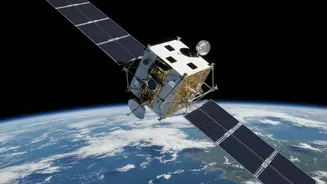
The latest breakthrough addresses the core challenges that have held solar sails back: weight, control, and deployment. Recent advances center on new advanced composite materials for the booms that unfurl and support the sail. These materials are significantly lighter and more rigid than previous designs, allowing for the deployment of vast, apartment-sized sails from a satellite no bigger than a small suitcase. This new generation of probes combines these ultra-lightweight structures with sophisticated AI-driven navigation. The system can make minute adjustments to the sail's angle, allowing it to 'tack' on sunlight to steer with unprecedented precision, a crucial capability for navigating the complex orbital paths required for asteroid rendezvous missions.
A New Era for Space Exploration
This development is a game-changer. By eliminating the need for heavy onboard propellant, these lightweight probes can be launched far more cheaply, often hitching a ride as secondary payloads on other missions. This drastically lowers the barrier to entry for space exploration, enabling universities, private companies, and smaller nations to launch their own deep-space missions. A single mission could potentially visit multiple asteroids in one trip, something prohibitively complex and expensive for a fuel-based spacecraft. This opens the door to creating a comprehensive map of near-Earth asteroids, a vital step for both scientific discovery and planetary defense.
From Science to a Solar System Economy
The long-term implications extend far beyond pure science. Efficient and low-cost travel to asteroids is the foundational technology required for a future space-based economy. Studies have shown that for returning resources from asteroids, solar sails are a more economically viable option than chemical rockets. As this technology matures, it paves the way for prospecting and eventually mining asteroids for water—to be used as rocket fuel in space—and rare metals that are scarce on Earth. For a space-faring nation like India, which is rapidly expanding its commercial space sector, this breakthrough represents a significant opportunity to be at the forefront of the next industrial revolution, one that takes place not on Earth, but across the solar system.