








A Private Place to Go
Cats, like their wild ancestors, are hardwired to seek out safe, secluded spots to do their business. This instinct comes from a place of vulnerability; in nature, eliminating is a moment when they are exposed to predators. By providing a private location,
you're tapping into this deep-seated need for security. An ideal spot is in a quiet, low-traffic corner of your home, like a bathroom or a spare room, where your cat won't be startled by sudden noises or frequent foot traffic. Placing the box in a busy hallway or near a loud appliance like a washing machine can create stress, leading them to avoid the box altogether. A quiet spot gives them the peace of mind to relax and use their box consistently, preventing accidents elsewhere in your home.
The Importance of Good Airflow
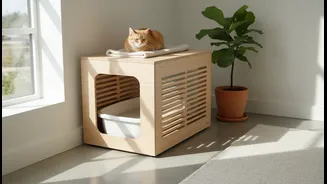
A cat’s sense of smell is far more sensitive than a human's. What might seem mildly unpleasant to us can be completely overwhelming for them. Enclosed or covered litter boxes, while popular with owners for hiding the mess, can trap ammonia fumes from urine. This creates an intensely unpleasant environment for a cat and can even lead to respiratory irritation for both pets and people. Good ventilation is key. An open-style box in a well-ventilated area allows odors to disperse naturally. If you must use a covered box or place it in a cabinet, ensure it has ample ventilation holes or is specifically designed for airflow. A stuffy, smelly box is a major reason cats start looking for cleaner, fresher places to relieve themselves, like your carpet or bed.
Easy Access for Daily Cleaning
This final point is as much for you as it is for your cat. A litter box that is difficult to get to won't be cleaned as often as it should be. Experts recommend scooping the box at least once, and preferably twice, a day. Cats are fastidiously clean creatures and many will refuse to step into a dirty box. Holding their urine to avoid a soiled box can contribute to serious health issues like urinary tract infections. To make this daily chore easier, place the box where you can access it without contorting yourself. A location that is easy to reach means you're more likely to keep up with the daily scooping, which in turn keeps your cat healthy and happy. Daily scooping also allows you to monitor your cat's health by noticing any changes in their urine or faeces.
Recognising the Warning Signs
How do you know if your current setup isn't working? Your cat will give you clues. Eliminating just outside the box is a classic sign of aversion. Other, more subtle signs include perching on the edge of the box, hesitating before entering, or bolting out as soon as they are finished. Some cats may not dig or cover their waste if they are unhappy with the litter or the cleanliness of the box. Paying attention to these behaviours is crucial. They are your cat's way of telling you something is wrong with their bathroom situation. Ignoring these signs can lead to worsening behavioural issues and potential health problems.