



A New Cosmic Puzzle
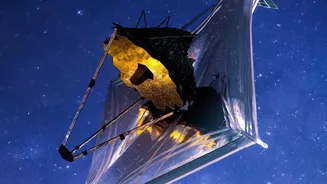
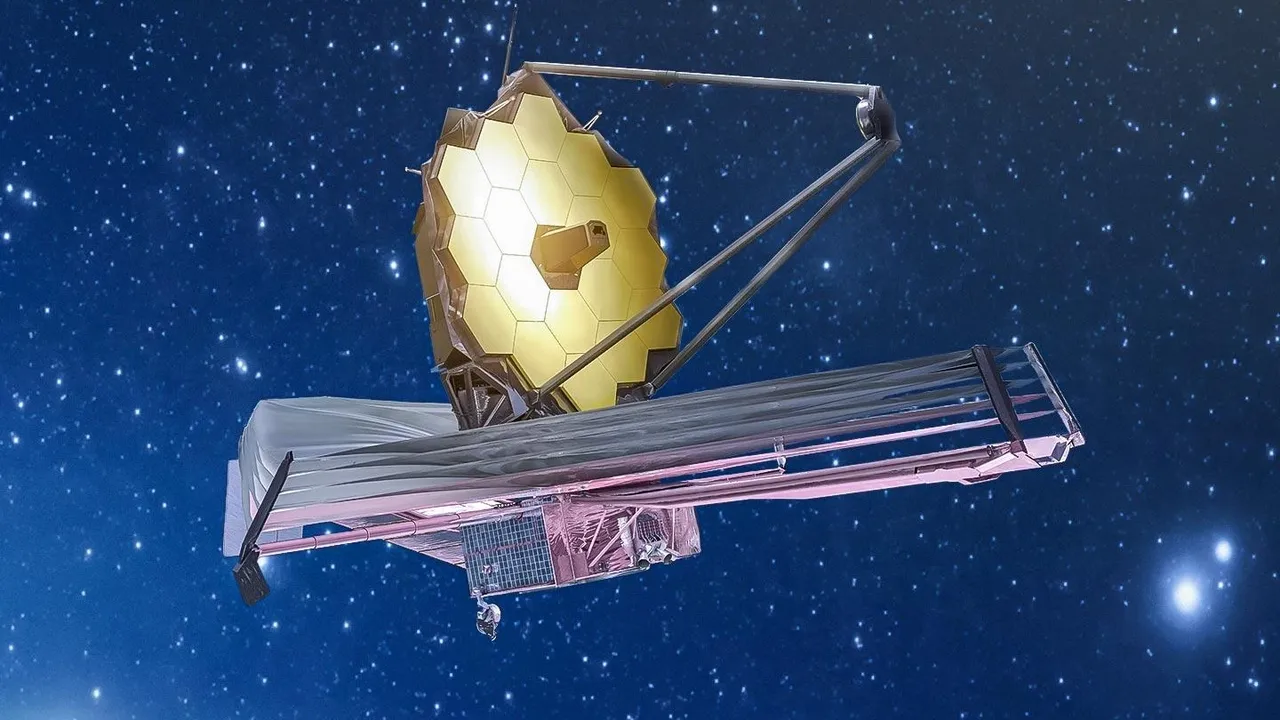
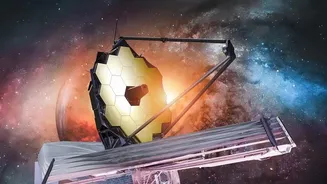
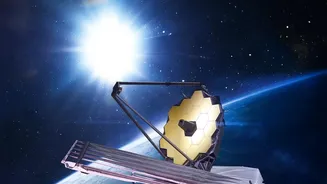
When astronomers first processed the initial deep-field images from the James Webb Space Telescope, they noticed something strange: a surprising number of small, distinctly red objects scattered across the blackness. These weren't just any cosmic bodies;
they were located at extreme distances, meaning we see them as they were in the universe’s infancy, just 600 million years or so after the Big Bang. Their brightness was the real shocker. If they were galaxies made of stars, their luminosity implied they were colossally massive—far larger than models predicted could form so quickly. This apparent contradiction led some to cheekily call them “universe breakers,” as they challenged our fundamental understanding of early galaxy formation.
Decoding the Red Light
To understand why these dots are significant, it helps to know why they are red. As the universe expands, the light from distant objects gets stretched on its long journey to us. This stretching shifts light towards the red end of the spectrum, a phenomenon called redshift. The higher the redshift, the farther away and further back in time the object is. The JWST was specifically designed to capture this faint, ancient infrared light. These little red dots have a very high redshift, placing them at the dawn of cosmic time. But their particular color profile—red at long wavelengths but surprisingly blue at shorter ones—suggested something more complex than just a collection of stars was at play.
The Prime Suspect: Hidden Black Holes
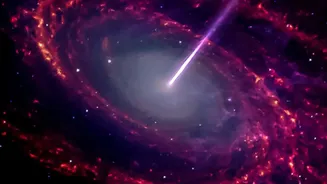
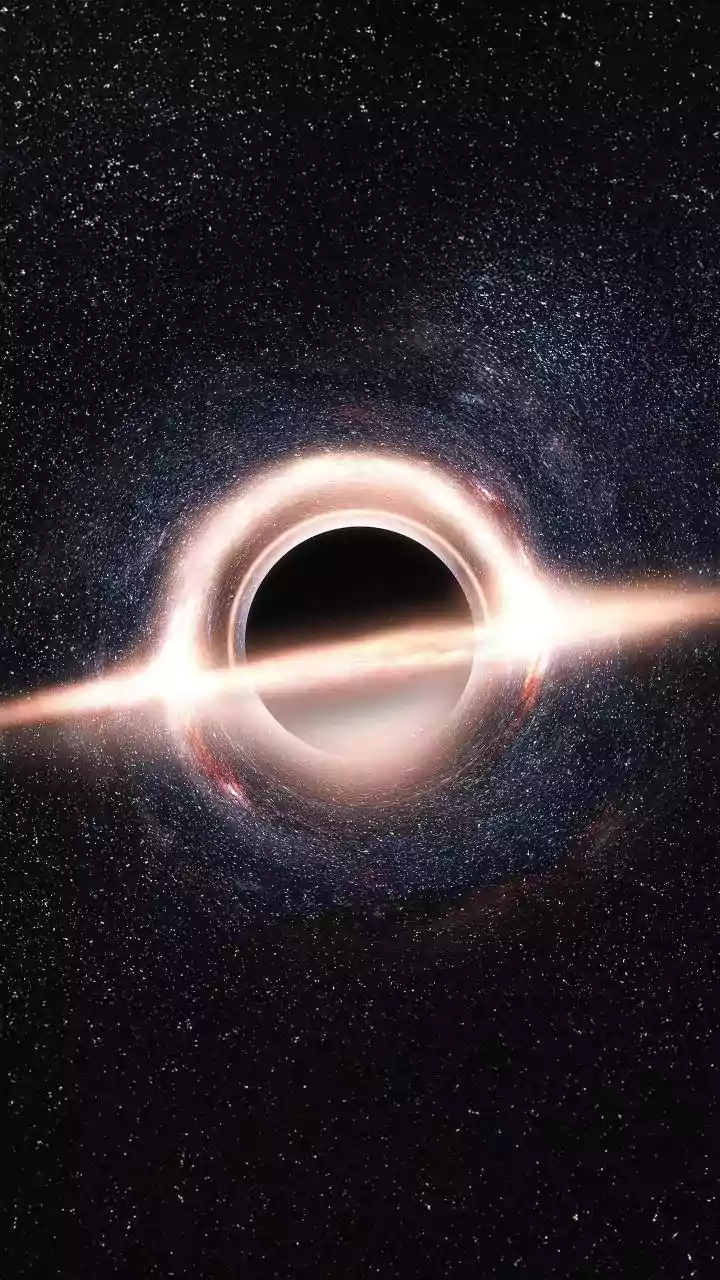
The leading theory to explain the little red dots quickly became one of the most exciting objects in cosmology: supermassive black holes. Astronomers proposed that these dots aren't just galaxies but active galactic nuclei (AGN). An AGN is the super-bright, compact region at the center of a galaxy where a massive black hole is furiously consuming gas and dust. This process releases an immense amount of energy, creating a brilliant quasar. According to this model, the little red dots are early quasars shrouded in a thick cocoon of dust, which absorbs much of the light and re-emits it in the red and infrared spectrums, making the object appear as a compact red dot.
Strong Evidence Emerges
This theory remained a strong possibility until a June 2026 study provided what many scientists are calling the strongest evidence to date. An international team focused Webb's powerful spectrograph on a single object, designated GLIMPSE-17775, capturing the most detailed light signature from a little red dot ever recorded. The spectrum revealed multiple chemical fingerprints and light patterns that all pointed to the same conclusion: this was a rapidly growing supermassive black hole enveloped in a dense cloud of partially ionized gas—effectively a “black hole star.” This finding strongly supports the idea that many of these objects are powered by black hole accretion, not just starlight.
A Temporary Phase of Galaxy Life
Another puzzle was why these little red dots seem abundant in the early universe but disappear as it matures. A July 2026 study offered a compelling answer by studying a closer, lower-redshift spiral galaxy nicknamed “Saguaro.” This galaxy’s core has the exact same characteristics as a little red dot. By simulating what Saguaro would look like if it were billions of light-years away, researchers showed that its bright, dusty nucleus would be visible, while its sprawling spiral arms would fade into blackness. This suggests being a little red dot isn't a permanent identity but a temporary, highly active phase in a galaxy’s evolution. As the central black hole consumes the available gas or blows it away, its appearance changes, explaining why they seem to vanish from the cosmos over time.