


A New Window to the Dawn of Time
For astronomers, a telescope is a time machine. Because light takes time to travel across the vastness of space, observing a galaxy billions of light-years away means we are seeing it as it was billions of years ago. With the unprecedented infrared sensitivity
of the James Webb Space Telescope, scientists can now peer back to the cosmic dawn, a period just a few hundred million years after the Big Bang. These new images are providing a treasure trove of data, capturing ancient galaxies that were previously hidden from view, allowing researchers to piece together a timeline of cosmic evolution. While the Hubble Space Telescope gave us our first glimpses, JWST's ability to capture faint, stretched-out infrared light pushes our observational frontier to the very first chapters of the universe's history.
The Universe's Earliest Blueprints
According to the standard model of cosmology, after the Big Bang 13.8 billion years ago, the universe was a hot, dense soup. As it expanded and cooled, gravity began to pull together enormous clouds of hydrogen gas. Early observations suggested the first galaxies to emerge from these clouds would be small, clumpy, and somewhat disorganized. They were the seeds of the giant structures we see today. Recent observations, however, are adding a surprising twist to this story. JWST is finding galaxies in the infant universe that are brighter, more numerous, and more mature than many models predicted. This doesn't break our understanding of the universe, but it does force a rethink of just how quickly the first stars and galaxies could get organized.
From Chaotic Disks to Ordered Spirals
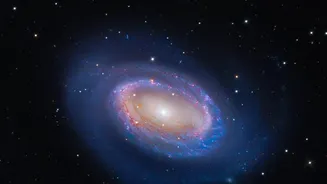
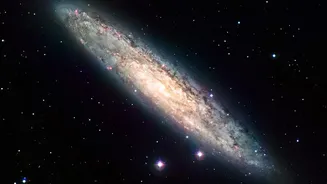
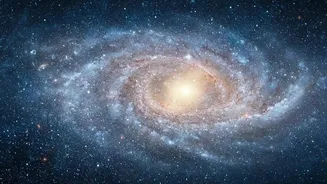
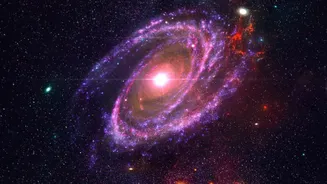
One of the most significant recent discoveries concerns the structure of these early galaxies. Many galaxies, including our own Milky Way, have what is known as a thin disk and a thick disk. The thick disk contains older stars, while the thin disk is home to younger stars like our Sun. Until recently, astronomers couldn't see these structures in the distant past. Using JWST, scientists have now spotted thick, chaotic disks in galaxies as far back as 10 billion years ago. This suggests a clear evolutionary path: galaxies first formed these turbulent, thick disks during a period of intense star formation and cosmic collisions. Only later, as things calmed down, did the more orderly, thin disks form within them.
Cosmic Collisions and Galactic Growth
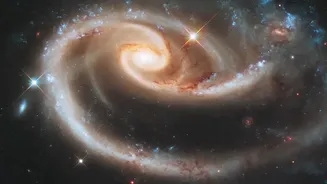
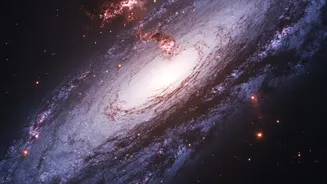
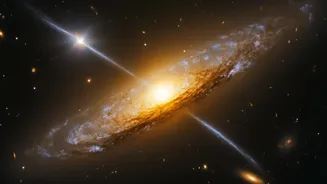
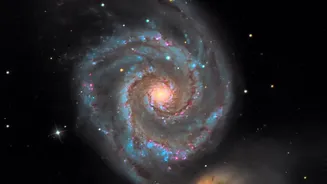
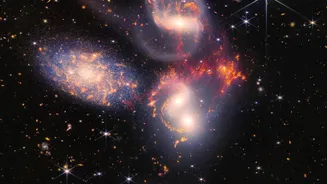
Galaxies don't grow in isolation; they grow by eating each other. The history of the cosmos is filled with dramatic mergers and collisions. The grand spiral and elliptical galaxies that populate the modern universe are the result of billions of years of these interactions. The evidence is everywhere, from the stellar streams wrapping around galaxies to the unusual shapes of active systems like Centaurus A, which bears the scars of a major collision from two billion years ago. By studying galaxies at different stages, from small, irregular systems in the early universe to massive clusters in the making, astronomers can trace how these mergers built up the complex galactic structures we see today. Our own Milky Way is on a collision course with the Andromeda galaxy, with the merger set to begin in about 4 billion years.
What the New Images Really Show Us
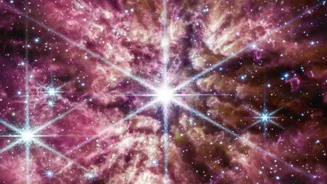
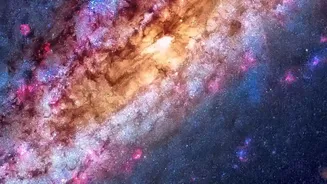
The latest images from JWST are not just beautiful; they are dense with scientific information. The telescope's infrared vision cuts through the cosmic dust that previously obscured our view, revealing the hidden birthplaces of stars and the intricate structures within galaxies. For example, by studying thousands of young star clusters, astronomers are getting fresh clues about how stellar birth and feedback can reshape an entire galaxy. In other cases, detailed views of nearby galaxies help us understand the processes that also happened in the distant past, like how the early universe was filled with the stardust necessary for forming new stars and planets. These images confirm that the early universe was a dynamic and chaotic place, but one where the foundations for galaxies like our own were being laid much earlier and faster than we once thought.