



Embrace Automation for Consistency
An automatic pet feeder is a game-changer for busy pet owners. These devices dispense pre-portioned meals at scheduled times, ensuring your pet is fed even if you're stuck in traffic or a meeting runs long. The primary benefit is maintaining a consistent
feeding schedule, which can reduce pet anxiety and prevent overeating. When choosing a feeder, consider your pet's size and the type of food they eat. Some advanced models are battery-operated or have a dual power supply, which is a crucial feature in case of a power outage. For multi-pet households, microchip-enabled feeders can be a fantastic solution, as they only open for the specific pet registered to them, preventing food theft and ensuring pets on special diets get the right meal.
Establish a 'Pet-Sitter' Pact
Technology is great, but there's no substitute for human connection. Identify a trusted neighbour, friend, or family member who can act as a backup feeder. It is crucial to have this conversation ahead of time, ensuring they are willing and able to help. Provide them with a spare key or access code and walk them through your pet's routine when the stakes are low. This person isn't just for emergencies; they can be a lifesaver for planned late nights or short trips. Make sure they know where the food is stored, the exact portion sizes, and any specific quirks your pet has around mealtime.
Create a Detailed Pet Information Sheet
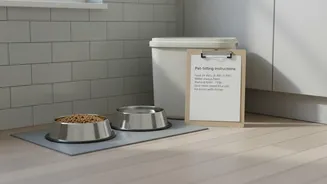
Whether you're using a professional sitter or a friendly neighbour, a detailed instruction sheet is essential for peace of mind. Vague notes like "feed the cat" aren't enough. Your information sheet should be a comprehensive guide to your pet's care. Include your pet’s name, age, breed, and a current photo. Detail the feeding schedule precisely, including times, food brand, and exact amounts. Note any allergies, medications, and treat allowances. It is also vital to list emergency contacts, including your veterinarian's number and the nearest 24-hour animal hospital. Keep this information in a visible place, like on the fridge or saved as a shared digital note.
Prepare Pre-Portioned Emergency Meals
To make things as simple as possible for your helper, prepare a few emergency meals in advance. For dry food, you can measure single servings into labelled bags for each meal (e.g., "Fido - Monday PM"). For wet food, you can do the same with small, refrigerated containers. This eliminates guesswork and reduces the chance of over or underfeeding, especially if your helper is in a hurry or unfamiliar with your pet's specific needs. This small step makes it incredibly easy for someone to step in and get the job done right, keeping your pet's diet consistent even when their routine is disrupted.
Managing Mealtimes with Houseguests
Visitors can disrupt a pet's environment and routine. To manage feeding time smoothly, try to stick to your pet's normal schedule as much as possible. It's often best to feed your pet in a separate, quiet room away from the excitement. This gives them a calm space to eat without feeling stressed or rushed by new people. Inform your guests of your pet's feeding rules, such as not feeding them table scraps, which can cause digestive upset. If you have a particularly anxious animal, this quiet feeding space becomes even more important for their comfort and well-being. Keeping their core routine stable helps them adapt better to the temporary change in household dynamics.