






The Official Process
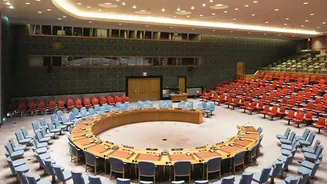
On paper, the process for appointing the UN's chief diplomat is straightforward. According to Article 97 of the UN Charter, the Secretary-General is appointed by the General Assembly upon the recommendation of the Security Council. This means the 15-member
Security Council first selects a single candidate. For a candidate to be recommended, they need at least nine 'yes' votes. That recommendation then goes to the 193-member General Assembly for a final, and historically unanimous, vote of approval. While the process has become more transparent in recent years with public vision statements and hearings, this public-facing portion does not alter the fundamental power dynamic. The ultimate decision is made behind the closed doors of the Security Council.
The P5's Ultimate Power
The critical rule is that the recommendation from the Security Council must not be blocked by any of its five permanent members (the P5): China, France, Russia, the United Kingdom, and the United States. A negative vote, or 'veto', from any of these five nations on a candidate for Secretary-General effectively ends their bid, regardless of how much support they have from the other 14 Council members. This isn't a formal veto of a resolution but is expressed during secret 'straw polls' where P5 members' ballots are a different colour, indicating to all which candidates face a definitive roadblock. This process ensures that no Secretary-General can be appointed without at least the tacit approval of the world's most powerful countries.
A History of Blocked Ambitions
The veto has shaped the history of the UN's leadership. In 1981, Kurt Waldheim of Austria sought a third term but was famously vetoed a record 16 times by China, which insisted it was time for a leader from the developing world. This led to the selection of Javier Pérez de Cuéllar of Peru. In 1996, the United States vetoed a second term for Boutros Boutros-Ghali of Egypt, citing dissatisfaction with his leadership style and approach to UN reform. These moments demonstrate how a single P5 member's national interest or political calculation can override the will of the majority and dictate who gets to lead the global body. This power has been used frequently, with dozens of vetoes cast throughout the history of Secretary-General selections.
How the Veto Shapes the Job
The consequence of this system is profound. It often leads to the selection of a 'lowest common denominator' candidate—someone who is broadly acceptable precisely because they are not seen as a threat to the interests of any of the P5 nations. Potential leaders who are perceived as too independent, outspoken, or reform-minded may struggle to survive the veto gauntlet. This dynamic incentivises candidates to be cautious and can result in a Secretary-General who is more of a 'secretary' than a 'general', limited in their ability to challenge the world's most powerful nations on critical issues like human rights, climate change, or international security. The process can become a negotiation where the candidate's agenda is shaped by the P5 even before they take office.
The 2026 Challenge
With the term of current Secretary-General António Guterres ending on December 31, 2026, the selection process is now underway. The current global landscape, marked by deep divisions between Russia and the West over conflicts like the one in Ukraine, and growing rivalry between the US and China, makes navigating the veto trap more difficult than ever. The ongoing straw polls have shown several candidates receiving 'discourage' votes from permanent members, highlighting the intense geopolitical jockeying at play. As November 2026 reports indicate, no single candidate has yet emerged who can unify the deeply divided P5, leaving the outcome uncertain and underscoring how the veto remains the single most important factor in the race for the UN's top job.